Coaching, Sports–and Life: To Control or Not to Control?


In previous posts I have explained that when athletes try to control the game too much (using Kobe Bryant as an example), it not only adversely impacts their performance, but that of their teammates as well.   I have also explained how the best way to “lose” sports slumps is to lose control.

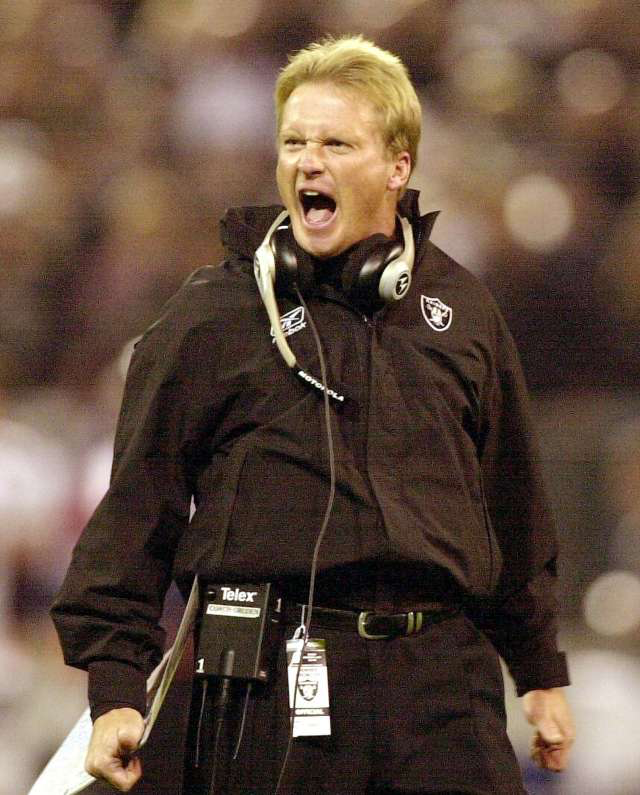
A more complex control issue concerns sports coaching.   After all, coaches are hired to “coach”—which is to say, teach, instruct, set rules, decide on strategies and the like, all of which are control based.

But when are coaches too domineering and what are the consequences?

In other words, when do coaches “over-coach” and what happens when say, they are too demanding, don’t delegate, take on too much, or don’t allow players some input and leeway.

This issue was just highlighted in an article by Gary Klein about the coaching practice of USC head football coach Lane Kiffin that appeared on the October 11, 2011 front page of the Sports Section of the LA Times.   The first sentence of the article reads,

“Lane Kiffin is not ready to let go.”

Kiffin doubles as the Trojan’s sole play-caller, which is an increasingly rare combination in major college football.   Why do most head coaches elect not to call plays?  Interestingly, Kiffin himself answers that best when he states,  “They (the coaches) can step back and look at the whole thing….”

Seeing the Forest from the Trees

I agree with Coach Kiffin.  In this blog and in Losing Control, Finding Serenity: How the Need to Control Hurts Us and How to Let It Go, I repeatedly emphasize how the intensity of our controlling actions puts “blinders” on us and we are unable to see the options and opportunities that are before us.    We are so focused on the trees, we can’t see the forest.   (Which by the way, applies equally to our work and creative endeavors).

Thus, when Kiffin focuses on play calling, it is difficult for him to concurrently follow the ebb and flow of the game or changes in momentum.

Letting Go Allows Players to Take Greater Responsibility


When coaches are willing to let go of some control, it allows the players to step up and take more responsibility for their performance.  This point was recently made by RPI (Rensselaer Polytechnic Institute in Troy, NY) hockey coach Seth Appert (“Appert’s next step: letting go” by Pete Dougherty in timesunion.com) when he stated,

“I run our program, but I want our seniors to run our team…. I think that is the next step for us—from going to a really good program to a great program and making the final step (winning the NCAA tournament).”

In evaluating his past pattern, Appert concludes, “Maybe some of it is I wasn’t ready to give up some of that control.”

I would also argue that letting go of some control in coaching frees players to more fully use their natural athletic instincts and talents.

What Kind of Coach are You?

You notice I didn’t say sports coach—just coach.   In varying ways, don’t we all coach our children?  Our mates? Our friends?

However, are you the kind of coach that tries to over-manage their lives?

If so, consider these likely consequences:

You hinder your children’s growth and independence. They don’t gain the wisdom and insights from making mistakes, nor the personal satisfaction and confidence that comes with doing things on their own.

You push your friends away. Most often, they just want you to listen, and not give them advice.

You obstruct intimacy with your spouse or partner. In matters of the heart, people don’t want to be told what they should do and how they should be.

To Coach or not to Coach? That is the Question!

Please share your thoughts, beliefs and experiences on this important subject by commenting below.

In the meantime, remember to,

Let It Go–and Accept “What Is!”

Danny

If you enjoyed this post, please “like” it on your Facebook page and share it with others.


Kobe Bryant Admits His Control Mentality Disrupts the Lakers

This past month has been an extremely disappointing time for the world champion Los Angeles Lakers.  They not only lost big to their prime time opponents, the Miami Heat, but to decidedly weaker teams as well.   Following a recent lopsided loss to the Memphis Grizzlies, in which Kobe Bryant tried to take control of the Laker offense by taking more than half of the team’s shots in the third quarter of the game, coach Phil Jackson charged that Kobe’s one-on-one mindset took “the rest of the guys out” of the flow of the game (Los Angeles Times Sports Section, Jan. 4, 2011)

Kobe acknowledged as much when he said, “He [Phil Jackson] was right, I totally broke the offense…”

Laker Center Pau Gasol Agrees: Kobe Took Over

Laker Center Pau Gasol effectively agrees with Jackson’s assessment of the impact on the other Lakers when Kobe tries to take over a game.   In the article Gasol states,  “I think we’re more effective and we’re more successful when our offense is balanced and everybody’s contributing.  We all know that we’re in good shape when everybody’s 10-plus points and just getting good looks because the offense will do that for you.”

Other players can’t contribute if they aren’t given the opportunity to do so—if they can’t, as they say in basketball, “get their hands on the ball”.  This point was proved again in the very next game, when shots and scoring were more evenly distributed among the players.  The Lakers beat the Detroit Pistons by over 20 points.

When You Control You Cant Flow!

One of the central themes of my new book, Losing Control, Finding Serenity (available next month), is that excessive control disrupts the flow in all areas of our lives:  love and intimacy, family, parenting, creative endeavors—and definitely in sports performance.

Why does excessive control lead to lost games, thrown matches, and major mistakes?  It’s simple:  when you control you cant flow.

The chapter of my book entitled Losing Sports Control: Gaining the Competitive Edge explains this phenomenon in detail.  The basic concept:  often when athletes press or try to do too much, they not only play poorly themselves, but they also severely impact the play of their teammates.  Controlling behaviors can go beyond limiting an athlete’s personal performance; they can hobble an entire team.

Coincidentally (or perhaps not!), the primary example I use in that chapter is the history of Kobe Bryant’s play. In my view, the other Lakers consistently play better when Kobe is willing to lose some control by not trying to do too much.  Kobe is truly a remarkable athlete, but that doesn’t always translate into wins for his team.  History shows that the Lakers win far more games when Kobe has a lot of assists!  In basketball, making assists—supporting other players instead of hogging the ball—is the epitome of letting go of control.

Tips for Giving Up Sports Control

I offered some tips for letting go of sports control in my November 3 post,  Lose Slumps by Losing Control . Here are two more effective ways to give up control and improve your athletic performance:

1.  Stay within your own game. Stay with what you do best.  When play is not going well, players often feel the urgency to do more, usually leading them to play beyond their skill levels.  Don’t make this mistake.  Over-reaching helps some of the time, but in the long run, performance usually suffers.   Staying within one’s own game is a particular dilemma for highly talented athletes like Kobe.

2.   Do What Chris Paul Does:  Sense the flow of the game. Like life, sports have their unique and unpredictable ebb and flow.  The action constantly shifts and changes.  It’s important to get a sense of the natural flow of the game.  To do this, you must not force the action.  Rather, develop the patience to wait until the “action” comes to you.  Then you can participate more naturally within your own skill set.

To me, no athlete senses the flow of a game better than New Orleans Hornets All Star point guard Chris Paul.  Paul is particularly adept at identifying what he needs to do to enhance the flow in ways favorable to his team. When he’s needed, he applies his skills almost seamlessly.   As a result, he usually plays differently from game to game and even within the same game.   Sometimes he becomes an aggressive scorer; at other times, he’s a facilitator.  He picks and chooses his moments, maximizing his performance and that of his teammates.  Chris Paul’s play is a perfect example of decontrol techniques at their most effective.

The next time you play your favorite sport, try these decontrol tools, too—and please let me know what happens.

In the meantime, remember to,

Let It Go–and Accept “What Is!”

Danny

If you enjoyed this post, please “like” it on your Facebook page and share it with others.