
The Love Enabler Test!

Are You a Love Enabler?  It’s a less apparent form of love control.   In fact, you may not be aware that you are one or how much it can impact your love bond.

Love Enabling

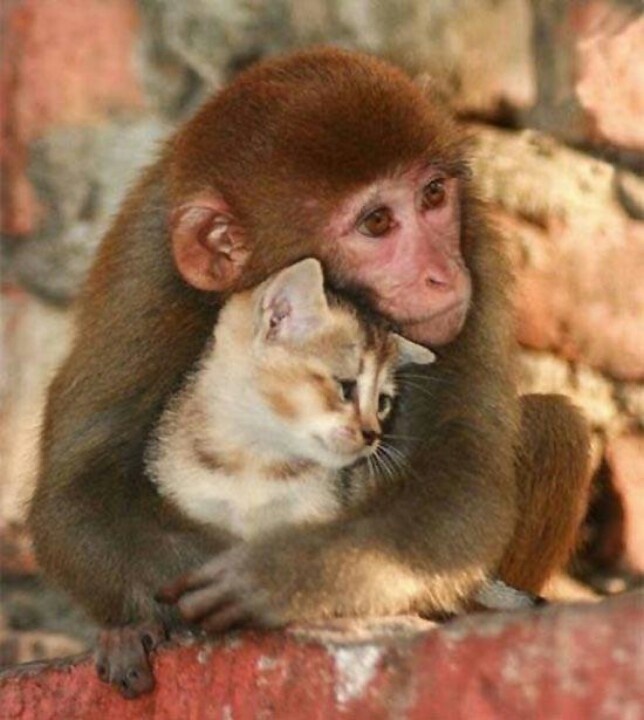
When we continually give too much or do too much for our loved ones, we are usually trying to control them–and instead risk taking away from them.   Thus, a husband’s giving his wife a large allowance so she doesn’t have to work may result in his wife foregoing her own career ambitions.

Love enabling can also breed dissension.  For example, a wife who gets tired from constantly running errands and taking care of the personal needs of her husband may become resentful because she doesn’t have the time to take care of her own personal needs.   Further, her husband may similarly be resentful because he feels his wife is too intrusive.

In addiction environments, enabling frequently occurs when the mate or partner of an addict constantly “rescues” him, thus saving him from the adverse consequences of his destructive actions.     However, the rescuer usually does not realize that the only way the addict will be induced to seek treatment or help is by suffering the painful consequences of his or her actions.

Are You a Love Control Enabler? 

It is not always easy to determine whether someone is a love enabler because it is only natural to want to “give” and “do” things for the ones we love and care about.    There are no hard and fast rules.   It is usually a matter of degree and constancy.  There are, however, some probing inquiries or guide lines that can assist in the determination.

Love Enabling Guidelines

Answer these questions as truthfully as you can.

  1. Are your actions depriving your loved one of valuable learning experiences and a sense of self -reliance? I remember my aunt never being able or wanting to learn how to drive because my uncle drove her everywhere she wanted.    After he died, to our surprise, within a couple of months she learned how to drive.
  1. What is the real motive behind your action? It is easy to discount our real motives for “helping” our loved ones. Consider whether the main reason you are doing something for your partner is because you want to make it “easier” or “better” for yourself.   For example, you may repeatedly help your wife clear her clutter because you believe it will help her stop cluttering.    However, the underlying motive may be that living with clutter unsettles you.

In either case, your helping her may exacerbate the problem and impede her personal growth.  Why?  Because your assistance provides little or no incentive for her to deal with the clutter herself.  If you abstained, the clutter may pile up so much that even she can’t stand it anymore.  She may then start doing something about it and in the process gain the inner satisfaction and self-esteem that comes from taking care of her needs.

      3. Are you constantly trying to solve your loved one’s problems? If so, you are once again impeding his or her opportunities for personal growth, self-reliance, and inner satisfaction.

  1. Do you help because you want things done your way? Aside from depriving your loved one of valuable learning experiences, it usually means that you do not trust that he can do it properly himself, which can undermine his self-confidence.    Instead, try to be more humble.  There is more than one way of doing most things and there is no assurance that your way is the best or right way.   Most often, it is simply a way!

Some Valentine’s Day Challenges 

Consider accepting the following “love” challenges for Valentine’s Day and this month:

*Allow your loved one the dignity of solving his or her problems and challenges.

*Examine your real motives for wanting to “help” your loved one.

*Listen attentively to the concerns of your loved one—without adding your two cents. 

Please let me know of your love bond begins to glow brighter!

In the meantime, remember to

Let it Go–and Accept “What Is!”

Danny

*If you enjoyed this post, please “like” it on your Facebook page and share it with others.


Truths and Tips #7: Letting Go of Control

Q: How can letting go of control allay some of the fear and anxiety associated with the current economic uncertainty brought about by Covid-19? 

A: The feeling of being powerless over our finances (and job prospects) can be extremely discomfiting and stressful–perhaps more so now than ever.   Our fear and anxiety compel us to control more.

However, when we try to control too much, we are putting “blinders” on ourselves, and literally can’t see the options and opportunities that could make life (and finances) better for us. (more…)

Truths and Tips #6: Letting Go of Control


Q: Is it difficult to let go of control?  Where does one begin? 

A:   Letting go of control can be extremely difficult because we have been raised with control; it is taught to us and all around us.  Our parents, bosses, teachers, and religious leaders—much of what they do is control based.

Control is thus what we have come to know. It is what we think works for us (which I strongly refute in Losing Control, Finding Serenity).   As such, it is a deeply engrained habit—one in which we feel very uncomfortable and even insecure in giving up.

The first step in changing the propensity to control is to become better aware of your controlling ways.  Many of us have little inkling of how much, how often, and in what we ways we try to control people and things around us.  We can see it in others, but much less so in ourselves.

Control can be subtle.   Suggesting or reminding too frequently, encouraging too strongly, or preaching too intently are common control devices.  Enabling our children and loved ones is another.

The “decontrol” process starts with an honest inventory of your controlling patterns. To do this, you have to reign in your ego and muster the courage to see yourself as you are—blemishes and all.

For example, are you typically judgmental? Highly opinionated? Overly critical? Too aggressive?

Questions to Ponder:

“Can you identify two ways you controlled today?”

“Are you fearful of what might happen if you let go of a pressing matter for a day?

Please share your answers with me!

In the meantime, remember to

Let It Go—and Accept “What Is!” 

Danny

*If you enjoyed this post, please “like” it on your Facebook page and share it with others.


         Truths and Tips #5: Letting Go of Control

Q: How does our need to control stiffen life’s possibilities? 

A:   When we focus too intently on trying to control or change people and things we are putting “blinders” on our selves, and literally can’t see the options and opportunities that are before us.  We are too closed-minded and not open to new ideas and ways of doing things.

Life is in a constant state of motion; fluid, shifting, changing, always moving.   As such, it is impossible to hold on to it—and that is precisely what controlling actions attempt to do.   The result is much the same as if you tried to grab on to a rapidly moving conveyor belt; you may slow it down temporarily, but you would ultimately get burned or dragged along!

So let go of control and expand life’s possibilities!

Questions to Ponder: 

Q: “Have you ever felt the freedom and lightness of ‘going with the flow?’”

Q:  “Was there a sense of ‘letting go’ associated with it?”

Please share your responses with me and others!

In the meantime, remember to

Let It Go—and Accept “What Is!”

Danny

*If you found this post helpful, please “like” it on your Facebook Page and share it with others.

Letting Go of Control Truths and Tips (#2)

Truth and Tips Q&A #1 explained how fear was the prime driver of our need to control others and outcomes. Q&A #2 is a logical follow up:

Q:How can we reduce our fears so that we will control less? (Part One) 

A:  Effectively reducing our fears is usually a multi-step process.    It begins with clearly identifying what they are.  For many, this is not so easy, because our fears easily bask in our lack of awareness.   We tend to attribute the anxiety and discomfort that fears generate to other things.  It is much easier to look elsewhere than it is to look within us.

Thus, one of the best ways to detect this most tricky of emotions is to do a fear inquiry.   Recall the day’s events as specifically as possible.  The fear-invoking event will be lurking in there somewhere. More often than not, it is something you totally blocked—and why not.  It was too painful to deal with at the time.

In doing your fear inquiry, be aware of any anger or resentment you may be harboring.  Anger is commonly an aggressive response to our fears, and it too, invokes controlling actions.   Still another sure sign is when you procrastinate in addressing important tasks and challenges.

Our fears can also have a strong physical presence.  Note where they may be located—tight chest and stomach, painful lower back, or somewhere else—and try to “feel” their presence.  As you do, breathe in and out slowly, and they will usually be revealed–and even ease.

Once we have a clearer understanding of our fears and how they impact us, we can then begin to find ways to defuse them. One effective way is to confront and process them.  I will offer some tools to help you do that in my next post.

Until then, I will leave you with two

Questions to Ponder: 

“Did you discover any “unknown” fears during your fear inquiry?  What were they?”

“Did knowing what they were lessen their impact?”

Please share your responses with me!

In the meantime, remember to

“Let It Go—and Accept “What Is!” 

Danny

*If you found this post helpful, please “like it” on your Facebook page and share it with others.


Letting Go of Control Truths and Tips (#1)

The need to reign in our unhealthy compulsion to control is thus more important than ever, whether we are a so-called “control freak,” a micro-manager, a nitpicker, or simply someone who controls excessively.

Toward that end, I will be sharing pertinent “Truths and Tips” through Q &A’s aimed at recognizing, clarifying, and understanding important aspects of the control dynamic, followed by some related questions for you to ponder.

Below is the first one.  Others will follow in upcoming posts.

Q:  What is the prime driver of our need to control others and outcomes? 

A:  FEAR!  Fear is the catalyst for most unhealthy controlling actions.  We are fearful of the unknown and unexpected; the “what ifs” and “what might happens.” We lack trust that we will be able to take care of ourselves or that our needs will be met if we let things be or run their natural courses.  In the deepest sense, we are afraid we won’t survive.    That’s why we are compelled to continually press and work hard to change or control others and outcomes.

Questions for You to Ponder: 

“What core fears propel you to control?”

“Has the Covid-19 Pandemic impacted your controlling ways?   How ?”

Please share your responses with me!

In the meantime,

“Let It Go–and Accept “What Is!” 

Danny

*If you found this post helpful, please “like it” on your Facebook page and share it with others.


How to Let Go of Holiday Stress and Anxiety

The holiday season is a time of great stress and anxiety for most people. We are forced to plod through heavy traffic, wade through crowded stores with too few sales clerks, incur unwanted financial burdens, and attend family gatherings fraught with unresolved issues and conflicts amongst members.

Thus, it comes as no surprise when we repeatedly hear the proverbial, “I just dread the holidays.”

I have a solution for much of your holiday anxiety:  Let Go of Control!

Holiday pressures exacerbate our tendency to rush, to press, to resist, to direct, to expect, and to criticize—all tension-creating control devices.

Wouldn’t you enjoy yourself much more during the holidays if you were able to take it easy and feel everything would work out okay?

You can—by letting go of control.  Here are some holiday decontrol tips that will assist you.

1.  Lower Your Expectations

Try not to expect too much of others, especially family.  As I’ve cautioned in prior posts, high expectations often lead to disappointment and resentment—and the harmful control actions warned against in recovery books. It is much better to have little or no expectations of how people will be or act. After all, they’re likely feeling holiday pressures themselves. And don’t assume or anticipate conflict or discord with others based on past history and experiences.

For example, if you are concerned about sitting at the same table with your wayward brother or sister at a holiday dinner or party, don’t make any assumptions—good or bad—about what might happen. Instead trust that you will be able to disengage (i.e., let go) from any problem that might occur and still enjoy the reunion.

2.  Be Patient

Allow holiday “currents” to progress and evolve naturally, rather than pressing for resolutions.  Life is always in a constant state of motion—shifting and ebbing and flowing—even more so during the holiday rush.  Focus on being calm and grounded, and wait for the currents to flow your way.  Then engage them intuitively, rather than forcefully.  To better do this, plan some alone time for yourself each day, whether to meditate, journal, take a short walk, or just do something fun.

3. Keep Things Simple

Don’t complicate things by over planning and over thinking. Don’t fret about all the “what ifs” and “what could happens.” Worrying only plants the seeds for those things to happen!  Instead, trust that everything will work out as it was meant to be. By keeping things simple you will save considerable time and energy and reduce stress and tension for yourself and those around you.

4.  Address and process your “Personal Truths”

Addressing our unwanted feelings is a critical component of reducing the compulsion to control. I devote an entire chapter to embracing your Personal Truths in Losing Control, Finding Serenity.

In simple terms, this involves identifying and processing the negative feelings that compel us to control, such as fear, anger, anxiety, insecurity and the like.

For example, if you are feeling  anxious because of all the things you feel you want or need to do during the holidays, rather than forging “past” your anxiety, take a few minutes to get in touch with it. Start by trying to feel it internally, even physically. Take some slow, deep breaths and really tap in to it. As many recovery books suggest, “Embrace” it, if you will. Ask yourself how important is it that everything gets done “right now?” What terrible things might happen if you don’t? The truth of the matter is that most things are not as important as we imagine or project them to be.

Though it may sound counterintuitive, so acknowledging and processing your stress and anxiety will lessen their “grip” over you.

If you try these “decontrol” tips I am confident you will enjoy the holidays more. You might even look forward to them!

In closing, I would like to wish you a very peaceful holiday season. And remember to,

Let It Go!

Danny

*If you enjoyed this post, please “like it” on our Facebook page and share it with your friends.

The Trust—Control Dynamic

Many of us have trust issues and are control freaks. Have you ever thought about the connection or dynamic between control and trust? Or more specifically, about how trust impacts our ability to let go of control? To be truthful, I hadn’t given it much thought until I read and successfully applied a tennis strategy called “Trust Your Body” in Jeff Greenwald’s insightful tennis book, The Best Tennis of Your Life.

As an avid seniors tennis player, I struggled to play up to my ability in tournament match play.  I was constantly over-thinking, too cautious, and unable to maintain sustained focus. Before playing in a big tournament in Palm Springs last month, I read a statement in Jeff’s book that really resonated with me:

“Letting go of control, trusting your shots, and accepting the outcome is imperative if you are going to ever play with true freedom on the court.”

I tried that in the tournament and beat several players who had soundly beat me a year earlier, before losing to the #1 seed in the semi-finals.  By trusting that my body and mind could work things out instinctively without all my “help,” I was able to let go of control and enjoy the wins that followed.

Upon reflection, it occurred to me that what applies to sports performance, applies equally to just about everything in life and that,

There is a powerful dynamic between trust and our ability to let go of control.

Trust and Let Go of Control

Here are some core truths about that dynamic.

  • The more we trust that we—or others or things—will be okay without our concerted effort, the less we feel the need to control them or the outcome.
  • A primary reason we try to control or over manage our life or that of others is that we lack trust that things will work out naturally by themselves.
  • When we trust and let go of control, we reduce our stress and anxiety, creating space for greater calmness and serenity.
  • When we trust and let go of control, we are able to engage and respond intuitively to “life’s natural currents”—the flow of life, if you will—thereby creating new opportunities and choices that can transform our lives.

Try These Two Things This Week

1. If you find yourself over-thinking situations or pressing matters too much, pause and say to yourself:  “Trust that everything will work out as it was intended to be.”

2. If you find yourself obsessing or worrying too much about someone—your child or love one, for instance—take a moment and say to yourself: “I trust that they will make the choices that are best for them.”

What is your view of the connection between control and trust?  Are you able to trust and let go?  What happens when you do?  Please share your experiences with me on this very important subject.

Click here to learn more about control freaks and find tools for eliminating control issues.

In the meantime, remember to

Let It Go!

Danny

*If you enjoyed this post, please “like” it on your Facebook page and share it with your friends.


10 Ways the Need to Control Hurts You

Many people call them control freaks.  Some call them controllers.  Others refer to them as nitpickers and micromanagers.  Whatever you call them, they all have one clear thing in common: The Need to Control.

Hence, the subtitle of my book Losing Control, Finding Serenity,  “How the Need to Control Hurts Us and How to Let It Go.”   As such, the book examines in-depth (using true stories) the many ways our need to control hurts us—and others.

Controlling too much is like gripping a rapidly moving conveyor belt—you either get burned or dragged along.

10 ways for control freaks to get themselves in check:

1.  The intensity of our control-driven actions “blinds” us from recognizing new paths and opportunities that could vastly improve our lives.

2.  The need to control our children’s lives deprives them of opportunities for personal growth.  It also leads to resentment between parent and child.

3.  Control obstructs the creative process.  Creativity flourishes with “opening up”, whereas control closes it down.

4.   Love control causes the dance of romance to lose its rhythm.  Who likes to feel they are not good enough in matters of the heart?

5.  Controlling others at work discourages original thought and ideas.   It also invites conflict and dissension.

6.  Control stymies spontaneity, and with that, the unexpected and often exciting joys it brings.

7.  Control impedes trust and intimacy.  When you keep telling others what they need to do or what’s best for them, they are reluctant to confide in and be open with you.

8.  The need to control diverts us from focusing on where it can do us the most good: ourselves!

9.  When you control, you can’t flow—especially in sports.

10.  Constantly trying to control or change others or things takes inordinate amounts of time.

So, doesn’t it make since to let go of control and enjoy the rewards that follow?

Please share with me and others your experiences about how your need to control has hurt you—and others.

In the meantime, remember to

Let It Go–and Accept “What Is!”

Danny

*If you enjoyed this post, please “like” it on your Facebook page and share it with others.
Control and Impermanence

One of the illusions about control is that many of us believe we can significantly alter or impact the natural flow of things, or as I like to say, “life’s natural currents.” This is why our friends or loved ones may refer to us as control freaks.

I write about the folly of control in Losing Control, Finding Serenity.  In short,

The more we try to control others and things, the less control we really have over them.

That delightful philosopher, Alan Watts, forms the issue so eloquently in The Wisdom of Insecurity (Vintage Books, 1953), when he states,

“It must be obvious, from the start, that there is a contradiction in wanting to be perfectly secure in a universe whose very nature is momentariness and fluidity….”

This fundamental truth is expressed in different ways.  Dr. Brad Zebrack, an Associate Professor at University of Michigan School of Social Work and a cancer survivor, speaks of it in terms of the impermanence of life.  In a recent Huffington Post he writes,

“We wake each morning and count on the permanence of our surroundings.  Our spouse or partner.  Our parents.  Our children…A morning cup of coffee or afternoon tea.  The routines that get us through the day.  This is called “taking life for granted.”   Yet, impermanence surrounds us.”

Dr. Zebrack then explains how cancer survivors learn to experience the “realities of impermanence” and the importance of letting go of what they want and instead embracing  “what is.”  With little certainty in their world, they can only control such things as how they engage the world and how they claim their own story and ultimately themselves.

Yet, isn’t this true for all of us?

In a world that is in a constant state of flux, isn’t the only thing we really have meaningful control over is ourselves—for example, how we choose to engage people and things, to act and react to what is before us, and our attitudes and beliefs? Indeed,

Are not the desire to control and being part of an impermanent world irreconcilable?

What’s your view on control and impermanence? Do you find them contradictory? Is living life as control freaks realistic or possible? Please share your thoughts and experiences with me.

In the meantime, remember to

Let It Go–and Accept “What Is!”

Danny

*If you enjoyed this post, please “like it” on your Facebook page and share it with your friends.

5 Keys to Practicing “Acceptance”

An underlying theme of my book, Losing Control, Finding Serenity, is that acceptance is fundamental to reducing our need to control. Readers agree. The most highlighted sentence of Amazon’s best selling eBook version is:

“The more we accept people and things for who and what they are, the less we need to control.”

Readers also recognize the folly of trying to control others, a realization present in all acceptance stories. The second most highlighted part is:

“At bottom, excessive control represents our attempt to change another’s very nature and spirit. But because another’s true spirit cannot be changed except by that person alone—our efforts to do so are not only fruitless, they are also harmful. It is not about the other person as much as it is about us and our unwillingness to accept life as it is.”

The Importance of Acceptance

More and more people in all walks of life are coming to understand the importance of acceptance* to their overall well-being, not the least of which is the vital role it plays in improving (and healing) family, love, work and interpersonal relationships. (See “Five Good Reasons for Accepting People as They Are”)

The acceptance paradigm is the very essence of The Serenity Prayer and First Step of the widely practiced 12 Step Programs. It is an intrinsic part of many spiritual beliefs and practices and fundamental to most mind, body and spirit teachings.

Why, then, is it that we—myself included—find it so difficult to practice “Acceptance?”

We readily recognize how important it is, but so often don’t or can’t do it! Instead, we continue to direct, pressure, resist, criticize, manipulate—almost anything except accept our powerlessness over others and most things.  When others share their acceptance stories, most reveal that at first it wasn’t easy to let go and accept things the way they were.

Keys to Practicing Acceptance

I have given serious thought to this quandary and how we can overcome or at least minimize it. I believe there are five fundamental, interrelated obstacles to our being able to effectively practice acceptance. Consequently, the keys to success in practicing acceptance lay in our ability and willingness to overcome them.

*We are too afraid. We are fearful if we accept the way others are, we—or they– will somehow be harmed. For example, if we allow our children to schedule their homework or study for tests as they see fit, we may be fearful that they will falter at school. Similarly, if we accept annoying aspects of another’s personality, we may be afraid we would be giving up too much of (or not be able to fend for) ourselves.

Facing and processing such fears makes it much easier to accept others and things as they are.

*We expect too much. Simply put, if we expect, we can’t accept! We thus need to lower or moderate our expectations of others in order to accept them as they are.

*We lack trust and faith. Many of us simply do not trust or have faith that things will work out okay if we accept “what is.” At work, for example, we may be struggling with a complex business problem over which we have very little influence, yet are reticent to let it“play out” by itself because we don’t have faith that the outcome will be positive.

Trust and faith can be fostered by remembering that almost always there are multiple paths to acceptable destinations and solutions.

*We are not humble enough. Accepting people and things as they are requires humility. We have to be willing to let go of such beliefs as “my way of doing it is the best way” and “I know what’s best for others.” We need to understand that what works well for us might not work well for others.

In short, we need to be more humble! It helps if we realize that we are not nearly as omniscient or omnipotent as we are prone to believe.

*We aren’t courageous enough. It takes considerable courage to overcome the above obstacles–and we often fall short.

Meaningful guidance is found in the Serenity Prayer: “God grant me…Courage to Change the Things I Can.”

We can try to face and move through our fears.

We can lower our expectations of others and things.

We can have greater faith that everything will turn out okay if we accept others and “what is.”

And we can strive to be more humble.

What do you do to practice acceptance?

Please share your acceptance stories with myself and others and let us know what helped you most.

In the meantime, remember to

Let It Go–and Accept “What Is!”

Danny

*Acceptance does not mean that we need condone or excuse what we find distasteful about another’s ways or dislike about a situation. Simply, that we need to accept that is the way the person or thing is and that it is beyond our power to meaningfully change him or her or it.

If you enjoyed this post, please “like” it on your Facebook page and share it with others.

Control Knows No Borders

My writing of Losing Control, Finding Serenity was primarily within the context of my struggles and personal recovery from the compulsive need to control most things and people in my life– particularly those closest to me—and the resulting adverse consequences. I didn’t give much thought to how pervasive the need to control might be in people in other places, cultures, and traditions, nor in which ways they manifested control.

It was thus unexpected–and deeply rewarding to me–that LCFS has attracted a broad international audience since it was published six years ago. The same has been the case with respect to this blog, which draws daily visitors from the far corners of the globe.

I have thus recently thought about whether the need to control is a “global” issue and I believe it is. Here is why.

Control Takes Diverse Forms

Most people typically think of controllers in such terms or ways as nitpickers, micro-managers, control freaks, perfectionists, home and work despots, Type A personalities, and the like.

However, subtle, even genteel, forms of control can also impact our serenity.   For example, when we prod, cajole, or charm, or when we withdraw from loved ones or play the victim or martyr, we are usually trying to control others.  When we repeat a suggestion more than once, we are likely being controlling.   And when we apply “guilt trips,” we are clearly controlling.  Depending on how it is used, silence, too, can be very controlling.

I doubt that these kinds of control are exclusive to us here in the U.S.

The Common Catalyst for Control 

Both assertive and subtle forms of control have a common catalyst: FEAR.   In LCFS, I refer to fear as “Control’s Best Friend.” That’s because most controllers, particularly control freaks are fear driven. They are afraid of uncertainty, the unknown, and of what the future holds. They thus constantly dwell in the “what ifs” and “what might bes,” and in their core are concerned about their very survival. (Hence, the acronym “Future Events Already Ruined). To shield themselves from the flames of these demons, they grip life tightly in an attempt to build a security wall around their “home field.”

So a pertinent question, then, is whether fear is an oppressor only to us here in the U.S?   I’m pretty sure it isn’t, which is to say,

            Fear Knows No Borders.

Fear is indigenous to the human species, particularly “emotional” fears.   While certain peoples, cultures, and traditions may be less fearful and afraid than others, it’s unlikely that they’re totally immune from fear, and thus still control to some extent. Any differences likely lay in how often, how much, and in which ways they try to control—and not whether they control.

That is why I believe that, 

            Control Knows No Borders!

I also believe that is why LCFS and my blog have garnered international interest from people seeking personal recovery from these issues. People throughout the world are concerned about the harms of excessive control and want to learn how to be less controlling.

Please Share Your Thoughts

These, of course, are only my beliefs and thoughts on the subject. What are yours?  Do you believe that Americans generally control more or less than people from other parts of the world? Are our controlling means and methods different than others? Do you know of any nationalities, cultures, or tribes that control more or less than we do?   If so, which ones and why do you think that is?

In the meantime, 

Let It Go!—and Accept What Is 

Danny

If you enjoyed this post, please “like” it on your Facebook page and share it with others.
Visit this link to learn more about the journey to personal recovery from control issues.