Adrian Gonzalez Knows How to Let Go of Control for Peak Performance

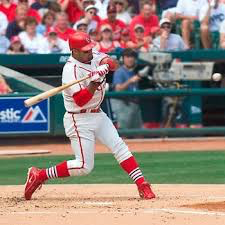
Sports stars seem to easily recognize the types of controlling actions that severely undermine peak performance.Adrian Gonzalez, a prolific home run hitter, is the most recent athlete to do so.

The Los Angeles Dodgers paid a huge amount ($126 million) to acquire Gonzalez in mid season with high expectations that he and several other acquired players would lead the Dodgers to the National League Playoffs.

However, the Dodgers failed to make the playoffs and Gonzalez’s home run production dropped dramatically.   When asked by sports reporter Dylan Hernandez (October 7 Los Angeles Times Sports Section) what he attributed his lack of home runs to, Gonzalez responded without hesitation:

“Trying too hard.”

What’s interesting is that in the two prior seasons Gonzalez hit considerably more home runs while playing with serious injuries.   When asked why he thought that was, Gonzalez answered:

“I was able to hit because I had no expectations for myself.”

Expanding further on why this past season was a subpar one for him, even though he was completely healthy for the first time in years, Gonzalez explained:

“This year, because I’m healthy, I’m like, OK, now I should be able to do this and do that…Before I know it, I’m up there trying to make things happen.  This game is not one in which you make things happen.  You have to let things happen.” (emphasis added.)

Thus, once again Gonzalez confirmed that trying too hard and having too high of expectations are the types of controlling actions that can severely undermine an athlete’s performance.

Importantly, it is these same controlling means that impact other kinds of performance.

For example,

*Over rehearsing a speech or theatrical role usually impacts its naturalness, emotional connection and flow.

*Expecting too much from your children on school exams can cause them to tighten up and make foolish mistakes.

*Trying too hard to please a prospective beau or belle may make him or her feel uncomfortable around you.

*Trying too hard to perform well sexually can ….you finish the sentence!

How many times has your trying too hard to accomplish something impacted the results? How often have high expectations of yourself or others affected performance?

In the meantime, remember to

Let It Go–and Accept “What Is!”

Danny

If you enjoyed this post, please “like” it on your Facebook page and share it with others.

Albert Pujols Lets Go of Control and Loses his Slump!

Several months ago I offered some decontrol suggestions to Albert Pujols on how he could come out of the horrendous batting slump he was mired in following his signing a record breaking contract with the Los Angeles Angels.

At the time, he was batting a measly .194 with NO home runs!

Remarkably, in the three months since he has hit .303 with 24 home runs and 71 runs batted in.

Why?  Because he let go of control!

Pujols confirmed this in the lead article in the August 13 Sports Section of the Los Angeles Times entitled “On a Barrel Roll, ” where he remarked:

“I think everyone was pressing, not just myself, but I was the face because I signed the big contract, and I had to show people I was worth every penny.”

Significantly, Pujols wents on to say:

“When I decided not to try to do too much, that’s when things started to turn.”

This aptly illustrates one of the major catalysts of our unproductive and often harmful controlling actions.

Pressing and trying to do too much.

All of which removes us from “life’s natural currents.”   Only when we are willing to lose control, are we able to engage and act more intuitively and expansively within the natural flow of life—whether it be our work lives, our home lives, creative lives—or in Albert Pujol’s case, our sports and performance lives.

The next time you are mired in a “slump,” try letting go of control.   And please let me know how it worked for you.

In the meantime, remember to

Let It Go–and Accept “What Is!”

Danny

If you enjoyed this post, please “like” it on your Facebook page and share it with others.

Albert Pujols–The Way Out of Your Slump

Poor Albert Pujols.   All those high expectations from fans, the owner–and  himself.

And why not?   A $240 million dollar contract can drum up a lot of expectations.

Is there thus any wonder why Albert is slumping so terribly?    Undue expectations invariably propel controlling actions; in his case trying too hard, analyzing and thinking too much, and likely doing too much.

The solution, Albert, may sound counter-intuitive, but it’s tried and true:

Let Go of Control!

Pujol’s dilemma of high expectations is not unusual or uncommon with high paid athletes.  In the chapter in my book entitled “Losing Sports Control: Gaining the Competitive Edge”, I relate how newly acquired L.A. Dodgers outfielder J.D. Drew was mired in a season long hitting slump until he finally gave up trying so hard to get out of it.   The following year he went on to make the American League All-Star team.

Similarly, in my post, “Lose Slumps by Losing Control”, I cite how other athletes (and professionals) successfully lost their slumps by letting go of control, as well as offering a few decontrol tips.

The dynamic is the same in all sports.

Too much control, too little flow.

So Albert, here is my advice—and please forgive me if I am being “too” controlling by offering it, but I truly believe it can help you continue to be the great player that you are.

*Disregard the expectations of fans and the owner.   Trying to meet them is what is causing you to be too controlling and not playing “within” yourself.

*Lower your own expectations as well.   It puts too much pressure on you.

*Stop trying so hard to come out of your slump.  Instead of over thinking and analyzing everything, just focus on having fun and enjoying the game that you love.

Regardless, Albert, I will continue rooting for you to hit them out of the park and I am confident you will soon return to form.

In the meantime, remember to

Let It Go–and Accept “What Is!”

Danny

If you enjoyed this post, please “like” it on your Facebook page and share it with others.

“Lose” Slumps By “Losing Control”

The Terrible Slump

“I’ve been in a terrible slump,” laments the star baseball player.  “No matter how hard I try, I can’t seem to  shake it.  I’ve been taking extra batting practice for the past week, and that’s only made things worse.  But I am convinced that if I try even harder,  I can come out of it.  As they say, ‘If you don’t succeed at first, try, try again,’” he bravely commits.

The player may be brave, but is he wise?

Is the Problem the Slump or Excessive Control?

Like many athletes and performers, the star player is control prone.  By that I mean, he is over thinking , over trying,  over obsessing—and under trusting and accepting.   As a result, he is resisting life’s “natural currents,” rather than letting them run their natural course.

As I wrote in my first blog post, life is constantly moving, shifting, ebbing and flowing.   There are and will always be highs and lows.  Yins and Yangs.  Slumps happen.  It is important to accept that.   Sometimes we lose our “groove” for no apparent reason, and fear sets in, causing a loss of confidence.   But trying extra hard doesn’t bring it back.  Once you start pressing and thinking too much about the problem, you become your own worst enemy.

It is usually better to let slumps resolve themselves naturally—and they usually will if you have patience and trust that everything will work out in due time.   That doesn’t mean that you should not check (and correct if necessary) your basic fundamentals—in the star player’s case,  swing form and technique—but after that, just let it go if you can.

Psychologists Agree:  Control Actions Make Slumps Even Worse

In a recent article by Sue Shellenbarger in the Wall Street Journal, “Slumping at Work? What Would Jack Do” (www.wsj.com, October 13),  psychologists confirm that working and trying too hard makes matters even worse, both in sports and at work.    Sport psychologist Gregg Steinberg told an account executive who was not producing to do what he advises athletes to do: “Stop working and allow yourself to relax.”  Following his advice, the executive’s sales doubled.   Dr Steinberg stated that the principles that lead to slumps are the same at work and in sports: loss of confidence, over-thinking every move, dwelling on past failures and working too much.

The article goes on to tell how star Atlanta Braves pitcher John Smotz, mired in a 2-11 record at the All Star Break,  made matters worse by trying to break out of his slump with hard work and overanalyzing every bad pitch he made.   When he stopped obsessing and instead focused on the positive things he did well; he was 12-2 for the remainder of the season.

Similarly, amateur golfer Greg DeRosa relates how during a slump,  he practiced harder and took lessons, only to lose the rhythm of his swing.   However, after working with sports and performance psychotherapist Tom Ferraro, he stopped taking lessons and started trusting his instincts.  Soon after, he took three strokes off his previous lowest average five years prior.

Lose Control and Regain the Flow

I like to say, “You can’t flow if you control.”  So drop the control and regain the flow!  That’s true, whether in sports, performance, work, the arts, relationships or life in general.   In my forthcoming book Losing Control, Finding Serenity , I offer tools and methods for learning how to effectively let go of control in these life arenas.

For now, here are two tips for losing slumps in addition to those I mention above:

*Envision yourself performing in a confident, smooth manner.  Do this well before, up to, and at the start of the game or performance.

*Face your performance fears and anxiety.   Don’t shy away from them.   Address and process them the best way you can.  In most instances, your fears and anxieties are what cause you to control.  (This key control catalyst is addressed at length in my book.)

By practicing these tips, I am confident you will see a marked improvement in performance.   They sure have helped my tennis game!

In the meantime, remember to,

Let It Go–and Accept “What Is!”

Danny Miller

If you enjoyed this post, please “like” it on your Facebook page and share it with others.