
Let Go of Judgment–No Good Comes From It!

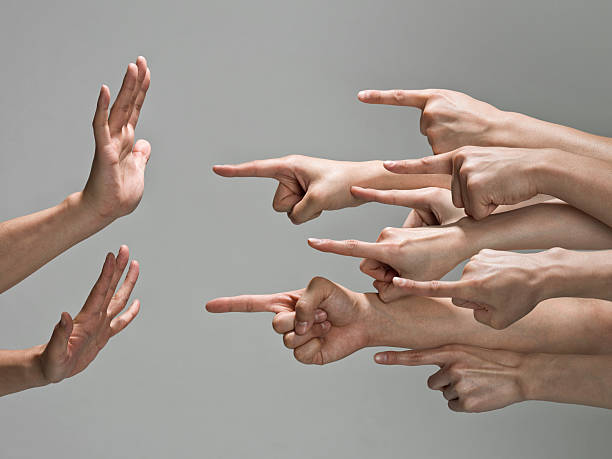
Judging others harms mainly us.

 Do you ever find yourself rolling your eyes over what someone does?  Or shaking your head in judgment of their choices or the way they are?    Or find yourself thinking or saying things like “You’re doing it all wrong!”, “He talks too much”, or “They’re way too indulgent with their kids.”

These kinds of gratuitous, self-righteous judgments, some would say, “are none of our business.”They have a certain “know-it-all-ness” to them; a “we know better” than others. Yet, little do we know or consider the reasons or contexts in which people act or make their decisions.   Nor do we account for our personal biases and prejudices.

            Moreover, such judgments can easily invoke resentment and push people away, and divert our attention from making better choices for ourselves.  In many respects, judging is a diversionary tactic that distracts us from taking stock of our lives and improving our own shortcomings.  And  it doesn’t change how people believe or act in any meaningful sense.  If anything, judging puts people on the defensive and their views become hardened.

            In short, no good comes from it!

         As a controller by nature, the judgment barrier has been an ongoing challenge for me to overcome.   It’s such an ingrained habit, that much of the time I am not aware that I’m judging.   It takes many forms; some overt, some subtle.   Criticizing, admonishing, shaming, being smug, dismissive, and sarcastic are a few prevalent ways we judge.  So, too, sneers and snide smiles and other body language convey judgment.    I’ve done them all.

         The thing is, many of my judgments have proved to be dead wrong.  During my first year of law school, I harshly judged one of my classmates while waiting for the instructor to arrive. The classroom had rows of desks tiered upward toward the back on rising levels. My classmate suddenly jumped on top of his desk in the rear and boldly walked on top of desks to the front of the room.

         Most classmates laughed loudly. Not me. I was very angry. I thought, “What a jerk and a-hole. All he wants is attention.” I didn’t want to have anything to do with him after that.

         Five years after we graduated law school this “jerk” became my most trusted friend and later was the best man at my wedding! He did continue to draw a lot of attention, though. He selflessly served as the Public Defender of Los Angeles County for over fifteen years, supervising over 700 attorneys, and was widely recognized for his efforts in helping reform state and national criminal justice systems.

         So I guess I misjudged! And the irony of it is not lost on me: his last name was Judge.  I miss him dearly.

         So, I often ask myself why do I continue to judge so much? What is my motive? Does it make me feel better or superior in some way? Maybe for a short moment, but it’s a sure sign of my lack of humility. I also ponder what purpose it serves. Do I think it will change or help the other person in some way? Sometimes I do, but it rarely does, if at all.  And no one’s ever thanked me for my judgments, that’s for sure!

         It has also occurred to me that my judging may be an indication of some shortcoming in myself. Concerning the incident with my law school classmate, for example, I was a very reserved, even shy person. Perhaps seeing someone be so bold, carefree, and “out there” accentuated my own insecurities.

         Above all, I believe to judge less, we need to be more accepting. When we accept people and things as they are, there is little need for us to judge them.

         Let’s begin the new year by letting go of judging!

            Here are a few Inquiries and Reflections that can help you do that:

            Make note of your judgments for a day, or even half a day.   Be sure to include the silent ones that you keep to yourself.         

           What feelings or beliefs are behind your judgments?  Do they serve any useful purpose?

           How often do you judge yourself?   What do you gain by it?  Are they the same kinds of things that you judge others by?

…………………………….

         In the meantime, Let It Go—and Accept “What Is!”

         Danny

*Part of this post was taken from my upcoming book, The Wave: Navigating Life’s Currents.”  Please leave your email address at info@losingcontrolfindingsrenity.com to receive special discount pricing when the book is published.

**If you enjoyed this post, please “like it” on your Facebook page and share it with others.



The Love Enabler Test!

Are You a Love Enabler?  It’s a less apparent form of love control.   In fact, you may not be aware that you are one or how much it can impact your love bond.

Love Enabling

When we continually give too much or do too much for our loved ones, we are usually trying to control them–and instead risk taking away from them.   Thus, a husband’s giving his wife a large allowance so she doesn’t have to work may result in his wife foregoing her own career ambitions.

Love enabling can also breed dissension.  For example, a wife who gets tired from constantly running errands and taking care of the personal needs of her husband may become resentful because she doesn’t have the time to take care of her own personal needs.   Further, her husband may similarly be resentful because he feels his wife is too intrusive.

In addiction environments, enabling frequently occurs when the mate or partner of an addict constantly “rescues” him, thus saving him from the adverse consequences of his destructive actions.     However, the rescuer usually does not realize that the only way the addict will be induced to seek treatment or help is by suffering the painful consequences of his or her actions.

Are You a Love Control Enabler? 

It is not always easy to determine whether someone is a love enabler because it is only natural to want to “give” and “do” things for the ones we love and care about.    There are no hard and fast rules.   It is usually a matter of degree and constancy.  There are, however, some probing inquiries or guide lines that can assist in the determination.

Love Enabling Guidelines

Answer these questions as truthfully as you can.

  1. Are your actions depriving your loved one of valuable learning experiences and a sense of self -reliance? I remember my aunt never being able or wanting to learn how to drive because my uncle drove her everywhere she wanted.    After he died, to our surprise, within a couple of months she learned how to drive.
  1. What is the real motive behind your action? It is easy to discount our real motives for “helping” our loved ones. Consider whether the main reason you are doing something for your partner is because you want to make it “easier” or “better” for yourself.   For example, you may repeatedly help your wife clear her clutter because you believe it will help her stop cluttering.    However, the underlying motive may be that living with clutter unsettles you.

In either case, your helping her may exacerbate the problem and impede her personal growth.  Why?  Because your assistance provides little or no incentive for her to deal with the clutter herself.  If you abstained, the clutter may pile up so much that even she can’t stand it anymore.  She may then start doing something about it and in the process gain the inner satisfaction and self-esteem that comes from taking care of her needs.

      3. Are you constantly trying to solve your loved one’s problems? If so, you are once again impeding his or her opportunities for personal growth, self-reliance, and inner satisfaction.

  1. Do you help because you want things done your way? Aside from depriving your loved one of valuable learning experiences, it usually means that you do not trust that he can do it properly himself, which can undermine his self-confidence.    Instead, try to be more humble.  There is more than one way of doing most things and there is no assurance that your way is the best or right way.   Most often, it is simply a way!

Some Valentine’s Day Challenges 

Consider accepting the following “love” challenges for Valentine’s Day and this month:

*Allow your loved one the dignity of solving his or her problems and challenges.

*Examine your real motives for wanting to “help” your loved one.

*Listen attentively to the concerns of your loved one—without adding your two cents. 

Please let me know of your love bond begins to glow brighter!

In the meantime, remember to

Let it Go–and Accept “What Is!”

Danny

*If you enjoyed this post, please “like” it on your Facebook page and share it with others.



Challenges of Practicing Acceptance in 2022

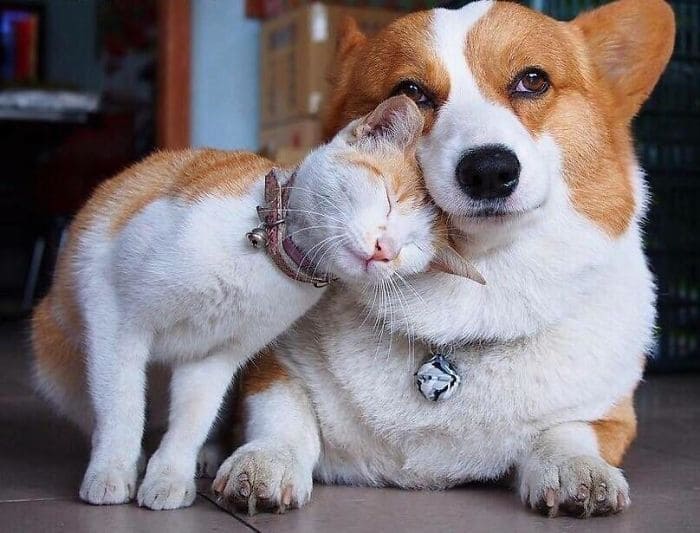
Photo of animals showing how to practice acceptance

How to Practice Acceptance

It seems like every day I am faced with unexpected situations and occurrences that need accepting.   Most are relatively minor disturbances, really, such as home delivery or installation times being changed at the last minute, a computer glitch or loss of Internet service when I am working to meet a deadline, or a driver cutting in front of me on the freeway without warning.

In such situations, if I forget that life is not governed by my desires and expectations—which I am still prone to do—I can easily get flustered, frustrated—and sometimes angry–until I remind myself that such annoyances are beyond my control, and that the best thing for my mental well-being is to accept “what is.”

I say this because even after having written a best-selling, award winning book on acceptance, practicing acceptance remains an ongoing, everyday challenge for me.  It requires my constant awareness whether I am controlling; knowing when I am powerless over changing people and situations; not being judgmental and smug; and not taking the disturbing words and actions of others too personally.

(The acceptance stories I share in my posts and in The Gifts of Acceptance offer guidance in dealing with  challenging acceptance situations that many of us regularly encounter.)

I am comforted that acceptance becomes easier and more natural with continued practice that changes our mental muscle memory—those deeply ingrained patterns and attitudes of judging, denying, resisting, expecting, and controlling.

Even incremental steps and partial successes in practicing acceptance make our lives easier.  And while practice may not make perfect, it does lead to improvement.

We all have our acceptance experiences—good and bad–and we can help and learn from one another by sharing them.   I hope you will consider sharing your acceptance stories with me and others this year at www.danielamiller.com.

In closing, like many, I am troubled by the divisiveness that confronts us as we enter 2022.  I strongly believe we need to practice acceptance more than ever.  I invite you to read “Acceptance Conversations as Peacemakers.

In the meantime, remember to

Let It Go—and Accept “What Is!” 

Danny

*You can read an excerpt of the new book I am writing, The Wave: Navigating Life’s Currents, here!

**If you found this post helpful, please “like” it your Facebook Page and share it with others.


The Illusions of High Expectations

The Illusions of High Expectations

When we expect too much of others, most often we are trying to change or control them in some manner.   And in doing so, by definition, we aren’t accepting them as they are.

Simply put,“When you expect, you can’t accept.”

The Illusions of High Expectations 

Many of us justify our expectations in the belief that we are “helping” others.   That we know what’s good or best for them.   But do we?

Aside from bordering on arrogance (and a shortage of humility), I have repeatedly found that I often don’t know what’s best for me, let alone others!   From mentoring others, I know I’m not alone in that.

Moreover, because such expectations place undue pressure on people to be other than who they are or do other than what they wish, resentment and fraying of relationships easily occur.

Who likes being told what to do or how to act or what’s best for them?  You are in effect telling them they are not “good enough.”

Upon closer (and a more honest) self-examination, it is more often the case that we feel we will be better off, or that our important “needs” will be met, if others act the way we want or expect them to.

This belief system warrants scrutiny.  It’s more illusion, than reality.

When our focus and reliance is too much on others—which is where our expectations direct us–we lose sight of what we can do to make things better for ourselves.   We thus risk stymieing our own growth and development.

In short, we give up the power to make our lives better. 

Piercing the Illusions

In The Gifts of Acceptance, I discuss tools and strategies in some detail for moderating expectations aimed at trying to change or control others.

Included are some interrelated self-queries that have helped me pierce the illusions of my expectations—particularly of loved ones, family, and close relationships–and in the process become more accepting of them:

*Are there any unfulfilled needs of mine underlying my expectations? 

*Can others realistically fulfill my needs—even if they wanted to?

*Will I truly be better off if others do or want as I expect? 

*Is my happiness or well-being that dependent on others?

I encourage you to make the same (or similar) queries.  Hopefully, they will help you release your expectations of others.

If you wish to explore this important subject further, below are four other posts that you may find helpful:

5 Ways High Expectations Hurt You

How to Lower Family Expectations

Tips for Letting Go of High Expectations

Let Go of Control by Moderating Expectations

In the meantime, remember to

Let It Go—and Accept “What Is!” 

Danny

*If you enjoyed this post, please “like” it on your Facebook page and share it with others.

My Personal Prayer for Acceptance

 For eighteen years, the Serenity Prayer has been my personal prayer and acceptance guide.

God, Grant Me the Serenity to Accept the Things I Cannot Change,

   Courage to Change the Things I Can, and

   The Wisdom to Know the Difference.

The first thing I do upon awakening in the morning is to get on my knees, place my hands on my bed, and recite these poetic phrases.

 I then go outside and recite the Prayer again as I take in the beauty all around me.

This ritual brings me a sense of comfort and well-being as I start my day.  It balances and grounds me as I deal with the day’s challenges and uncertainties.

I also love writing and sharing about the Serenity Prayer.  In Losing Control, Finding Serenity I devote a chapter explaining how the Prayer helps remove the unhealthy compulsion to control.  In The Gifts of Acceptance, I include a chapter explaining how I apply the three phrases of the Prayer to specific situations and circumstances.

In this blog, I shared “How the Serenity Prayer Helps with the Coronavirus” and some ideas about “Optimizing the Benefits of the Serenity Prayer.”

Using the Serenity Prayer As an Acceptance Guide 

I encourage you to try using the Serenity Prayer as an acceptance guide.   If it feels foreign to you or seems simplistic, start with unimportant matters in the beginning.   I think you will find that it is very soothing to just state the words aloud.   It takes the edge off things for me, and I don’t think I’m alone in that.

As you begin experiencing the comfort and serenity that comes with accepting the things you cannot change, you will feel more confident in using the Serenity Prayer in times of greater struggles and challenges.

Please share  your personal stories about the Serenity Prayer; how it has helped you; how and when you use it; and how it has changed your life.

In the meantime, remember to

Let It Go—and Accept “What Is”! 

Danny

*If you enjoyed this post, please “like” it on your Facebook page and share it with others.

The Genesis of The Gifts of Acceptance

 The genesis of The Gifts of Acceptance:Embracing People and Things as They Are began with a short blog post I wrote almost 10 years ago titled “5 Good Reasons for Accepting People As They Are.”

The post quickly attained coveted first page appearance for Google searches on acceptance, and retains its high  ranking to this day.  The response motivated me to continue writing about the many aspects of the acceptance dynamic over the next five years, eventually culminating in the publication of the book in 2018.

The book won multiple book awards and has been an Amazon best seller now going on three years, for which I am deeply grateful.

It has been even more gratifying to see how the need for acceptance in our lives and the world has resonated so strongly with readers from around the world, as well as with reviewers and media hosts.    That need is greater and more challenging than ever before, particularly in the highly divisive social and political arenas.

I am republishing that first acceptance post today and will publish others in the coming weeks and months.   I hope you find them helpful!

5 Good Reasons for Accepting People as They Are

In the meantime, remember to

Let It Go–and Accept “What Is!”

Danny

*If you found this post helpful, please “like” it on your Facebook page and share it others.

Truths and Tips #9: Letting Go of Control

Q: What is wrong with trying to control the circumstances of our lives?

A: It’s important to distinguish between those circumstances that are set or fixed and those that are not.  There is a broad range of events and circumstances that we cannot change or control:  computer glitches, equipment failures, flight cancelations, and bureaucratic inefficiencies, to name just a few.

We also can’t change people’s basic natures and ways–as much as we may wish to. (more…)

Truths and Tips #8: Letting Go of Control

      Q:  Romantic relationships can be stressful, especially when we try to “improve” or change our partner’s behavior and habits.  How can accepting our loved one for who they are enhance our love bond? 
A: I don’t think any of us like being told by our mates how we should act or behave, or to be someone other than whom we are.  Such pressure makes us feel “less than” or not good enough.   Who want to feel that in matters of the heart? (more…)

Truths and Tips #7: Letting Go of Control

Q: How can letting go of control allay some of the fear and anxiety associated with the current economic uncertainty brought about by Covid-19? 

A: The feeling of being powerless over our finances (and job prospects) can be extremely discomfiting and stressful–perhaps more so now than ever.   Our fear and anxiety compel us to control more.

However, when we try to control too much, we are putting “blinders” on ourselves, and literally can’t see the options and opportunities that could make life (and finances) better for us. (more…)

Truths and Tips #6: Letting Go of Control


Q: Is it difficult to let go of control?  Where does one begin? 

A:   Letting go of control can be extremely difficult because we have been raised with control; it is taught to us and all around us.  Our parents, bosses, teachers, and religious leaders—much of what they do is control based.

Control is thus what we have come to know. It is what we think works for us (which I strongly refute in Losing Control, Finding Serenity).   As such, it is a deeply engrained habit—one in which we feel very uncomfortable and even insecure in giving up.

The first step in changing the propensity to control is to become better aware of your controlling ways.  Many of us have little inkling of how much, how often, and in what we ways we try to control people and things around us.  We can see it in others, but much less so in ourselves.

Control can be subtle.   Suggesting or reminding too frequently, encouraging too strongly, or preaching too intently are common control devices.  Enabling our children and loved ones is another.

The “decontrol” process starts with an honest inventory of your controlling patterns. To do this, you have to reign in your ego and muster the courage to see yourself as you are—blemishes and all.

For example, are you typically judgmental? Highly opinionated? Overly critical? Too aggressive?

Questions to Ponder:

“Can you identify two ways you controlled today?”

“Are you fearful of what might happen if you let go of a pressing matter for a day?

Please share your answers with me!

In the meantime, remember to

Let It Go—and Accept “What Is!” 

Danny

*If you enjoyed this post, please “like” it on your Facebook page and share it with others.


         Truths and Tips #5: Letting Go of Control

Q: How does our need to control stiffen life’s possibilities? 

A:   When we focus too intently on trying to control or change people and things we are putting “blinders” on our selves, and literally can’t see the options and opportunities that are before us.  We are too closed-minded and not open to new ideas and ways of doing things.

Life is in a constant state of motion; fluid, shifting, changing, always moving.   As such, it is impossible to hold on to it—and that is precisely what controlling actions attempt to do.   The result is much the same as if you tried to grab on to a rapidly moving conveyor belt; you may slow it down temporarily, but you would ultimately get burned or dragged along!

So let go of control and expand life’s possibilities!

Questions to Ponder: 

Q: “Have you ever felt the freedom and lightness of ‘going with the flow?’”

Q:  “Was there a sense of ‘letting go’ associated with it?”

Please share your responses with me and others!

In the meantime, remember to

Let It Go—and Accept “What Is!”

Danny

*If you found this post helpful, please “like” it on your Facebook Page and share it with others.

Truths and Tips #4: Letting Go of Control

Q: What does a person gain when they relinquish control? 

A: They gain greater vision and clarity—and ultimately greater serenity.

Relinquishing control (or, as I sometimes say, losing control) frees life’s “natural currents” and allows us to engage those currents in a more intuitive and expansive manner, thereby enhancing our life paths.   In doing so, it reduces stress and anxiety;  lessens our worries; fosters intimacy and closer bonds with loved ones, family and friends; expands our creative horizons; and, increases efficiency and productivity–and enjoyment–at work.

The intensity of our controlling actions obstructs our vision and we are unable to “see” the options and make the choices that would vastly improve our lives—emotionally, spiritually, creatively, and even financially.   Instead we are immersed in our fears and worries because of our not accepting life as it is.

Questions to ponder: 

Q: “Have troublesome issues ever  improved when you surrendered control?”

Q: “Have meaningful choices appeared when you stopped pressing?”

Please share your responses with me and others!

In the meantime, remember to

Let It Go—and Accept “What Is!” 

Danny

*If you found this post helpful, please “like” it on your Facebook Page and share it with others.