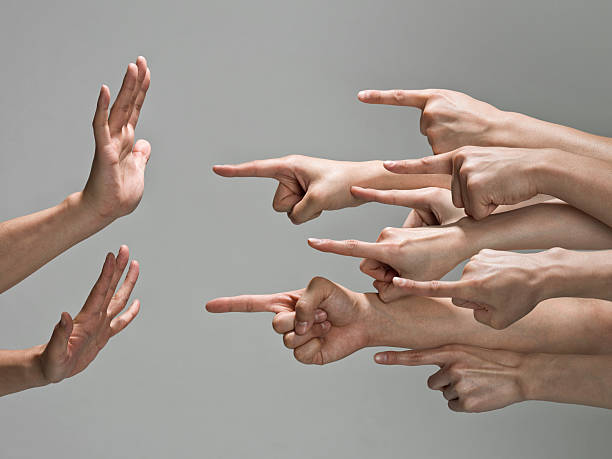

Let Go of Judgment–No Good Comes From It!

Judging others harms mainly us.

 Do you ever find yourself rolling your eyes over what someone does?  Or shaking your head in judgment of their choices or the way they are?    Or find yourself thinking or saying things like “You’re doing it all wrong!”, “He talks too much”, or “They’re way too indulgent with their kids.”

These kinds of gratuitous, self-righteous judgments, some would say, “are none of our business.”They have a certain “know-it-all-ness” to them; a “we know better” than others. Yet, little do we know or consider the reasons or contexts in which people act or make their decisions.   Nor do we account for our personal biases and prejudices.

            Moreover, such judgments can easily invoke resentment and push people away, and divert our attention from making better choices for ourselves.  In many respects, judging is a diversionary tactic that distracts us from taking stock of our lives and improving our own shortcomings.  And  it doesn’t change how people believe or act in any meaningful sense.  If anything, judging puts people on the defensive and their views become hardened.

            In short, no good comes from it!

         As a controller by nature, the judgment barrier has been an ongoing challenge for me to overcome.   It’s such an ingrained habit, that much of the time I am not aware that I’m judging.   It takes many forms; some overt, some subtle.   Criticizing, admonishing, shaming, being smug, dismissive, and sarcastic are a few prevalent ways we judge.  So, too, sneers and snide smiles and other body language convey judgment.    I’ve done them all.

         The thing is, many of my judgments have proved to be dead wrong.  During my first year of law school, I harshly judged one of my classmates while waiting for the instructor to arrive. The classroom had rows of desks tiered upward toward the back on rising levels. My classmate suddenly jumped on top of his desk in the rear and boldly walked on top of desks to the front of the room.

         Most classmates laughed loudly. Not me. I was very angry. I thought, “What a jerk and a-hole. All he wants is attention.” I didn’t want to have anything to do with him after that.

         Five years after we graduated law school this “jerk” became my most trusted friend and later was the best man at my wedding! He did continue to draw a lot of attention, though. He selflessly served as the Public Defender of Los Angeles County for over fifteen years, supervising over 700 attorneys, and was widely recognized for his efforts in helping reform state and national criminal justice systems.

         So I guess I misjudged! And the irony of it is not lost on me: his last name was Judge.  I miss him dearly.

         So, I often ask myself why do I continue to judge so much? What is my motive? Does it make me feel better or superior in some way? Maybe for a short moment, but it’s a sure sign of my lack of humility. I also ponder what purpose it serves. Do I think it will change or help the other person in some way? Sometimes I do, but it rarely does, if at all.  And no one’s ever thanked me for my judgments, that’s for sure!

         It has also occurred to me that my judging may be an indication of some shortcoming in myself. Concerning the incident with my law school classmate, for example, I was a very reserved, even shy person. Perhaps seeing someone be so bold, carefree, and “out there” accentuated my own insecurities.

         Above all, I believe to judge less, we need to be more accepting. When we accept people and things as they are, there is little need for us to judge them.

         Let’s begin the new year by letting go of judging!

            Here are a few Inquiries and Reflections that can help you do that:

            Make note of your judgments for a day, or even half a day.   Be sure to include the silent ones that you keep to yourself.         

           What feelings or beliefs are behind your judgments?  Do they serve any useful purpose?

           How often do you judge yourself?   What do you gain by it?  Are they the same kinds of things that you judge others by?

…………………………….

         In the meantime, Let It Go—and Accept “What Is!”

         Danny

*Part of this post was taken from my upcoming book, The Wave: Navigating Life’s Currents.”  Please leave your email address at info@losingcontrolfindingsrenity.com to receive special discount pricing when the book is published.

**If you enjoyed this post, please “like it” on your Facebook page and share it with others.


Challenges of Practicing Acceptance in 2022

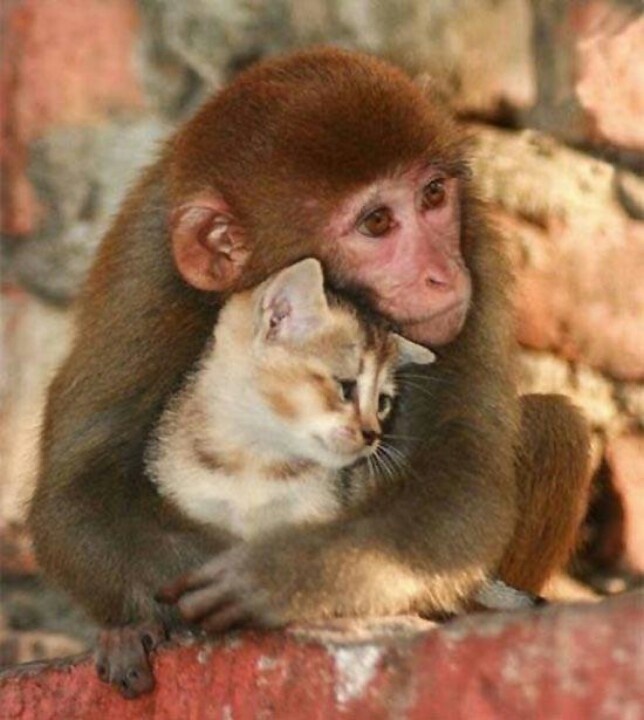
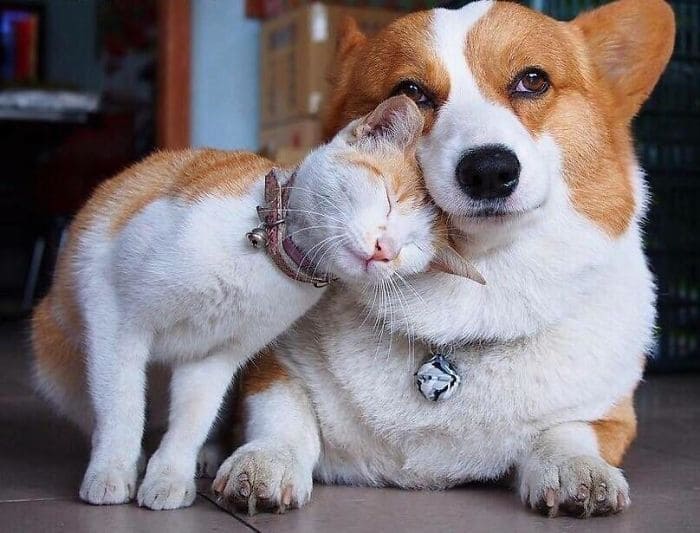
Photo of animals showing how to practice acceptance

How to Practice Acceptance

It seems like every day I am faced with unexpected situations and occurrences that need accepting.   Most are relatively minor disturbances, really, such as home delivery or installation times being changed at the last minute, a computer glitch or loss of Internet service when I am working to meet a deadline, or a driver cutting in front of me on the freeway without warning.

In such situations, if I forget that life is not governed by my desires and expectations—which I am still prone to do—I can easily get flustered, frustrated—and sometimes angry–until I remind myself that such annoyances are beyond my control, and that the best thing for my mental well-being is to accept “what is.”

I say this because even after having written a best-selling, award winning book on acceptance, practicing acceptance remains an ongoing, everyday challenge for me.  It requires my constant awareness whether I am controlling; knowing when I am powerless over changing people and situations; not being judgmental and smug; and not taking the disturbing words and actions of others too personally.

(The acceptance stories I share in my posts and in The Gifts of Acceptance offer guidance in dealing with  challenging acceptance situations that many of us regularly encounter.)

I am comforted that acceptance becomes easier and more natural with continued practice that changes our mental muscle memory—those deeply ingrained patterns and attitudes of judging, denying, resisting, expecting, and controlling.

Even incremental steps and partial successes in practicing acceptance make our lives easier.  And while practice may not make perfect, it does lead to improvement.

We all have our acceptance experiences—good and bad–and we can help and learn from one another by sharing them.   I hope you will consider sharing your acceptance stories with me and others this year at www.danielamiller.com.

In closing, like many, I am troubled by the divisiveness that confronts us as we enter 2022.  I strongly believe we need to practice acceptance more than ever.  I invite you to read “Acceptance Conversations as Peacemakers.

In the meantime, remember to

Let It Go—and Accept “What Is!” 

Danny

*You can read an excerpt of the new book I am writing, The Wave: Navigating Life’s Currents, here!

**If you found this post helpful, please “like” it your Facebook Page and share it with others.


The Wave: Navigating Life’s Currents


I wanted to acquaint you with a new book I am writing.   Its title is The Wave: Navigating Life’s Currents.

The mystery, randomness, and freeness of ocean waves  (high and low tides, riptides and undertows, crests, swells, murky waters, etc.) serve as a metaphor for an expansive life path that closely parallels surfing or riding waves.

The book explores how we can meaningfully navigate the currents in all aspects of our lives—work, love, friendships, parenting, aging, sports and performance, and creative endeavors, and enjoy the many gifts that follow.

Formidable wave “barriers” such as control, judgment, fear, denial, high expectations, limited thinking, and unclear boundaries are examined together with wave “enhancers” such as trust, acceptance, humility, and intuition.

Below is an excerpt from The Wave.  I welcome your comments, suggestions, and experiences about riding the wave.

If you wish to be kept abreast of the book’s progress and receive future excerpts, please email info@losingcontrolfindingserenity.com

And remember to,

Let It Go-and Accept “What Is!” 

Danny

………………………….

THE WAVE

” When you observe nature for any period, you can sense the presence of a natural process or rhythm.  You may notice it in the way leaves fall from a tree, gently floating down to form eloquent patterns on the grass.  Or as I first did, watching the way ocean waves build, crest, flow and change course in an endless variety of movements.

At such moments, we sense that the life force or energy we are experiencing is unpredictable and unknowable yet has an innate and vast intelligence all its own, one well beyond our capacity to understand.

We also realize that, as mysterious as this universal rhythm is, we are a part of it.

I refer to this rhythm as the Wave or life’s currents.  It is intrinsically truthful and cannot be controlled or manipulated.  It just “is”, and though it may feel ancient, it is always present.

There is a noticeable cohesiveness to it; a harmony of co-existence; a wisdom and mystery waiting to be discovered.

Ralph Waldo Emerson poetically described this rhythm of truth as:“There is a guidance for each of us, and by lowly listening we shall hear the right word…Place yourself in the middle of the stream of power and wisdom which flows into you as life…then you are without effort impelled to truth, to right and a perfect contentment.”

Before that day at the beach many years ago, I had no inkling of such a guidance.   I had been too engulfed in futile battles and engagements.

Today I feel the comfort of its presence when I sit in my back yard early mornings, listening to the cheerful medleys of song birds and the cooing of doves, watching the branches of my magnificent olive tree gently swaying as they reach toward the sky, and the ground squirrels scampering around its limbs.

Indeed, I feel it in the stillness and solitude of nature most anywhere; when I hug an oak tree; inhale the strong  aroma of eucalyptus leaves; or watch colorful humming birds darting from flower to flower.

I also feel it most of the time when I’m painting or channeling verses that occasionally lead to poems.

I have come to learn that the more I am able to live my life in harmony with this natural rhythm, or ride the Wave, the more I am able to discover solutions to my most pressing and troubling concerns and enjoy the unplanned, spontaneous moments in life and marvel at the beauty all around me.

That is not to say that the rides are always smooth or easy, or without low tides and riptides.   I tumble often.   The difference now is that it is not for as long or as severe because I am more aware of how and why I slipped and have learned some ways to return.

Like Emerson, I believe “there is a guidance for each of us.” It is up to me to lowly listen and place myself in the middle of the stream of power and wisdom.  Writing this book is part of my endeavor to do that and I hope encourage readers to discover their waves.

It also is to remind me that I am not the only wave in the ocean and that I need to accept, respect, and honor the waves of others, lest I find myself “making waves!”

As expressed earlier, for me the metaphor that comes closest to the vision of aligning with this natural rhythm are ocean waves.  The mystery, randomness, and freeness of waves closely parallel the expansive life path I am seeking.

Think about bodysurfing in the challenges you face.  There will be a great variety of waves, some building up quickly and crashing mightily, others cresting more gradually and lasting longer.  Some will simply vanish.   Many will change course.

We have no control or influence on their patterns, paths, and frequencies; we can only be patient and alert as we await them.

As soon as one crests near us, we extend our arms, swim a few strokes, and try to glide with it.  We make adjustments along the way, if needed.  If we encounter turbulence, which we often will, we can protect ourselves; for example, wrapping our hands around our head if we are forcefully thrown asunder, or pulling out of the currents or diving beneath the waves.

Much of the time, though unpredictable, the ride will be smoother and often enjoyable, and at times even exhilarating.  And the lows not as severe or as long.

In a similar vein, consider how experienced surfers engage and ride waves.   First, they patiently observe how the waves are building and developing near them; when they sense there may be a good–and safe—one to ride, they paddle toward it, aligning their boards with the cresting wave; if it looks too strong or dangerous, they pull out and wait for another; if it looks good, they quickly paddle some more, hop on their board, and begin their ride.

Surfers accept that the waves, and not they, are in control; that they can easily be sent flying off their boards into crashing waters if they resist their flow.  They know, however, that they can enjoy exhilarating rides by aligning, and gliding, with the waves.

It is easy to discern the practices and attitudes that are essential for skillfully and safely surfing or riding waves: awareness, observation, acceptance, patience, humility, trust, instincts and intuition, and the willingness to surrender or let go of control.

It’s not as easy to discern the practices and attitudes that obstruct riding waves: control, arrogance, high expectations, judgment, denial, limited thinking, and fear.

We will see in the pages ahead that the very same factors, or wave “enhancers”and “barriers,” strongly impact how we  navigate our currents in work, love, friendships, parenting, aging, sports and performance, and creative endeavors.”

END OF EXCERPT

*If you enjoyed the excerpt, please share it with others and “like” it on your Facebook page.


My Personal Prayer for Acceptance

 For eighteen years, the Serenity Prayer has been my personal prayer and acceptance guide.

God, Grant Me the Serenity to Accept the Things I Cannot Change,

   Courage to Change the Things I Can, and

   The Wisdom to Know the Difference.

The first thing I do upon awakening in the morning is to get on my knees, place my hands on my bed, and recite these poetic phrases.

 I then go outside and recite the Prayer again as I take in the beauty all around me.

This ritual brings me a sense of comfort and well-being as I start my day.  It balances and grounds me as I deal with the day’s challenges and uncertainties.

I also love writing and sharing about the Serenity Prayer.  In Losing Control, Finding Serenity I devote a chapter explaining how the Prayer helps remove the unhealthy compulsion to control.  In The Gifts of Acceptance, I include a chapter explaining how I apply the three phrases of the Prayer to specific situations and circumstances.

In this blog, I shared “How the Serenity Prayer Helps with the Coronavirus” and some ideas about “Optimizing the Benefits of the Serenity Prayer.”

Using the Serenity Prayer As an Acceptance Guide 

I encourage you to try using the Serenity Prayer as an acceptance guide.   If it feels foreign to you or seems simplistic, start with unimportant matters in the beginning.   I think you will find that it is very soothing to just state the words aloud.   It takes the edge off things for me, and I don’t think I’m alone in that.

As you begin experiencing the comfort and serenity that comes with accepting the things you cannot change, you will feel more confident in using the Serenity Prayer in times of greater struggles and challenges.

Please share  your personal stories about the Serenity Prayer; how it has helped you; how and when you use it; and how it has changed your life.

In the meantime, remember to

Let It Go—and Accept “What Is”! 

Danny

*If you enjoyed this post, please “like” it on your Facebook page and share it with others.

The Genesis of The Gifts of Acceptance

 The genesis of The Gifts of Acceptance:Embracing People and Things as They Are began with a short blog post I wrote almost 10 years ago titled “5 Good Reasons for Accepting People As They Are.”

The post quickly attained coveted first page appearance for Google searches on acceptance, and retains its high  ranking to this day.  The response motivated me to continue writing about the many aspects of the acceptance dynamic over the next five years, eventually culminating in the publication of the book in 2018.

The book won multiple book awards and has been an Amazon best seller now going on three years, for which I am deeply grateful.

It has been even more gratifying to see how the need for acceptance in our lives and the world has resonated so strongly with readers from around the world, as well as with reviewers and media hosts.    That need is greater and more challenging than ever before, particularly in the highly divisive social and political arenas.

I am republishing that first acceptance post today and will publish others in the coming weeks and months.   I hope you find them helpful!

5 Good Reasons for Accepting People as They Are

In the meantime, remember to

Let It Go–and Accept “What Is!”

Danny

*If you found this post helpful, please “like” it on your Facebook page and share it others.

Truths and Tips #9: Letting Go of Control

Q: What is wrong with trying to control the circumstances of our lives?

A: It’s important to distinguish between those circumstances that are set or fixed and those that are not.  There is a broad range of events and circumstances that we cannot change or control:  computer glitches, equipment failures, flight cancelations, and bureaucratic inefficiencies, to name just a few.

We also can’t change people’s basic natures and ways–as much as we may wish to. (more…)

Truths and Tips #8: Letting Go of Control

      Q:  Romantic relationships can be stressful, especially when we try to “improve” or change our partner’s behavior and habits.  How can accepting our loved one for who they are enhance our love bond? 

A: I don’t think any of us like being told by our mates how we should act or behave, or to be someone other than whom we are.  Such pressure makes us feel “less than” or not good enough.   Who want to feel that in matters of the heart? (more…)

Truths and Tips #7: Letting Go of Control

Q: How can letting go of control allay some of the fear and anxiety associated with the current economic uncertainty brought about by Covid-19? 

A: The feeling of being powerless over our finances (and job prospects) can be extremely discomfiting and stressful–perhaps more so now than ever.   Our fear and anxiety compel us to control more.

However, when we try to control too much, we are putting “blinders” on ourselves, and literally can’t see the options and opportunities that could make life (and finances) better for us. (more…)

Overcoming Denial in The Time of Coronavirus

(8th in an ongoing series on “Acceptance in The Time of Coronavirus”)

Overcoming denial is a prerequisite to acceptance.  You can’t accept “what is” when you are unaware, can’t, or refuse to “see” the underlying reality of the situation.

This is perhaps even more true in The Time of Coronavirus. 

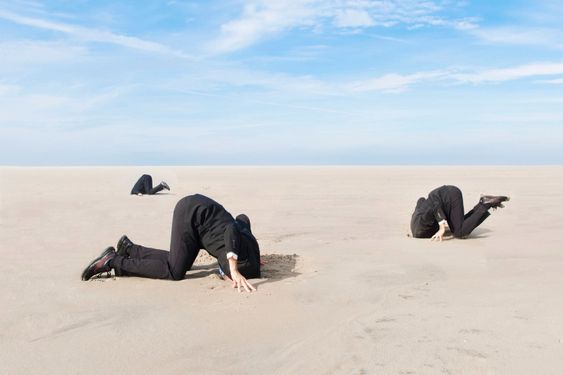
Denial is not just denying or rejecting a certain state of affairs.  Its subtler forms include wishful thinking, kidding ourselves, underestimating things, avoidance, or simply choosing to turn a blind eye.

I feel much of our responses to Covid 19 are of that nature. At the beginning, it was all too easy for me to discount or minimize its spread and impact on our lives.  And I am quite sure that I was not alone in believing that.

I frequently heard (and still do) what I consider denial based comments about Covid 19, such as the following:

“It’s not that harmful—the flu kills more people each year”

“They will soon find a vaccine”

“The virus will soon run its course”

“I’m young and in good health”

“Only old people are at risk”

“People are just running scared”

“It’s all politically based”

And the highly optimistic denial: “Things are getting much better now”

The problem is that when you are in denial of the underlying issue or problem,

You can’t make the choices and pursue the paths that can alleviate the very problems you are denying. 

Indeed, you risk making them worse!

A prime example is the early opening of restaurants, bars, gyms, and other gathering places by many states and local governments.   In almost every instance, there has been a huge spike in cases, deaths, and shortage of hospital and ICU beds.

I’ve previously offered ways to let go of denial in other contexts. (See my post, “Letting Go of Denial”).   One vital key is worth repeating:

We must be able to dispassionately see the “truth” and then have the courage and wherewithal to act upon it. 

I understand that people will see different versions of the truth and/or may choose to act in different ways upon it, especially in these highly divisive times.

Nonetheless, I encourage you to at least be willing to reexamine your deeply ingrained beliefs in order to gain a greater awareness of when, how, and what you may be denying in The Time of Coronavirus.   Remember, too, that when you deny less, you accept more, and will have greater serenity even during turbulent times.

In the meantime, remember to

Let It Go—and Accept “What Is!” 

Danny

* To help make The Gifts of Acceptance and Losing Control, Finding Serenity available to more people during the coronavirus crisis, I have lowered their ebook prices to $2.99.

**If you enjoyed this post, please “like” it on your Facebook page and share it with others.

Taking Stock in The Time of Coronavirus

                (7th in an ongoing series on “Acceptance in The Time of Coronavirus”)

The other day as I was sorting through some books that had accumulated on my small bedside table, I came across a “dream catcher” journal that someone had given me sixteen years ago for my 60th birthday.

Even though the journal had remained on a table shelf for all these years, I had only written a few entries. Most notable among them was a statement in which I desired to “live a whole, meaningful, free, and engaging life, and to share my wisdom with others.”

I felt heartened that I had made good progress toward achieving that goal.

Interestingly, the very next entry was a two-page assessment of things I liked about myself—my attributes, if you will—and those that I didn’t and wanted to change, improve upon, or remove.  The latter included being less critical of others, dealing with my anger early on, and not rushing so much.

It thus occurred to me that to effectively strive toward a life that is more fulfilling and meaningful, it is essential to first “take stock” of where and how we are at the moment.

A silver lining of the Covid 19 pandemic is that it provides us with a unique opportunity to do that.  There certainly is no shortage of time for most of us to try!

In fact, when you think about it, the immense challenges and hurdles we face in The Time of Coronavirus—emotionally, spiritually, physically and financially–compel us to take such action if we wish to avoid despair and the debilitating feelings of helplessness and hopelessness.

I thus encourage you to start by making a personal accounting of yourself and your life.

In doing so, consider where you feel you fall short.  What things hold you back? What do you like about yourself and don’t you like about yourself?  What behavior makes you feel bad or guilty?What would you like to do better?  What things no longer serve you well?   And so on.

You will likely find certain recurring themes and impediments that consistently undermine your overall well-being.  Try to hone in on them one at a time, asking yourself this very simple, but pertinent question:

“How’s that working for me?”

Your answer will bring the issue front and center and allow no room for convenient excuses or rationalizations.  It can also motivate positive changes.

In your personal assessment, you will discover certain positive qualities and traits that you may not have been fully aware of, dismissed, or downplayed.  It’s important to remember that they are vital parts of who you are and you should give them their just due.   Your attributes play an important role in attaining the life you want.

It is also instructive to ponder the following question from the chapter “Discovering and Accepting Who We Are” in The Gifts of Acceptance:

What do I need to change or ‘become’ in order to feel better about myself?” 

I encourage you to envision, reflect, meditate and write about what these things may be and how doing them might make you feel.  Then start doing them.

But do them without expectations or self-judgment.   And be grateful for partial successes, viewing setbacks merely as opportunities for further growth.

As you progress, the healing light of awareness will shine brightly on you during The Time of Coronavirus—and after, making it easier to choose what and who you want to become.

In the meantime, remember to

Let It Go—and Accept “What Is!” 

Danny

*If you liked this post, please “like” it on your Facebook page and share it with others.

**To help make The Gifts of Acceptance and Losing Control, Finding Serenity available to more people during The Time of Coronavirus I have lowered their ebook prices to $2.99


Letting Go of Judgment in The Time of Coronavirus

  Letting Go of Judgment in The Time of Coronavirus 

(6th in an ongoing series on “Acceptance in The Time of Coronavirus“)

I’ve always struggled with being too judgmental of others.  I’ve worked a lot on being less so, but it takes constant awareness—not only that I’m judging, but also how it impacts my overall well being and serenity. (More on that later)

I’ve noticed that my inclination to judge others has risen in The Time of Coronavirus. It is likely due to my having greater “dis-ease” and impatience these days—and sometimes getting agitated over little things.  (See my post, “Accepting Agitated People in The Time of Coronavirus”)

As a result, I’m more likely to judge or question why people are doing or acting the way they do.   I forget that these are not normal times, and most people are often not acting “normally.”

A recent example is when I reacted strongly when a good friend asked me to share a video with my friends in which a disgruntled scientist made some disparaging remarks about a well known scientist who has played a prominent public role in combating the COVID 19 Pandemic.

After viewing the video, I had doubts about the veracity of some of its accusatory statements.  I found several articles that provided evidence disputing the scientist’s main claims and admonished my friend about promoting the video to his friends without first fact checking the claims.

I sent him the articles, but that didn’t defray him.  He was convinced about the merits–and adamant–about what he was doing.

The truth of the matter is that I judged my friend harshly for his beliefs and actions.  I felt the video was untruthful and wanted him to stop—signs of a true controller and judger!

When I later thought about my actions, certain things about judging became clearer to me.

*Most judgments serve no real purpose or benefit.  It’s unlikely to change the way people are or act.  If anything, it puts them on the defensive and they are likely to resist and dig in harder.

That doesn’t mean we shouldn’t express our views and beliefs on matters that are important to us, but rather to not dismiss or disparage others’ views without first making an effort to listen and hear them out.  (See my post, “Acceptance Conversations as Peacemakers”)

*We are not accepting others for who and how they are.

I didn’t have to approve or condone what my friend was saying or doing, but I should have accepted he had the right to express his own views and make his own choices, provided they didn’t harm me or those I care about.

The short of it is,

When we judge, we can’t accept. 

*We are often being righteous and arrogant. There is a certain “know-it-all-ness” when we judge.  We believe we know better than others and what the “real” truth is.   However, we easily disregard our own personal biases.  I certainly was that way with my friend.

In deed, I don’t think

A judger has ever been accused of having too much humility!

Even when we wish to judge less, we are often unaware that we are in fact judging.   Judging takes many forms.  Criticism, curtness, withdrawal,  smugness, and having unreasonable expectations are just a few of the ways we voice our judgments.

In many ways, judging is a counterproductive diversionary tactic.  It diverts us from taking stock of those parts of us, especially our shortcomings, that don’t serve us well.  It further diverts us from making an effort to improve upon them.

At its core, judging is a controlling mechanism that harms primarily ourselves.    

I thus encourage you to temper your judgments and try to be more understanding and tolerant of others.   In doing so, you will control less and accept more, and thereby enjoy greater peace and serenity in The Time of Coronavirus—and afterwards, as well!

In the meantime, remember to

Let It Go—and Accept “What Is!” 

Danny

*If you enjoyed this post, please “like” it on your Facebook page and share it with others.

**To help make The Gifts of Acceptance and Losing Control, Finding Serenity available to more people, I have lowered their ebook prices to $2.99


Overcoming “Lulls” and “Lows” in The Time of Coronavirus

(5th in an ongoing series on “Acceptance in The Time of Coronavirus“) 

I don’t know about you, but its easy for me to fall into a “lull” and “low” during The Time of Coronavirus.

Every day seems the same, yet I feel different almost every day. 

Same in the sense I have a lot of time on my hands most days and am restricted in movement, engagement, and enjoyment of what I like to do, especially playing tennis.

Different because I don’t know how I will feel until I get out of bed and begin my day.   Some days I feel calm, relaxed and productive.  Others anxious and antsy.   And unfortunately, a good night’s sleep isn’t necessarily a harbinger of positive thoughts, feelings, and energy.

And some days, like today, I feel a “lull” and “low”–and lethargic.  My body didn’t feel right this morning.   I wasn’t sure if I was coming down with something.  Who Knows? Maybe even the dreaded Covid-19.  Fear is at the forefront these days.  (See my post, “Dealing with Fear in The Time of Coronavirus”)

You may relate to what I’m talking about.   If so, I would like to share some simple things that helped me feel much better as the day progressed.    I hope they will help you, as well.

I reached out to a friend to see how he was doing. That wasn’t easy for me because I really didn’t feel like speaking to anyone. But I knew from past experience that the best way for me to get out of my head’s “negative” thinking was to see how others are doing and lend a good ear. My friend greeted me warmly and we shared some insights and “what we were doings” during The Time of Coronavirus.  We even had a few good laughs.    The conversation lightened my spirits, and then,

I took a “nature walk” around my neighborhood. It’s wonderful springtime here in California.   Why not enjoy “the beauty all around me.”  The blooming roses and irises.  The bright blue sky.  And the cheerful music of birds. Have you noticed lately that the birds seem happier than ever?  The doves even more peaceful?  And the ground squirrels playfully scampering around?

Is it possible they know something that we don’t?

Or, maybe it’s that they know “less” than we do–and are happier because of it? 

Whatever the reason, it was a real blessing to be able to share their space with them.

I’ve heard it said that we are only a guest of nature, and I welcomed the invitation.

I felt so much lighter, and then

I decided to write this post. I thought that others—maybe even you—have experienced similar lulls and lows during The Time of Coronavirus and my sharing  today’s experiences might ease their discomfort.

Quite honestly, just that thought lifted my spirits considerably.   And the actual writing—this very writing—helps me a lot.

I gain needed awareness, clarity—and acceptance. 

I encourage you try these things when you feel a lull or low.  (The writing part can be some basic journaling.) Please also share your  experiences and ideas about dealing with lulls and lows in The Time of Coronavirus. It would be helpful to me and I know others.

(You can read my earlier post, “Accepting “Lulls” and “Lows” for some other suggestions on this subject.)

In the meantime, remember to

Let It Go!—and Accept “What Is!” 

Danny

*If you enjoyed this post, please “like” it on your Facebook page and share it with others.

**To help make The Gifts of Acceptance and Losing Control, Finding Serenity available to more people, I have lowered their ebook prices to $2.99