The Wave: Navigating Life’s Currents


I wanted to acquaint you with a new book I am writing.   Its title is The Wave: Navigating Life’s Currents.

The mystery, randomness, and freeness of ocean waves  (high and low tides, riptides and undertows, crests, swells, murky waters, etc.) serve as a metaphor for an expansive life path that closely parallels surfing or riding waves.

The book explores how we can meaningfully navigate the currents in all aspects of our lives—work, love, friendships, parenting, aging, sports and performance, and creative endeavors, and enjoy the many gifts that follow.

Formidable wave “barriers” such as control, judgment, fear, denial, high expectations, limited thinking, and unclear boundaries are examined together with wave “enhancers” such as trust, acceptance, humility, and intuition.

Below is an excerpt from The Wave.  I welcome your comments, suggestions, and experiences about riding the wave.

If you wish to be kept abreast of the book’s progress and receive future excerpts, please email info@losingcontrolfindingserenity.com

And remember to,

Let It Go-and Accept “What Is!” 

Danny

………………………….

THE WAVE

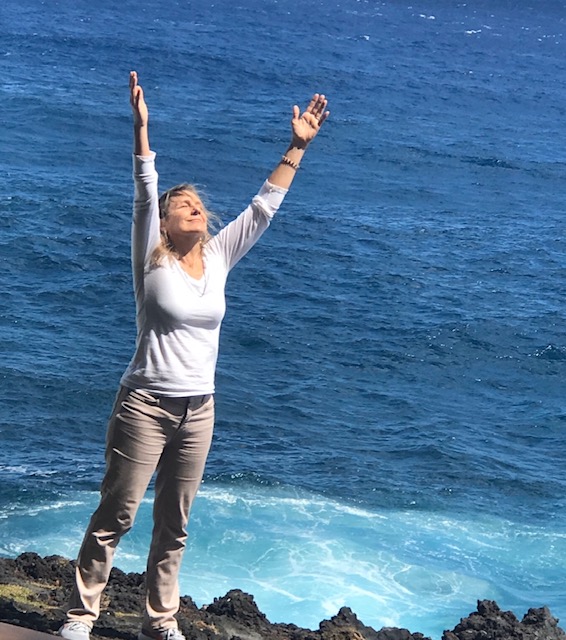
” When you observe nature for any period, you can sense the presence of a natural process or rhythm.  You may notice it in the way leaves fall from a tree, gently floating down to form eloquent patterns on the grass.  Or as I first did, watching the way ocean waves build, crest, flow and change course in an endless variety of movements.

At such moments, we sense that the life force or energy we are experiencing is unpredictable and unknowable yet has an innate and vast intelligence all its own, one well beyond our capacity to understand.

We also realize that, as mysterious as this universal rhythm is, we are a part of it.

I refer to this rhythm as the Wave or life’s currents.  It is intrinsically truthful and cannot be controlled or manipulated.  It just “is”, and though it may feel ancient, it is always present.

There is a noticeable cohesiveness to it; a harmony of co-existence; a wisdom and mystery waiting to be discovered.

Ralph Waldo Emerson poetically described this rhythm of truth as:“There is a guidance for each of us, and by lowly listening we shall hear the right word…Place yourself in the middle of the stream of power and wisdom which flows into you as life…then you are without effort impelled to truth, to right and a perfect contentment.”

Before that day at the beach many years ago, I had no inkling of such a guidance.   I had been too engulfed in futile battles and engagements.

Today I feel the comfort of its presence when I sit in my back yard early mornings, listening to the cheerful medleys of song birds and the cooing of doves, watching the branches of my magnificent olive tree gently swaying as they reach toward the sky, and the ground squirrels scampering around its limbs.

Indeed, I feel it in the stillness and solitude of nature most anywhere; when I hug an oak tree; inhale the strong  aroma of eucalyptus leaves; or watch colorful humming birds darting from flower to flower.

I also feel it most of the time when I’m painting or channeling verses that occasionally lead to poems.

I have come to learn that the more I am able to live my life in harmony with this natural rhythm, or ride the Wave, the more I am able to discover solutions to my most pressing and troubling concerns and enjoy the unplanned, spontaneous moments in life and marvel at the beauty all around me.

That is not to say that the rides are always smooth or easy, or without low tides and riptides.   I tumble often.   The difference now is that it is not for as long or as severe because I am more aware of how and why I slipped and have learned some ways to return.

Like Emerson, I believe “there is a guidance for each of us.” It is up to me to lowly listen and place myself in the middle of the stream of power and wisdom.  Writing this book is part of my endeavor to do that and I hope encourage readers to discover their waves.

It also is to remind me that I am not the only wave in the ocean and that I need to accept, respect, and honor the waves of others, lest I find myself “making waves!”

As expressed earlier, for me the metaphor that comes closest to the vision of aligning with this natural rhythm are ocean waves.  The mystery, randomness, and freeness of waves closely parallel the expansive life path I am seeking.

Think about bodysurfing in the challenges you face.  There will be a great variety of waves, some building up quickly and crashing mightily, others cresting more gradually and lasting longer.  Some will simply vanish.   Many will change course.

We have no control or influence on their patterns, paths, and frequencies; we can only be patient and alert as we await them.

As soon as one crests near us, we extend our arms, swim a few strokes, and try to glide with it.  We make adjustments along the way, if needed.  If we encounter turbulence, which we often will, we can protect ourselves; for example, wrapping our hands around our head if we are forcefully thrown asunder, or pulling out of the currents or diving beneath the waves.

Much of the time, though unpredictable, the ride will be smoother and often enjoyable, and at times even exhilarating.  And the lows not as severe or as long.

In a similar vein, consider how experienced surfers engage and ride waves.   First, they patiently observe how the waves are building and developing near them; when they sense there may be a good–and safe—one to ride, they paddle toward it, aligning their boards with the cresting wave; if it looks too strong or dangerous, they pull out and wait for another; if it looks good, they quickly paddle some more, hop on their board, and begin their ride.

Surfers accept that the waves, and not they, are in control; that they can easily be sent flying off their boards into crashing waters if they resist their flow.  They know, however, that they can enjoy exhilarating rides by aligning, and gliding, with the waves.

It is easy to discern the practices and attitudes that are essential for skillfully and safely surfing or riding waves: awareness, observation, acceptance, patience, humility, trust, instincts and intuition, and the willingness to surrender or let go of control.

It’s not as easy to discern the practices and attitudes that obstruct riding waves: control, arrogance, high expectations, judgment, denial, limited thinking, and fear.

We will see in the pages ahead that the very same factors, or wave “enhancers”and “barriers,” strongly impact how we  navigate our currents in work, love, friendships, parenting, aging, sports and performance, and creative endeavors.”

END OF EXCERPT

*If you enjoyed the excerpt, please share it with others and “like” it on your Facebook page.


The Genesis of The Gifts of Acceptance

 The genesis of The Gifts of Acceptance:Embracing People and Things as They Are began with a short blog post I wrote almost 10 years ago titled “5 Good Reasons for Accepting People As They Are.”

The post quickly attained coveted first page appearance for Google searches on acceptance, and retains its high  ranking to this day.  The response motivated me to continue writing about the many aspects of the acceptance dynamic over the next five years, eventually culminating in the publication of the book in 2018.

The book won multiple book awards and has been an Amazon best seller now going on three years, for which I am deeply grateful.

It has been even more gratifying to see how the need for acceptance in our lives and the world has resonated so strongly with readers from around the world, as well as with reviewers and media hosts.    That need is greater and more challenging than ever before, particularly in the highly divisive social and political arenas.

I am republishing that first acceptance post today and will publish others in the coming weeks and months.   I hope you find them helpful!

5 Good Reasons for Accepting People as They Are

In the meantime, remember to

Let It Go–and Accept “What Is!”

Danny

*If you found this post helpful, please “like” it on your Facebook page and share it others.

Letting Go of Control Truths and Tips (#2)

Truth and Tips Q&A #1 explained how fear was the prime driver of our need to control others and outcomes. Q&A #2 is a logical follow up:

Q:How can we reduce our fears so that we will control less? (Part One) 

A:  Effectively reducing our fears is usually a multi-step process.    It begins with clearly identifying what they are.  For many, this is not so easy, because our fears easily bask in our lack of awareness.   We tend to attribute the anxiety and discomfort that fears generate to other things.  It is much easier to look elsewhere than it is to look within us.

Thus, one of the best ways to detect this most tricky of emotions is to do a fear inquiry.   Recall the day’s events as specifically as possible.  The fear-invoking event will be lurking in there somewhere. More often than not, it is something you totally blocked—and why not.  It was too painful to deal with at the time.

In doing your fear inquiry, be aware of any anger or resentment you may be harboring.  Anger is commonly an aggressive response to our fears, and it too, invokes controlling actions.   Still another sure sign is when you procrastinate in addressing important tasks and challenges.

Our fears can also have a strong physical presence.  Note where they may be located—tight chest and stomach, painful lower back, or somewhere else—and try to “feel” their presence.  As you do, breathe in and out slowly, and they will usually be revealed–and even ease.

Once we have a clearer understanding of our fears and how they impact us, we can then begin to find ways to defuse them. One effective way is to confront and process them.  I will offer some tools to help you do that in my next post.

Until then, I will leave you with two

Questions to Ponder: 

“Did you discover any “unknown” fears during your fear inquiry?  What were they?”

“Did knowing what they were lessen their impact?”

Please share your responses with me!

In the meantime, remember to

“Let It Go—and Accept “What Is!” 

Danny

*If you found this post helpful, please “like it” on your Facebook page and share it with others.


Overcoming Denial in The Time of Coronavirus

(8th in an ongoing series on “Acceptance in The Time of Coronavirus”)

Overcoming denial is a prerequisite to acceptance.  You can’t accept “what is” when you are unaware, can’t, or refuse to “see” the underlying reality of the situation.

This is perhaps even more true in The Time of Coronavirus. 

Denial is not just denying or rejecting a certain state of affairs.  Its subtler forms include wishful thinking, kidding ourselves, underestimating things, avoidance, or simply choosing to turn a blind eye.

I feel much of our responses to Covid 19 are of that nature. At the beginning, it was all too easy for me to discount or minimize its spread and impact on our lives.  And I am quite sure that I was not alone in believing that.

I frequently heard (and still do) what I consider denial based comments about Covid 19, such as the following:

“It’s not that harmful—the flu kills more people each year”

“They will soon find a vaccine”

“The virus will soon run its course”

“I’m young and in good health”

“Only old people are at risk”

“People are just running scared”

“It’s all politically based”

And the highly optimistic denial: “Things are getting much better now”

The problem is that when you are in denial of the underlying issue or problem,

You can’t make the choices and pursue the paths that can alleviate the very problems you are denying. 

Indeed, you risk making them worse!

A prime example is the early opening of restaurants, bars, gyms, and other gathering places by many states and local governments.   In almost every instance, there has been a huge spike in cases, deaths, and shortage of hospital and ICU beds.

I’ve previously offered ways to let go of denial in other contexts. (See my post, “Letting Go of Denial”).   One vital key is worth repeating:

We must be able to dispassionately see the “truth” and then have the courage and wherewithal to act upon it. 

I understand that people will see different versions of the truth and/or may choose to act in different ways upon it, especially in these highly divisive times.

Nonetheless, I encourage you to at least be willing to reexamine your deeply ingrained beliefs in order to gain a greater awareness of when, how, and what you may be denying in The Time of Coronavirus.   Remember, too, that when you deny less, you accept more, and will have greater serenity even during turbulent times.

In the meantime, remember to

Let It Go—and Accept “What Is!” 

Danny

* To help make The Gifts of Acceptance and Losing Control, Finding Serenity available to more people during the coronavirus crisis, I have lowered their ebook prices to $2.99.

**If you enjoyed this post, please “like” it on your Facebook page and share it with others.

Letting Go of Judgment in The Time of Coronavirus

  Letting Go of Judgment in The Time of Coronavirus 

(6th in an ongoing series on “Acceptance in The Time of Coronavirus“)

I’ve always struggled with being too judgmental of others.  I’ve worked a lot on being less so, but it takes constant awareness—not only that I’m judging, but also how it impacts my overall well being and serenity. (More on that later)

I’ve noticed that my inclination to judge others has risen in The Time of Coronavirus. It is likely due to my having greater “dis-ease” and impatience these days—and sometimes getting agitated over little things.  (See my post, “Accepting Agitated People in The Time of Coronavirus”)

As a result, I’m more likely to judge or question why people are doing or acting the way they do.   I forget that these are not normal times, and most people are often not acting “normally.”

A recent example is when I reacted strongly when a good friend asked me to share a video with my friends in which a disgruntled scientist made some disparaging remarks about a well known scientist who has played a prominent public role in combating the COVID 19 Pandemic.

After viewing the video, I had doubts about the veracity of some of its accusatory statements.  I found several articles that provided evidence disputing the scientist’s main claims and admonished my friend about promoting the video to his friends without first fact checking the claims.

I sent him the articles, but that didn’t defray him.  He was convinced about the merits–and adamant–about what he was doing.

The truth of the matter is that I judged my friend harshly for his beliefs and actions.  I felt the video was untruthful and wanted him to stop—signs of a true controller and judger!

When I later thought about my actions, certain things about judging became clearer to me.

*Most judgments serve no real purpose or benefit.  It’s unlikely to change the way people are or act.  If anything, it puts them on the defensive and they are likely to resist and dig in harder.

That doesn’t mean we shouldn’t express our views and beliefs on matters that are important to us, but rather to not dismiss or disparage others’ views without first making an effort to listen and hear them out.  (See my post, “Acceptance Conversations as Peacemakers”)

*We are not accepting others for who and how they are.

I didn’t have to approve or condone what my friend was saying or doing, but I should have accepted he had the right to express his own views and make his own choices, provided they didn’t harm me or those I care about.

The short of it is,

When we judge, we can’t accept. 

*We are often being righteous and arrogant. There is a certain “know-it-all-ness” when we judge.  We believe we know better than others and what the “real” truth is.   However, we easily disregard our own personal biases.  I certainly was that way with my friend.

In deed, I don’t think

A judger has ever been accused of having too much humility!

Even when we wish to judge less, we are often unaware that we are in fact judging.   Judging takes many forms.  Criticism, curtness, withdrawal,  smugness, and having unreasonable expectations are just a few of the ways we voice our judgments.

In many ways, judging is a counterproductive diversionary tactic.  It diverts us from taking stock of those parts of us, especially our shortcomings, that don’t serve us well.  It further diverts us from making an effort to improve upon them.

At its core, judging is a controlling mechanism that harms primarily ourselves.    

I thus encourage you to temper your judgments and try to be more understanding and tolerant of others.   In doing so, you will control less and accept more, and thereby enjoy greater peace and serenity in The Time of Coronavirus—and afterwards, as well!

In the meantime, remember to

Let It Go—and Accept “What Is!” 

Danny

*If you enjoyed this post, please “like” it on your Facebook page and share it with others.

**To help make The Gifts of Acceptance and Losing Control, Finding Serenity available to more people, I have lowered their ebook prices to $2.99


Managing Expectations in The Time of Coronavirus

         (4th in an ongoing series on Acceptance in The Time of Coronavirus)

I’ve often talked and written about the importance of moderating our expectations if we wish to control less and accept more.  High expectations can hurt us in a lot of ways. ( See my post,“5 Ways High Expectations Hurt You”)

A recent occurrence made me realize that it’s even more important to manage our expectations in The Time of Coronavirus, given all the uncertainty and unknowns, and the emotional tolls it has taken on people.

A few days ago I visited my local pharmacy to pick up two prescriptions I had phoned in the week before.   Although the only customer in the store, I waited (with mask on) for what felt like an eternity while the pharmacist was speaking with another customer on the phone.

Truth be told, the wait was actually only about 5 minutes, but I found myself getting anxious and impatient.   I had wanted to get in and out of there.

When the pharmacist finally got off the phone, she informed me that only one of the prescriptions was ready, because the other one had expired.

Oh brother, I told myself.  I would now have to come back again when the other prescription was filled. Fortunately, I “cooled off.”    After all, the pharmacist was a sweet, kind person, who was doing her best during The Time of Coronavirus!

When I later reflected on the incident, I realized my expectations created my angst.   Specifically, I expected that

  1. It would be a quick and easy pick-up since I came several days after the pharmacist told me the prescriptions would be ready.
  1. That she would have called my doctor for a renewal, as she had done in the past.
  1. She would tell the phone caller that she would call back after taking care of her store customer—me. (Pretty presumptuous of me!)

And the all-inclusive expectation: 

That everything would be (and operate) the same as it had before coronavirus.  (Really?)

I know this is a silly little story, but these everyday types of occurrences can easily affect our serenity, if we let them, because of our expectations.

As I’ve said before, we need to cut people some slack!

So, bottom line, we need to manage our expectations better, lest we become agitated ourselves.  (See “Accepting Agitated People in The Time of Coronavirus”)

These are not normal times, and our so-called “normal” expectations don’t serve us well now, if they ever did!  

Simply put, they aren’t healthy for us.

So I encourage you to moderate, manage, and lower your expectations during the Time of Coronavirus.    My post “Let Go of Control by Moderating Your Expectations” will help you do that.

In the meantime,

Let It Go—and Accept “What Is!” 

Danny

*If you liked this post please “like it” on your Facebook page and share it with others.

**To help make The Gifts of Acceptance  and Losing Control, Finding Serenity available to more people, I have lowered their ebook prices to $2.99.


Accepting Agitated People in The Time of Coronavirus

(Third in an ongoing series on  Acceptance in The Time of Coronavirus) 

If you’re like me, your tolerance of others has been strained in this Time of Coronavirus, be it with loved ones you are
“confined” at home with or just people who get on your nerves.

No question about it, most people are on edge these days and it doesn’t take much for them to go off.

Patience is in short supply, and anger is in abundance.

If I were to tell you that you would likely be much better off—and have greater serenity—if you were to accept these people as they are, you might think I have contacted the virus!

Fortunately, I haven’t—and hope not to!

But I will also tell you that accepting others, as ornery as they may be, does not mean what you might think it means.

It has nothing to do with excusing, condoning, or otherwise approving of their words or behavior. (See, “Three Misconceptions About Acceptance)

It does have a lot to do with “staying on your side of the street” and focusing on taking good care of yourself.

Take my friend Jen, for example.   On many days, her husband is stressed and agitated, particularly over being cooped up at home day and night.

As Jen puts it, “I truly don’t know what side of the bed he will be getting up on each day.”

She further explains,

“But I also know I can’t fix him or make him feel better.  I’ve learned that’s well beyond my power to accomplish.   And when I do focus on his woes too much, I soon find myself down the rabbit’s hole as well, and that clearly doesn’t help him any.

“So I just try to love and accept him as he is, pray for his well being, and be careful not to get wrapped up in it all.  That allows me to stay more emotionally balanced and focus on what I can do to take better care of myself during these difficult times.”

Here are four suggestions that will make it easier to accept others in The Time of Coronavirus:

  1. Cut them some slack. These are trying times for everyone. A lot of people are really struggling in coping with things.   Their fears, frustrations, and “demons” consume them.  These are not normal times and many people are not acting as they normally do.
  2. Don’t take things too personally. What someone says or does that offends most often has more to do with where they are in their life or what’s happening to them. In other words, it’s not about us.   Hence, when the “stings” come, try to take some time to consider what their real sources may be and not take the matters too personally.
  3. Detach with love. This mainstay of the 12 Step programs is particularly helpful now.  It simply means to emotionally (and if necessary, physically) separate or remove yourself from the “drama” or unnerving ways of others, but to do so in a kind, caring manner.  Jen’s story is a good example of detaching with love.
  4. Consider whether you had a role in another’s behavior. Let’s not lose sight of the fact that we, too, have been impacted by what’s going on.   We also may not be our “normal” selves and may have contributed to another’s offensive or irritable ways.   It’s therefore important to at least ask yourself such questions as:

“Did I play a part in the matter?”  “Have I been curt or impatient with the person?”  “Have I been on edge lately?”, and the like.

I am confident that these tools will help you better accept others in The Time of Coronavirus and concurrently bring you greater calm and serenity.

I welcome your thoughts and experiences on accepting people who bother you.   How do you, for example, react or respond when someone upsets or irritates you?  What acceptance tools have helped you in dealing with such people?

(You may also wish to read the first two posts in this series:“Dealing With Fear in The Time of Coronavirus” and “Acceptance in the Time of Coronavirus”)

In the meantime,

Let It Go—and Accept “What Is!” 

Danny

*If you liked this post, please “like it” on your Facebook page and share it with others.

**To help make The Gifts of Acceptance and Losing Control, Finding Serenity, available to more people, I have lowered their ebook prices to $2.99.


Acceptance in the Time of Coronavirus–A Series

 “These are Times that Try Men’s Souls”

In December 1776 General George Washington and his troops were facing imminent defeat, having been driven out of New York and chased across New Jersey by the British.

Washington had been deserted by Congress and his demoralized, hungry, and ill equipped troops planned to go home in two weeks when their enlistments ran out.

In an inspired move, Washington rounded up his weary soldiers into ranks and had them listen to a stirring message written by Thomas Paine:

“These are the times that try men’s souls.  The summersoldier and sunshine patriot will, in this crisis, shrink from the service of their country, but he that stands it now deserves the love and thanks of man and woman.”* 

Thomas Paine’s words had a major impact on Washington’s beleaguered soldiers.   A sense of renewed commitment and sacred mission returned to their souls.

Two nights later they crossed the Delaware, caught the British mercenaries completely off guard on a groggy hangover the morning after Christmas Day.   Washington captured the whole British contingent of a thousand Hessians without a single American being killed.

The rest, as they say, is History!

We are now facing an equally precarious time in our “history”—one brought about by the unrelenting coronavirus and Covid-19 pandemic.  And many, if not most, of us are equally dreary, beleaguered, demoralized—and fear driven.

I wish I had some stirring words like Thomas Paine to arouse and inspire you.  I clearly don’t.  I suffer the same unsettling range of emotions that you likely do.

However, I know that practicing acceptance in the time of coronvirus has helped me cope with the current chaos and uncertainty.   It lightens my spirit.  It grounds me.  It balances me.  And it frees me.  (See my last post “How The Serenity Prayer Helps Deal with the Coronavirus)

From the tremendous response to that post, I am heartened to learn that it helps others as well. Daily blog visitors have increased more than tenfold.   Facebook friends and fans have shared broadly.

I cannot tell you how deeply grateful I am for that.   It makes me feel useful and being of service at a time when I so often feel helpless and powerless.

It also motivates me to do and share more about how to practice acceptance and enjoy the many “gifts” that surely follow.

I thus will be offering a short course  on “Acceptance in the Time of Coronavirus” through weekly blog posts.

I will share what I know and have experienced first hand, as well as things learned from others, about practicing acceptance–its benefits, keys, challenges, obstacles, catalysts and dynamics.

Although I have extensively written and talked about these subjects before, I will discuss them and others within the context of the coronavirus Covid-19 pandemic. I hope to do so in a personal, everyday sort of way.

Concurrent with that, I have lowered the price of the ebooks for The Gifts of Acceptance and Losing Control, Finding Serenity to $2.99, so that more people will be given the opportunity to read and hopefully learn from them.

So stay tuned for the first session!

In the meantime,

Let It Go—and Accept “What Is!” 

Danny

*From The Crisis by Thomas Paine, December 23, 1776.  His cogent essay is prescient about the politics, public panic, and other aspects of the coronavirus pandemic.

**If you like this post, please “like” it on your Facebook Page and share it with ot

Optimizing The Benefits of The Serenity Prayer

The Serenity Prayer* is my guide to practicing acceptance in all my affairs.   It is a prayer for acceptance that allows me to be more fully aware, from the very start of my day, of the vast number of things I cannot control or change, and it reminds me that my very serenity depends on my willingness to accept them as they are.


I devote a chapter in The Gifts of Acceptance on ways to effectively apply the three poetic phrases of the Prayer.   For many, the last phrase, “The Wisdom to Know the Difference,” is the most challenging one in practice.

Specifically, how do we know whether we do or do not have the power to change or control a person or situation?   

The determination is frequently difficult. Strong emotions—fear and anger, for example—as well as high expectations easily thwart our intentions to realistically consider whether the issue is something over which we truly have power.   Denial, too, can impact the determination because of our ignorance or unawareness of (or unwillingness) to accept the underlying reality of the situation.

The requisite wisdom often comes only after enduring the hard, painful consequences of ongoing non-acceptance.  The pains of non-acceptance will likely occur at different times for each of us because there will always be things and people we aren’t able to accept—at least initially.

Here are two ways that will help you with the wisdom to know the difference and thereby optimize the benefits of The Serenity Prayer:

Pause and Reflect 

When first faced with contentious issues or people, take a moment (or as some say, “pause”) to consider whether you can realistically expect to change matters.   Try not to react impulsively or retaliate.   Fear and anger often emerge, and it is important to constructively process these emotions as soon as you are able.    Try to remember the acronym for FEAR: Future Events Already Ruined.

Pausing and reflecting in this manner will ground you and enable you to better evaluate what is really at stake and its importance, and that in turn will allow you to address the situation or person in a more constructive, responsive manner.

Consider Whether You Can Meaningfully Impact the Person or Situation 

Even if you feel you can change or have some impact on the matter or person, consider whether any success is worth the cost and energy—and anguish.

What I have found extremely helpful in uncertain situations is to ask myself “Can I have any meaningful impact on the person or situation?”  If I don’t think I can, I accept the current situation or circumstance and move on.   Similarly, it is also helpful to ask oneself, “How important is this to me?”

Remember, not everything is a crisis, but anything can become one if you fail to let go of control and accept “what is.”

Please share with me what you have found helpful in determining whether or not you have the power to change certain people or things in your life, giving specific examples if you can.

In the meantime,

Let It Go—and Accept “What Is.” 

….and Let’s Help Make Acceptance Go Viral!

Danny

*”God Grant Me the Serenity to Accept the Things I Cannot Change,

Courage to Change the Things I Can, and

The Wisdom to Know the Difference.”

**If you enjoyed this post, please “like” it on your Facebook page and share it with your friends.


The Humility/Acceptance Link

In media interviews for The Gifts of Acceptance I am often asked,  “what are the keys to practicing acceptance?”

When I say “humility” is an important key, some interviewers ask me to explain further because the link between humility and acceptance may not seem readily apparent.

Yet, it’s a very direct one.

Simply put, in order to accept people as they are, we need to be humble.   Within the context of acceptance, that means we must recognize and accept that:

  1. We truly don’t know what’s best for others–particularly our loved ones, children, and family.    (We are not so omniscient, as many of us are prone to believe!)
  1. Our way is not the only way.  It’s just a way, nothing more.   There are multiple paths to an acceptable destination.
  1. What works well for us doesn’t mean that it will work well for others. Everyone is unique and responds to events and challenges differently.


  1. Everyone has the right to determine (and choose) what’s best for them, and we should respect and honor their choices as long as they don’t harm us or those close to us.
  1. We should be open-minded and non-judgmental. (Probably the most challenging aspect of humility)

Being humble also means that we shouldn’t judge, criticize, or press our views on others, unless asked.   Nor should we constantly try to control or change people, no matter how much we think it will benefit them.

Admittedly, it’s much easier to understand humility than to practice it.   As a former compulsive controller, it’s been a life long challenge for me to refrain from telling others, particularly those closest to me, what I think they should do or not do, or how they should be.

It’s all too easy to justify our intrusions as acts of love, care, and concern.   However, experience has proven to me time again that I risk doing more harm than good—to others and myself—when I fail to be humble.

In the meantime, remember to

Let It Go—and Accept “What Is!” 

…and Let’s Help Make Acceptance Go Viral! 

Danny

**If you enjoyed this post, please “like” it on your Facebook page and share it with your friends.


The Gifts of Accepting Our Children’s Addictions

Some people–maybe even you–upon reading the title of this post might immediately retort something like, “Gifts? What do you mean mean gifts?  My child’s addiction has been nothing but a horrendous burden for us.”

I understand your frustration. I really do. I have friends who have suffered tremendously in dealing with their children’s debilitating drug and alcohol addictions. Household theft, deceit, manipulation, and violence are not uncommon.

Most parents will do almost anything to keep their children off the streets, in school, and out of jail. When going through such hell, parents have difficulty conceiving that accepting their children’s addictions could be of any benefit.

My friend Mike, however, found unexpected gifts after finally accepting his son’s drug and alcohol addictions. (more…)

The Link Between Acceptance and Recovery

In a previous post, The Link between Addiction and Control, I considered whether a pertinent connection exists between addiction and control. I hypothesized that because the internal lives of most addicts are so out of control, they attempt to manage their uncomfortable emotions and feelings of powerlessness by exerting strong outward forms of control. This blog post was shared more times than any other in the seven-year history of this blog. Many readers agreed that addiction and control are connected, and many others did not.

In my new book, The Gifts of Acceptance: Embracing People and Things as They Are, I explain why acceptance is the best antidote for the compulsion to control.

Given acceptance’s strong impact on control, I have been thinking about its relationship to addiction and recovery. What are the links, if any, among the three? Some pertinent questions come to mind:

          Do addicts need to accept that they are powerless over their addiction before they can recover from it?

         Do most addicts live in denial of their addiction and the impact it has on their lives—and the lives of others? (more…)