Truths and Tips #8: Letting Go of Control

      Q:  Romantic relationships can be stressful, especially when we try to “improve” or change our partner’s behavior and habits.  How can accepting our loved one for who they are enhance our love bond? 

A: I don’t think any of us like being told by our mates how we should act or behave, or to be someone other than whom we are.  Such pressure makes us feel “less than” or not good enough.   Who want to feel that in matters of the heart? (more…)

Are You a Love Controller?

Are you or your loved one a love controller? If so, this can be very hard on the relationship. Love control obstructs the romantic flow.  It forces the action, rather than allowing the love currents to unfold naturally so that people can relax and just be themselves—and offer their love and kindness without pressure or expectations.

Simply put, most people don’t like being told what to do, how to be, or how to act in matters of the heart. Do you?

And yet, if you were to ask a friend or your love one if they considered themselves a love controller, my guess is that they would likely say no.  Are you a love controller?  Let’s find out. Take the Love Control Test from my book, Losing Control, Finding Serenity: How the Need to Control Hurts Us and How To Let It Go. 

The Love Control Test 

Ask yourself the following:

Do I usually feel I know what’s best for my partner?

Do I charm or pout or withdraw to get my way?

Am I often impatient with him or her?

Do I try to solve his or her problems?

Am I quick to point out my partner’s shortcomings?

Do I expect my partner to do what I want?

Do I look to the other person for my own happiness?

Am I overly concerned that my partner will not be able to resolve his or her personal issues?

Am I judgmental of him or her (be honest now!)?

If you answered “Yes” to these questions, this indicates that you are trying to control the relationship.

Now answer these questions:

Do I listen attentively to my partner’s concerns without trying to solve them?

Am I patient with his or her struggles?

Am I willing to let my partner plan our vacations?

Do I play a part in my love conflicts?

Do I accept my partner’s annoying habits?

If you answered “Yes” to these questions, this indicates that you are not trying to control the relationship.

Is your loved one a love controller? If so, please share with me the ways in which he or she tries to control your relationship.

In the meantime, remember to

Let It Go–and Accept “What Is”! 

Danny

*If you enjoyed this post, please “like” it on your Facebook page and share it with your friends.


10 Ways the Need to Control Hurts You

Many people call them control freaks.  Some call them controllers.  Others refer to them as nitpickers and micromanagers.  Whatever you call them, they all have one clear thing in common: The Need to Control.

Hence, the subtitle of my book Losing Control, Finding Serenity,  “How the Need to Control Hurts Us and How to Let It Go.”   As such, the book examines in-depth (using true stories) the many ways our need to control hurts us—and others.

Controlling too much is like gripping a rapidly moving conveyor belt—you either get burned or dragged along.

10 ways for control freaks to get themselves in check:

1.  The intensity of our control-driven actions “blinds” us from recognizing new paths and opportunities that could vastly improve our lives.

2.  The need to control our children’s lives deprives them of opportunities for personal growth.  It also leads to resentment between parent and child.

3.  Control obstructs the creative process.  Creativity flourishes with “opening up”, whereas control closes it down.

4.   Love control causes the dance of romance to lose its rhythm.  Who likes to feel they are not good enough in matters of the heart?

5.  Controlling others at work discourages original thought and ideas.   It also invites conflict and dissension.

6.  Control stymies spontaneity, and with that, the unexpected and often exciting joys it brings.

7.  Control impedes trust and intimacy.  When you keep telling others what they need to do or what’s best for them, they are reluctant to confide in and be open with you.

8.  The need to control diverts us from focusing on where it can do us the most good: ourselves!

9.  When you control, you can’t flow—especially in sports.

10.  Constantly trying to control or change others or things takes inordinate amounts of time.

So, doesn’t it make since to let go of control and enjoy the rewards that follow?

Please share with me and others your experiences about how your need to control has hurt you—and others.

In the meantime, remember to

Let It Go–and Accept “What Is!”

Danny

*If you enjoyed this post, please “like” it on your Facebook page and share it with others.

Letting go of Control Improves the Love Flow

accepting others as they are

Have you ever noticed how with certain couples love and affection flow so naturally?  Indeed, almost effortlessly.   There is a good reason for this.   These couples have learned to stop trying to control one another—and their relationship—and that leads to greater intimacy and a more vibrant love flow.

Conversely, you may have noticed that when couples press or “search” for love too intensely, they just can’t seem to find it.  Indeed, in spite of (and usually because of) their best efforts they often push love away.  There is a good reason for this as well: Love control obstructs the romantic flow.   It forces the action, rather than allowing the love currents to unfold naturally so that people can relax and just be themselves—and offer their love and kindness without pressure or expectations.

Love Control

 Intimate relations are fertile grounds for controlling actions.   Love control runs the gamut from unsolicited advice and opinions, to criticism and judgment, to unreasonable demands and expectations.   When we behave in this way with our partners, our actions invariably breed resentment and diminish the love glow.   People don’t like being told what to do or how to be in matters of the heart.   Control stops the give-and-take of a relationship to unfold in its own time.

Many of us have almost no awareness of how often we control and how many ways we try to do it—particularly in love and romance.   Our very intensity and insecurity obscures awareness.   For example,  we are controlling when we repeat a suggestion or express our views more than once,  when we prod and cajole, when we play the victim or martyr, and when we cry to churn a lover’s heart.

Are You a Love Controller?

So, let’s find out if you are a love controller.  Ask yourself the following:

*Do I usually feel I know what’s best for my partner?

*Am I often impatient with her?

*Do I try to solve his problems all the time?

*Am I quick to point out my partner’s shortcomings?

“Yes” answers to these questions indicate you are trying to control the relationship.

Losing Love Control

If you wish to improve your love flow, you must be willing to give up trying to control your intimate relationships.    Here are three effective decontrol tools that will help you do that.

1.  Accept Your Loved One.    Letting go love control begins by accepting your partner for whom, what, and how he or she is, rather than trying to “mold” him (or her) to suit your perceived needs.   True acceptance removes the need to change or control another.    The simple truth of the matter is that you are essentially powerless over changing traits in another that you dislike, and trying to do so only makes things worse.    However, this does not mean that you have to like or condone these traits, but simply that you need to accept their “reality”.

Accepting the reality  allows you to recognize the choices and options that you do have, even under very trying circumstances.    Further, you are much better served by focusing on what you do have control over: yourself and your role in the relationship.   For example, you have the power to reduce your expectations of your partner, to improve your own attitude–particularly to be more humble and not always assume your way is the “right” or “only” way—and to improve your own shortcomings.   If you do these things, your love bond will improve exponentially.

2.  Moderate Your Expectations.  Try not to expect too much of or from your partner.   High expectations fuel controlling actions and lead to disappointment and resentment by both parties.    For example, don’t expect him (or her )to be more affectionate or say “loving” things when he or she is uncomfortable doing so.    Similarly, do not expect too much of yourself.   When you do, you will likely press to hard to make things “better” and that usually results in unhealthly enabling actions.    To reduce love and relationship expectations, it is helpful to ask yourself whether your perceived need or desire is that important in the overall scheme of things.    Most of the time it is not.

3. Address Your Love Fears.  Fear is the primary catalyst of controlling conduct—and no less so in intimate relationships.  It may be fear of not finding (or keeping) someone, not being attractive or “good” enough—or the fear of being alone.  Not only is the “real” person covered by this blanket of fear and thus not seen for whom he or she is, but it also induces assertive controlling actions such as pressuring and manipulating, as well as passive ones such as withdrawal and withholding love.

It is thus important that you try to defuse your love fears as much and as soon as you can.  In simple terms, this means you need to first identify and be clear about your fears, and then address and process them.  For short, I call this process  “face and embrace”.   For instance, if you constantly get upset (and snippy) at your husband’s (or wife’s) constantly running around until he’s exhausted, examine the reason why.   Is it your fear that he will be mean and irritable when he’s tired?  If so, then share those concerns with him.    If he is not responsive to your concerns,  then detach from him at such times  by physically removing yourself, even if that means getting out of the house for a while.  In other words,  focus on taking care of your own needs.   Once you realize that you have “options”, your fears will quickly diminish.

Practicing these “de-control” tools will free the love currents in your life. They are not easy, to be sure, but you will find that even a little progress will stimulate the romantic flow!

Do Your Loved One’s Political Views Anger You?

The current divisive political climate becomes even more divisive when the political choices of our loved ones are contrary to our own.   For example, what if you are for Clinton, and they are for Trump?  If you are for gun control, and they support the NRA?  If they want to build a gigantic wall along border to keep people out, and you feel it’s a foolish idea.

How do you deal with such political disharmony between your loved one and yourself?  Do you try to persuade them to change their views? (and how does that work?) Are you able to have respectful, cordial discussions with each other?  Or do damaging arguments ensue? Or, is it “My way or the highway!? (more…)

Let the Love FLow on Valentine’s Day

If you don’t control, you can flow–and that’s true with love as well.    So let go of love control this month and let the love flow!  For some guidance on how to do this, read my previous post “Enhance Your Valentine’s Day Love Flow.”

In the meantime, remember to

Let it Go–and Accept “What Is!”

Danny

*If you enjoyed this post, please “like” it on your Facebook page and share it with your friends.


Two Keys to Accepting Your Loved One As They Are

I’ve previously shared two keys to enhancing the love flow on Valentine’s Day:

*Accepting your love one as they are, and

*Moderating the expectations you have of them.

In this post I would like to expand on the importance of “love acceptance” and two ways that make it easier.

When we don’t accept our love one for who and how they are, are we not really communicating to them that they are not good enough?  That they fall short?   Who wants to feel that — particularly in matters of the heart?  Do you?

It should thus come as no surprise that not accepting our love one as they are invariably results in anger and resentment, and undermines love, intimacy, and trust.

Simply put, when we don’t accept our love one as they are, it severely dampens the love flow.

Two Keys to Accepting Your love One

*Focus on the things you like and appreciate about them. Rather than commiserating about the things that irritate or bother you about your love one, focus on their positive traits.    Remember what originally attracted you to them.   Think about all the nice things they do for you.   The good times you enjoy together.  Their sense of humor.  And so on.

In short, see the good in them and the good they bring to your life.

*Recognize that you are powerless to change them.   Although we may not want to accept this, the truth of the matter is that we are essentially powerless over changing those aspects of our love one that we don’t like.    Any changes must come from them, and the more we try to change or control them, the less likely it will happen.    Indeed, it usually makes matters worse. (See my article, “Letting Go of Control Improves the Love Flow.”)

I encourage you to try be more accepting of your love one, and what better time to start than on Valentine’s Day!  I am confident it will enhance the love flow in your life.

And please share your love acceptance stories with me.

In the meantime, remember to

Let It Go!

Danny

*If you enjoyed this post, please “like” it on your Facebook page and share it with your friends.

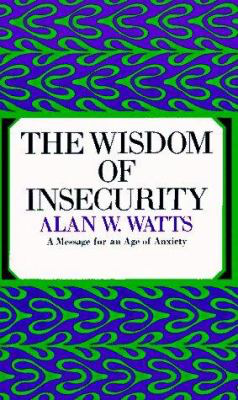
Alan Watts and Letting Go of Love Control

I wrote an article for my web site entitled “Letting Go of Love Control Improves the Love Flow,” in which I expressed how letting go of love control brings greater intimacy and a more vibrant love flow, and then offered suggestions on how to let go of control in intimate relationships.

The wise and humorous sage, Alan Watts, explains the dynamic of letting go of love and relationship control so much more simply and eloquently than I ever could hope to.   He succinctly states in part,

“Let it go and it returns to you, but dominate it and say “you must be mine,” and you lose it.”

In a similar vein, when you lose control, you gain control, to the extent you can!

In the meantime, remember to

Let It Go–and Accept “What Is!”

Danny

*If you enjoyed this post, please “like” it on your Facebook page and share it with others.

Are You a Love Enabler?

Last Valentine’s day I wrote about the importance of letting go of love control and offered a few suggestions on how to do it. Love control comes in many forms.  When you advise your loved one about what he or she should do or how to be, you are being controlling.   When you repeatedly “suggest” things that you feel will “help” your loved one, you are being controlling.

And certainly, when you judge or criticize your loved one, you are being controlling.

However, love control can also be quite subtle.   For example, cajoling, flirting—and pouting–can be controlling.  With Valentine’s Day again rapidly approaching, it is appropriate to look at another, less apparent form of love control—Love Enabling.

Love Enabling

When we continually give too much or do too much for our loved ones, we are usually trying to control them–and instead risk taking away from them. Thus, a husband’s giving his wife a large allowance so she doesn’t have to work may result in his wife foregoing her own desires and ambitions.

Love enabling can also breed dissension.  For example, a wife who gets tired from constantly running errands and taking care of the personal needs of her husband may become resentful because she is unable to take care of her own needs.   Further, her husband may similarly be resentful because he feels his wife is too intrusive.

In addiction environments, enabling frequently occurs when the mate or partner of an addict constantly “rescues” the addict, thus saving him from the adverse consequences of his destructive actions.     However, the rescuer usually does not realize that the only way the addict will be induced to seek treatment or help is by suffering the painful consequences of his or her actions.

Are You a Love Enabler?

It is not always easy to determine whether someone is a love enabler, because it is only natural to want to “give” and “do” things for the ones we love and care for.    It is usually a matter of degree and constancy.  There are, however, some probing inquiries or guide lines that can assist us.

Love Enabling Guidelines

Answer these questions as truthfully as you can.

1.  Are your actions depriving your loved one of valuable learning experiences and self -reliance? I remember my aunt never being able or wanting to learn how to drive because my uncle drove her everywhere she wanted.    After he died, to our surprise, she promptly learned how to drive.

2.  What is the real motive behind your action? It is easy to discount our real motives for “helping” our loved ones.  Consider whether the main reason you are doing something for your partner is because you want to make it “easier” or “better” for yourself.   For example, you may repeatedly help your wife clear her clutter because you believe it will help her stop cluttering.    However, the underlying motive may be that living with clutter unsettles you.

In either case, your helping her may exacerbate the problem and impede her personal growth.  Why?  Because your assistance provides little or no incentive for her to deal with the clutter herself.  If you abstained, the clutter may pile up so much that even she can’t stand it anymore.  She may then start doing something about it and in the process gain the inner satisfaction and self-esteem that comes from taking care of her needs.

3.  Are you always trying to solve your loved one’s problems? If so, you are once again impeding his or her opportunities for personal growth, self-reliance, and inner satisfaction.

4.  Do you help because you want things done your way? Aside from depriving your loved one of valuable learning experiences, it usually means that you do not trust that he can do it properly himself, and thus undermine his self-confidence.    Instead, try to be more humble.  There is more than one way of doing most things and there is no assurance that your way is the best or right way.   Most often, it is simply a way!

Some Valentine’s Day Love Challenges

Consider accepting the following “love” challenges for Valentine’s Day and this month:

*Allow your loved one the dignity of solving his problems and challenges.

*Examine your real motives for wanting to “help” your loved one.

*Accept that your way is only the right way for you.

*Listen attentively to the concerns of your loved one—without adding your two cents.

As you progress, please let me know if your love bond begins to glow brighter!

In the meantime, remember to

Let It Go–and Accept “What Is!”

Danny

If you enjoyed this post, please “like” it on your Facebook page and share it with others.

Writing Love Poems by Letting Go of Control

For me, composing poems encompasses letting go of control, particularly in the sense of not overthinking and overanalyzing them.

I begin with my intention and then jot down words and phrases that evoke that intention, not really concerning myself where they may eventually fit, or whether I will even use them.

I then put these short sketches away—literally and mentally—sometimes for several months.   When I later take a fresh look at them, I usually revise and expand them.   As this process continues, I am careful not to presss for completion.  I trust that the right words and structure will be revealed in due course.

The process is very much akin to planting a seed (of thought or intention), watering it from time to time, and letting it bloom in its own time and way.

The following love poem written in celebration of my marriage to my wife, Sigute, over fifteen years ago evolved in this manner.   I hope you enjoy reading it as much as I did in writing it.*

FIRST LOVE

Not earlier loves,
Forged by expectant young hearts
And minds more lustful
Than wise.

Where changes came fast,
But few as one.
And where our child’s past
Fogged our marital screens.

Not loves where souls still searched,
And hearts still yearned.
Where vulnerable bruises
Went unheeded with loud cries.

No, I speak of a love more wise,
Between two people more whole.
One graced with clear vision
And teachings from mistakes past.

A love that honors thy self,
As much as the union.
That lightens the spirit,
And inspires the mind.

One whose pillars are trust and respect,
And mortar truth and honesty.
And whose greener grass
Lies within its fence.

Yes, I speak of a Love
Where souls dance with grace,
And where full hearts and warm bodies
Securely embrace.

This Love of which I speak
Is…Last Love.
This Love of which I speak
Is…First Love.

In the meantime, remember to,

Let It Go–and Accept “What Is!”

Danny

If you enjoyed this post, please “like” it on your Facebook page and share it with others.

*You may read more of my poems here

COPYRIGHT 2010 BY DANIEL A. MILLER
The above poem can not be copied, altered, reproduced, or published without the prior express written consent of Daniel A. Miller. However, you are free to share them with your friends with proper accreditation!  Thank you for respecting these creative rights.


Let Go of Control and Be Happy!

Many of my posts explore the remarkable and often unexpected benefits that come to us when we are able to let go of control–even partially– in such vital areas of our lives as parenting, intimate relations, family and friends, at work and in our creative endeavors.

Simply put, losing control brings freedom and contentment.   Here’s a post on how letting go of control improves your life.

In the meantime, remember to,

Let It Go–and Accept “What Is!”

Danny

Enhance Your Valentine’s Day Love Flow

Valentine’s Day is almost here.   What better time to focus on enhancing your “Love Flow”.   It’s easier than you might think. Simply let go of Love Control.

Intimate relations are fertile grounds for controlling actions.  Love control runs the gamut, from unsolicited advice and opinions, to criticism and judgment, to unreasonable demands and expectations.   Such control behaviors breed resentment and diminish the love glow.

Let Go of Love Control

Here are two effective ways to let go of love control and stimulate your love flow.

1. Be Accepting of Your Loved One. Accept your partner for whom, what, and how he or she is, rather than trying to “mold” him (or her) to suit your perceived needs.

2. Moderate Your Expectations. Expecting too much of or from your partner invariably leads to resentment and conflict by putting undue pressure on him or her.  Hence, lower your expectations,reduce the intensity, and allow the love currents to flow naturally.

A Valentine’s Committment

Make a commitment to try these love decontrol tools  this week.  I am confident your Valentine’s Day will shine brighter with enhanced love glow.

In the meantime, remember to,

Let It Go–and Accept “What Is!”

Danny

If you enjoyed this post, please “like” it on your Facebook page and share it with others.