
Challenges of Practicing Acceptance in 2022

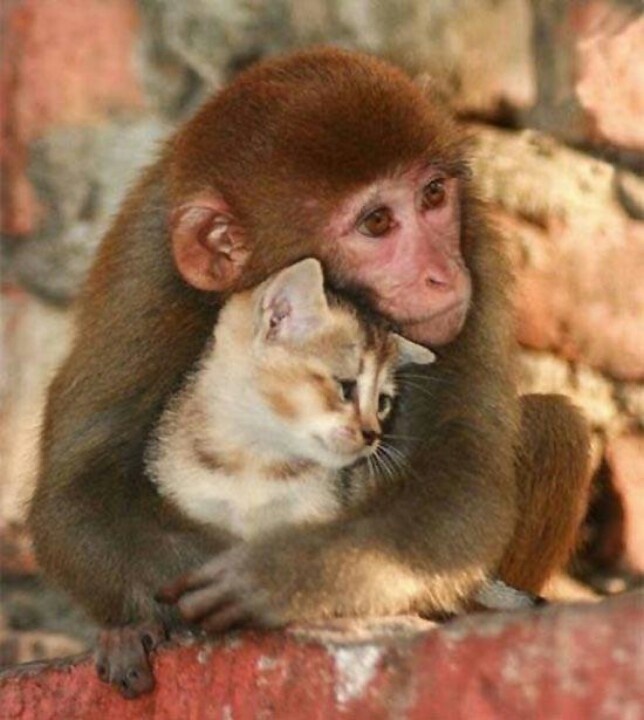
Photo of animals showing how to practice acceptance

How to Practice Acceptance

It seems like every day I am faced with unexpected situations and occurrences that need accepting.   Most are relatively minor disturbances, really, such as home delivery or installation times being changed at the last minute, a computer glitch or loss of Internet service when I am working to meet a deadline, or a driver cutting in front of me on the freeway without warning.

In such situations, if I forget that life is not governed by my desires and expectations—which I am still prone to do—I can easily get flustered, frustrated—and sometimes angry–until I remind myself that such annoyances are beyond my control, and that the best thing for my mental well-being is to accept “what is.”

I say this because even after having written a best-selling, award winning book on acceptance, practicing acceptance remains an ongoing, everyday challenge for me.  It requires my constant awareness whether I am controlling; knowing when I am powerless over changing people and situations; not being judgmental and smug; and not taking the disturbing words and actions of others too personally.

(The acceptance stories I share in my posts and in The Gifts of Acceptance offer guidance in dealing with  challenging acceptance situations that many of us regularly encounter.)

I am comforted that acceptance becomes easier and more natural with continued practice that changes our mental muscle memory—those deeply ingrained patterns and attitudes of judging, denying, resisting, expecting, and controlling.

Even incremental steps and partial successes in practicing acceptance make our lives easier.  And while practice may not make perfect, it does lead to improvement.

We all have our acceptance experiences—good and bad–and we can help and learn from one another by sharing them.   I hope you will consider sharing your acceptance stories with me and others this year at www.danielamiller.com.

In closing, like many, I am troubled by the divisiveness that confronts us as we enter 2022.  I strongly believe we need to practice acceptance more than ever.  I invite you to read “Acceptance Conversations as Peacemakers.

In the meantime, remember to

Let It Go—and Accept “What Is!” 

Danny

*You can read an excerpt of the new book I am writing, The Wave: Navigating Life’s Currents, here!

**If you found this post helpful, please “like” it your Facebook Page and share it with others.



The Illusions of High Expectations

The Illusions of High Expectations

When we expect too much of others, most often we are trying to change or control them in some manner.   And in doing so, by definition, we aren’t accepting them as they are.

Simply put,“When you expect, you can’t accept.”

The Illusions of High Expectations 

Many of us justify our expectations in the belief that we are “helping” others.   That we know what’s good or best for them.   But do we?

Aside from bordering on arrogance (and a shortage of humility), I have repeatedly found that I often don’t know what’s best for me, let alone others!   From mentoring others, I know I’m not alone in that.

Moreover, because such expectations place undue pressure on people to be other than who they are or do other than what they wish, resentment and fraying of relationships easily occur.

Who likes being told what to do or how to act or what’s best for them?  You are in effect telling them they are not “good enough.”

Upon closer (and a more honest) self-examination, it is more often the case that we feel we will be better off, or that our important “needs” will be met, if others act the way we want or expect them to.

This belief system warrants scrutiny.  It’s more illusion, than reality.

When our focus and reliance is too much on others—which is where our expectations direct us–we lose sight of what we can do to make things better for ourselves.   We thus risk stymieing our own growth and development.

In short, we give up the power to make our lives better. 

Piercing the Illusions

In The Gifts of Acceptance, I discuss tools and strategies in some detail for moderating expectations aimed at trying to change or control others.

Included are some interrelated self-queries that have helped me pierce the illusions of my expectations—particularly of loved ones, family, and close relationships–and in the process become more accepting of them:

*Are there any unfulfilled needs of mine underlying my expectations? 

*Can others realistically fulfill my needs—even if they wanted to?

*Will I truly be better off if others do or want as I expect? 

*Is my happiness or well-being that dependent on others?

I encourage you to make the same (or similar) queries.  Hopefully, they will help you release your expectations of others.

If you wish to explore this important subject further, below are four other posts that you may find helpful:

5 Ways High Expectations Hurt You

How to Lower Family Expectations

Tips for Letting Go of High Expectations

Let Go of Control by Moderating Expectations

In the meantime, remember to

Let It Go—and Accept “What Is!” 

Danny

*If you enjoyed this post, please “like” it on your Facebook page and share it with others.

My Personal Prayer for Acceptance

 For eighteen years, the Serenity Prayer has been my personal prayer and acceptance guide.

God, Grant Me the Serenity to Accept the Things I Cannot Change,

   Courage to Change the Things I Can, and

   The Wisdom to Know the Difference.

The first thing I do upon awakening in the morning is to get on my knees, place my hands on my bed, and recite these poetic phrases.

 I then go outside and recite the Prayer again as I take in the beauty all around me.

This ritual brings me a sense of comfort and well-being as I start my day.  It balances and grounds me as I deal with the day’s challenges and uncertainties.

I also love writing and sharing about the Serenity Prayer.  In Losing Control, Finding Serenity I devote a chapter explaining how the Prayer helps remove the unhealthy compulsion to control.  In The Gifts of Acceptance, I include a chapter explaining how I apply the three phrases of the Prayer to specific situations and circumstances.

In this blog, I shared “How the Serenity Prayer Helps with the Coronavirus” and some ideas about “Optimizing the Benefits of the Serenity Prayer.”

Using the Serenity Prayer As an Acceptance Guide 

I encourage you to try using the Serenity Prayer as an acceptance guide.   If it feels foreign to you or seems simplistic, start with unimportant matters in the beginning.   I think you will find that it is very soothing to just state the words aloud.   It takes the edge off things for me, and I don’t think I’m alone in that.

As you begin experiencing the comfort and serenity that comes with accepting the things you cannot change, you will feel more confident in using the Serenity Prayer in times of greater struggles and challenges.

Please share  your personal stories about the Serenity Prayer; how it has helped you; how and when you use it; and how it has changed your life.

In the meantime, remember to

Let It Go—and Accept “What Is”! 

Danny

*If you enjoyed this post, please “like” it on your Facebook page and share it with others.

The Genesis of The Gifts of Acceptance

 The genesis of The Gifts of Acceptance:Embracing People and Things as They Are began with a short blog post I wrote almost 10 years ago titled “5 Good Reasons for Accepting People As They Are.”

The post quickly attained coveted first page appearance for Google searches on acceptance, and retains its high  ranking to this day.  The response motivated me to continue writing about the many aspects of the acceptance dynamic over the next five years, eventually culminating in the publication of the book in 2018.

The book won multiple book awards and has been an Amazon best seller now going on three years, for which I am deeply grateful.

It has been even more gratifying to see how the need for acceptance in our lives and the world has resonated so strongly with readers from around the world, as well as with reviewers and media hosts.    That need is greater and more challenging than ever before, particularly in the highly divisive social and political arenas.

I am republishing that first acceptance post today and will publish others in the coming weeks and months.   I hope you find them helpful!

5 Good Reasons for Accepting People as They Are

In the meantime, remember to

Let It Go–and Accept “What Is!”

Danny

*If you found this post helpful, please “like” it on your Facebook page and share it others.

Letting Go of Judgment in The Time of Coronavirus

  Letting Go of Judgment in The Time of Coronavirus 

(6th in an ongoing series on “Acceptance in The Time of Coronavirus“)

I’ve always struggled with being too judgmental of others.  I’ve worked a lot on being less so, but it takes constant awareness—not only that I’m judging, but also how it impacts my overall well being and serenity. (More on that later)

I’ve noticed that my inclination to judge others has risen in The Time of Coronavirus. It is likely due to my having greater “dis-ease” and impatience these days—and sometimes getting agitated over little things.  (See my post, “Accepting Agitated People in The Time of Coronavirus”)

As a result, I’m more likely to judge or question why people are doing or acting the way they do.   I forget that these are not normal times, and most people are often not acting “normally.”

A recent example is when I reacted strongly when a good friend asked me to share a video with my friends in which a disgruntled scientist made some disparaging remarks about a well known scientist who has played a prominent public role in combating the COVID 19 Pandemic.

After viewing the video, I had doubts about the veracity of some of its accusatory statements.  I found several articles that provided evidence disputing the scientist’s main claims and admonished my friend about promoting the video to his friends without first fact checking the claims.

I sent him the articles, but that didn’t defray him.  He was convinced about the merits–and adamant–about what he was doing.

The truth of the matter is that I judged my friend harshly for his beliefs and actions.  I felt the video was untruthful and wanted him to stop—signs of a true controller and judger!

When I later thought about my actions, certain things about judging became clearer to me.

*Most judgments serve no real purpose or benefit.  It’s unlikely to change the way people are or act.  If anything, it puts them on the defensive and they are likely to resist and dig in harder.

That doesn’t mean we shouldn’t express our views and beliefs on matters that are important to us, but rather to not dismiss or disparage others’ views without first making an effort to listen and hear them out.  (See my post, “Acceptance Conversations as Peacemakers”)

*We are not accepting others for who and how they are.

I didn’t have to approve or condone what my friend was saying or doing, but I should have accepted he had the right to express his own views and make his own choices, provided they didn’t harm me or those I care about.

The short of it is,

When we judge, we can’t accept. 

*We are often being righteous and arrogant. There is a certain “know-it-all-ness” when we judge.  We believe we know better than others and what the “real” truth is.   However, we easily disregard our own personal biases.  I certainly was that way with my friend.

In deed, I don’t think

A judger has ever been accused of having too much humility!

Even when we wish to judge less, we are often unaware that we are in fact judging.   Judging takes many forms.  Criticism, curtness, withdrawal,  smugness, and having unreasonable expectations are just a few of the ways we voice our judgments.

In many ways, judging is a counterproductive diversionary tactic.  It diverts us from taking stock of those parts of us, especially our shortcomings, that don’t serve us well.  It further diverts us from making an effort to improve upon them.

At its core, judging is a controlling mechanism that harms primarily ourselves.    

I thus encourage you to temper your judgments and try to be more understanding and tolerant of others.   In doing so, you will control less and accept more, and thereby enjoy greater peace and serenity in The Time of Coronavirus—and afterwards, as well!

In the meantime, remember to

Let It Go—and Accept “What Is!” 

Danny

*If you enjoyed this post, please “like” it on your Facebook page and share it with others.

**To help make The Gifts of Acceptance and Losing Control, Finding Serenity available to more people, I have lowered their ebook prices to $2.99


Managing Expectations in The Time of Coronavirus

         (4th in an ongoing series on Acceptance in The Time of Coronavirus)

I’ve often talked and written about the importance of moderating our expectations if we wish to control less and accept more.  High expectations can hurt us in a lot of ways. ( See my post,“5 Ways High Expectations Hurt You”)

A recent occurrence made me realize that it’s even more important to manage our expectations in The Time of Coronavirus, given all the uncertainty and unknowns, and the emotional tolls it has taken on people.

A few days ago I visited my local pharmacy to pick up two prescriptions I had phoned in the week before.   Although the only customer in the store, I waited (with mask on) for what felt like an eternity while the pharmacist was speaking with another customer on the phone.

Truth be told, the wait was actually only about 5 minutes, but I found myself getting anxious and impatient.   I had wanted to get in and out of there.

When the pharmacist finally got off the phone, she informed me that only one of the prescriptions was ready, because the other one had expired.

Oh brother, I told myself.  I would now have to come back again when the other prescription was filled. Fortunately, I “cooled off.”    After all, the pharmacist was a sweet, kind person, who was doing her best during The Time of Coronavirus!

When I later reflected on the incident, I realized my expectations created my angst.   Specifically, I expected that

  1. It would be a quick and easy pick-up since I came several days after the pharmacist told me the prescriptions would be ready.
  1. That she would have called my doctor for a renewal, as she had done in the past.
  1. She would tell the phone caller that she would call back after taking care of her store customer—me. (Pretty presumptuous of me!)

And the all-inclusive expectation: 

That everything would be (and operate) the same as it had before coronavirus.  (Really?)

I know this is a silly little story, but these everyday types of occurrences can easily affect our serenity, if we let them, because of our expectations.

As I’ve said before, we need to cut people some slack!

So, bottom line, we need to manage our expectations better, lest we become agitated ourselves.  (See “Accepting Agitated People in The Time of Coronavirus”)

These are not normal times, and our so-called “normal” expectations don’t serve us well now, if they ever did!  

Simply put, they aren’t healthy for us.

So I encourage you to moderate, manage, and lower your expectations during the Time of Coronavirus.    My post “Let Go of Control by Moderating Your Expectations” will help you do that.

In the meantime,

Let It Go—and Accept “What Is!” 

Danny

*If you liked this post please “like it” on your Facebook page and share it with others.

**To help make The Gifts of Acceptance  and Losing Control, Finding Serenity available to more people, I have lowered their ebook prices to $2.99.


Accepting Agitated People in The Time of Coronavirus

(Third in an ongoing series on  Acceptance in The Time of Coronavirus) 

If you’re like me, your tolerance of others has been strained in this Time of Coronavirus, be it with loved ones you are
“confined” at home with or just people who get on your nerves.

No question about it, most people are on edge these days and it doesn’t take much for them to go off.

Patience is in short supply, and anger is in abundance.

If I were to tell you that you would likely be much better off—and have greater serenity—if you were to accept these people as they are, you might think I have contacted the virus!

Fortunately, I haven’t—and hope not to!

But I will also tell you that accepting others, as ornery as they may be, does not mean what you might think it means.

It has nothing to do with excusing, condoning, or otherwise approving of their words or behavior. (See, “Three Misconceptions About Acceptance)

It does have a lot to do with “staying on your side of the street” and focusing on taking good care of yourself.

Take my friend Jen, for example.   On many days, her husband is stressed and agitated, particularly over being cooped up at home day and night.

As Jen puts it, “I truly don’t know what side of the bed he will be getting up on each day.”

She further explains,

“But I also know I can’t fix him or make him feel better.  I’ve learned that’s well beyond my power to accomplish.   And when I do focus on his woes too much, I soon find myself down the rabbit’s hole as well, and that clearly doesn’t help him any.

“So I just try to love and accept him as he is, pray for his well being, and be careful not to get wrapped up in it all.  That allows me to stay more emotionally balanced and focus on what I can do to take better care of myself during these difficult times.”

Here are four suggestions that will make it easier to accept others in The Time of Coronavirus:

  1. Cut them some slack. These are trying times for everyone. A lot of people are really struggling in coping with things.   Their fears, frustrations, and “demons” consume them.  These are not normal times and many people are not acting as they normally do.
  2. Don’t take things too personally. What someone says or does that offends most often has more to do with where they are in their life or what’s happening to them. In other words, it’s not about us.   Hence, when the “stings” come, try to take some time to consider what their real sources may be and not take the matters too personally.
  3. Detach with love. This mainstay of the 12 Step programs is particularly helpful now.  It simply means to emotionally (and if necessary, physically) separate or remove yourself from the “drama” or unnerving ways of others, but to do so in a kind, caring manner.  Jen’s story is a good example of detaching with love.
  4. Consider whether you had a role in another’s behavior. Let’s not lose sight of the fact that we, too, have been impacted by what’s going on.   We also may not be our “normal” selves and may have contributed to another’s offensive or irritable ways.   It’s therefore important to at least ask yourself such questions as:

“Did I play a part in the matter?”  “Have I been curt or impatient with the person?”  “Have I been on edge lately?”, and the like.

I am confident that these tools will help you better accept others in The Time of Coronavirus and concurrently bring you greater calm and serenity.

I welcome your thoughts and experiences on accepting people who bother you.   How do you, for example, react or respond when someone upsets or irritates you?  What acceptance tools have helped you in dealing with such people?

(You may also wish to read the first two posts in this series:“Dealing With Fear in The Time of Coronavirus” and “Acceptance in the Time of Coronavirus”)

In the meantime,

Let It Go—and Accept “What Is!” 

Danny

*If you liked this post, please “like it” on your Facebook page and share it with others.

**To help make The Gifts of Acceptance and Losing Control, Finding Serenity, available to more people, I have lowered their ebook prices to $2.99.


Acceptance in the Time of Coronavirus–A Series

 “These are Times that Try Men’s Souls”

In December 1776 General George Washington and his troops were facing imminent defeat, having been driven out of New York and chased across New Jersey by the British.

Washington had been deserted by Congress and his demoralized, hungry, and ill equipped troops planned to go home in two weeks when their enlistments ran out.

In an inspired move, Washington rounded up his weary soldiers into ranks and had them listen to a stirring message written by Thomas Paine:

“These are the times that try men’s souls.  The summersoldier and sunshine patriot will, in this crisis, shrink from the service of their country, but he that stands it now deserves the love and thanks of man and woman.”* 

Thomas Paine’s words had a major impact on Washington’s beleaguered soldiers.   A sense of renewed commitment and sacred mission returned to their souls.

Two nights later they crossed the Delaware, caught the British mercenaries completely off guard on a groggy hangover the morning after Christmas Day.   Washington captured the whole British contingent of a thousand Hessians without a single American being killed.

The rest, as they say, is History!

We are now facing an equally precarious time in our “history”—one brought about by the unrelenting coronavirus and Covid-19 pandemic.  And many, if not most, of us are equally dreary, beleaguered, demoralized—and fear driven.

I wish I had some stirring words like Thomas Paine to arouse and inspire you.  I clearly don’t.  I suffer the same unsettling range of emotions that you likely do.

However, I know that practicing acceptance in the time of coronvirus has helped me cope with the current chaos and uncertainty.   It lightens my spirit.  It grounds me.  It balances me.  And it frees me.  (See my last post “How The Serenity Prayer Helps Deal with the Coronavirus)

From the tremendous response to that post, I am heartened to learn that it helps others as well. Daily blog visitors have increased more than tenfold.   Facebook friends and fans have shared broadly.

I cannot tell you how deeply grateful I am for that.   It makes me feel useful and being of service at a time when I so often feel helpless and powerless.

It also motivates me to do and share more about how to practice acceptance and enjoy the many “gifts” that surely follow.

I thus will be offering a short course  on “Acceptance in the Time of Coronavirus” through weekly blog posts.

I will share what I know and have experienced first hand, as well as things learned from others, about practicing acceptance–its benefits, keys, challenges, obstacles, catalysts and dynamics.

Although I have extensively written and talked about these subjects before, I will discuss them and others within the context of the coronavirus Covid-19 pandemic. I hope to do so in a personal, everyday sort of way.

Concurrent with that, I have lowered the price of the ebooks for The Gifts of Acceptance and Losing Control, Finding Serenity to $2.99, so that more people will be given the opportunity to read and hopefully learn from them.

So stay tuned for the first session!

In the meantime,

Let It Go—and Accept “What Is!” 

Danny

*From The Crisis by Thomas Paine, December 23, 1776.  His cogent essay is prescient about the politics, public panic, and other aspects of the coronavirus pandemic.

**If you like this post, please “like” it on your Facebook Page and share it with ot

The Harms of Withdrawal–And How to “Return”


In a recent post, I explained how procrastination is a control based avoidance mechanism that carries potentially severe consequences.  Withdrawal is another such mechanism that can be even more detrimental to our well-being.

At times we all have had the urge to retreat and “hole up” and just escape the world.   This is understandable given the burdens, responsibilities, and pressures we face today.

For much of my adult life, withdrawal was my default mode, usually triggered by strong anger, feeling mistreated, or being overwhelmed.

Truth be told, it didn’t take much for me to emotionally “leave” my loved ones.

It was often easier for me to retreat into my private world of painful thoughts than to confront vital issues head-on.   Blame was often the game, as I remained stuck in my self-pity.

Indeed, I can’t think of anything positive that ever resulted from my absences.

Harms of Withdrawal

Withdrawal can become a self-perpetuating process.   The longer your departure, the more difficult your return, and by the time you do return, considerable harm may have already occurred—to you and others.

At home, your mates and family may feel rejected and helpless– even abandoned.  At work, it is difficult to focus on important tasks and assignments, as well as interact with co-workers and customers.

In the arts, your creativity is easily submerged.   And with intimate relations, your sex drive can disappear.

Returning from Exile 

Consequently, because of its negative momentum, withdrawal needs to be nipped in the bud.   I learned that it is important to learn from your past history what makes you depart, and then make an effort to timely counter it.

For many, unprocessed anger and resentment are the catalysts.  For others, it may be financial or health fears, or deteriorating personal relationships.  Grief and sadness, particularly from the loss of a loved one or a close relationship, are also prevalent causes of withdrawal.

To return from your personal “exile,” it is paramount that these core feelings and emotions be processed; otherwise they will fester, propelling you deeper into your inner sanctum.  You must “face and embrace” them; “lean” in to them, if you will.   As you do, the barriers to your return will begin to thaw.

A good way to process your unsettling feelings and emotions is by sharing them with a trusted friend or confidant.   Another is to write about them in some way.

During one withdrawal, I wrote the below poem about withdrawal and what I needed to do to overcome it.   It is included at the beginning of the chapter titled  Avoiding Avoidance in Losing Control, Finding Serenity

Default Mode                                                         

“Engulfed with anger,

We retreat.

Ensnarled by fear,

We hide.


Webbed by doubts

We avoid.

Immersed in pities,

We remain

In exile—

With no default mode.


To return,

Joust the fears,

Lose the anger,

Embrace the truth, and

Face the danger.”

Please share  your experiences with withdrawal.  What typically induces it? How does it impact you?  And how do you overcome it?

In the meantime,

Let It Go—and Accept “What Is”! 

Danny

*If you enjoyed this post, please “like” it on your Facebook page and share it with your friends.


The Instant Holiday Stress Remover!

The Holidays are upon us!  As beautiful as this season is with decorations, holiday songs, and gift giving, it also comes with a lot of stress , anxiety, apprehension  and agitation.   Getting the expensive item on sale, standing in lines, and traffic, traffic, traffic.  It’s little wonder that our anger can flash at the slightest inconvenience.

But my friend Jenna marches to a different, calmer beat.   Her chosen path is,

                             Acceptance—the instant holiday stress remover.                   

Jenna knows acceptance is the best holiday gift she can give herself.   Needing to buy some last minute holiday gifts at her local mall, she joined a block-long line of cars creeping along toward the parking entrance.

Once entering, she had to maneuver like a matador to avoid cars aggressively vying for parking spaces as if they were winning lottery tickets.

Walking into her favorite department store, she had to navigate through hordes of frenzied shoppers and clothes strewn about as if there had been a teenage slumber party the night before.

After finally finding the things she was looking for, Jenna then had to wait fifteen minutes before it was her turn at the cashier counter.

Upon hearing her shopping experience, I remarked that she must have been totally stressed out by the experience. To my surprise, Jenna responded, “No, not really.”

Knowing that my emotional equilibrium would be off kilter if I had endured the same obstacles, I asked her how she managed to remain so calm in the midst of such madness.

Without missing a beat, Jenna replied, “If I’m entering the madness, I have to accept that’s all part of it.”

True words, indeed. The underlying reality is that the holidays are truly maddening times for many people. Heavy traffic, rude people, too few sales clerks, family dinners with estranged siblings, and so on. Jenna was wise enough to recognize that she was powerless over changing any of that and thus wasn’t overwhelmed by it all.

She also maintained realistic expectations.  Our expectations increase during the holidays. We often expect our children, mates, and friends to act like angels; to be on time, thoughtful, help out, read our minds, and such. These kinds of expectations inevitably lead to conflict and resentment by us—and them–and this only increases our stress.

                                                                    People Stressors

Unfortunately, it’s just not trying situations that create stress during the holidays.  We also have to cope with “people stressors” who are more invasive—and pervasive–during the holidays—you know,  control freaks, dysfunctional family members, and other “crazy- makers.”

Take heed, though, because

Acceptance insulates us from people stressors. 

When we are able to accept people stressors as they are,  their actions and words cause us considerably less stress and anxiety. With acceptance, we are able to disengage and emotionally remove ourselves from their fear based world, and not take matters too personally—and sometimes even “forgive” their trespasses, for they likely do not know what they do!   (Acceptance  does not mean we are excusing or condoning their behavior.   See my post “Three Misconceptions About Acceptance”)

 The simple truth is that with acceptance, little really remains to stress over.

A heavy burden is lifted from our shoulders. We no longer have to worry or obsess about things (or at least, not nearly as much!) during the holidays.   We can breathe easier and focus on the realistic choices we have, such as doing something nice for ourselves; being more mindful; planning our outings better; keeping things simple; and, maintaining an attitude of gratitude for all the good things in our lives.

As we become more aware of these choices, we no longer feel so “stuck,” and our stress lessens considerably.

That’s why it is also important  to be aware of when you are powerless over changing or controlling things or people. This is not easy this time of the year, to be sure, because we can  get so wrapped up in things.

If you begin to feel the “dis-ease” that comes from overreaching or overextending, take a moment and ask yourself, “Do I really have the power to change this?” Or, “Is it really that important?” Or, “Should I let it go for now?” With such query pauses, the answers usually appear quickly, enabling you to accept “what is.”

So what is there to lose by practicing acceptance during the holidays? The short answer is nothing! The long answer is a lot of stress!

Peaceful Holidays to You and Yours!!

In the meantime,

Let It Go—and Accept “What Is!” 

Danny

*If you liked this post, please “like” it on your Facebook page and share it with your friends.


Optimizing The Benefits of The Serenity Prayer

The Serenity Prayer* is my guide to practicing acceptance in all my affairs.   It is a prayer for acceptance that allows me to be more fully aware, from the very start of my day, of the vast number of things I cannot control or change, and it reminds me that my very serenity depends on my willingness to accept them as they are.


I devote a chapter in The Gifts of Acceptance on ways to effectively apply the three poetic phrases of the Prayer.   For many, the last phrase, “The Wisdom to Know the Difference,” is the most challenging one in practice.

Specifically, how do we know whether we do or do not have the power to change or control a person or situation?   

The determination is frequently difficult. Strong emotions—fear and anger, for example—as well as high expectations easily thwart our intentions to realistically consider whether the issue is something over which we truly have power.   Denial, too, can impact the determination because of our ignorance or unawareness of (or unwillingness) to accept the underlying reality of the situation.

The requisite wisdom often comes only after enduring the hard, painful consequences of ongoing non-acceptance.  The pains of non-acceptance will likely occur at different times for each of us because there will always be things and people we aren’t able to accept—at least initially.

Here are two ways that will help you with the wisdom to know the difference and thereby optimize the benefits of The Serenity Prayer:

Pause and Reflect 

When first faced with contentious issues or people, take a moment (or as some say, “pause”) to consider whether you can realistically expect to change matters.   Try not to react impulsively or retaliate.   Fear and anger often emerge, and it is important to constructively process these emotions as soon as you are able.    Try to remember the acronym for FEAR: Future Events Already Ruined.

Pausing and reflecting in this manner will ground you and enable you to better evaluate what is really at stake and its importance, and that in turn will allow you to address the situation or person in a more constructive, responsive manner.

Consider Whether You Can Meaningfully Impact the Person or Situation 

Even if you feel you can change or have some impact on the matter or person, consider whether any success is worth the cost and energy—and anguish.

What I have found extremely helpful in uncertain situations is to ask myself “Can I have any meaningful impact on the person or situation?”  If I don’t think I can, I accept the current situation or circumstance and move on.   Similarly, it is also helpful to ask oneself, “How important is this to me?”

Remember, not everything is a crisis, but anything can become one if you fail to let go of control and accept “what is.”

Please share with me what you have found helpful in determining whether or not you have the power to change certain people or things in your life, giving specific examples if you can.

In the meantime,

Let It Go—and Accept “What Is.” 

….and Let’s Help Make Acceptance Go Viral!

Danny

*”God Grant Me the Serenity to Accept the Things I Cannot Change,

Courage to Change the Things I Can, and

The Wisdom to Know the Difference.”

**If you enjoyed this post, please “like” it on your Facebook page and share it with your friends.


The Humility/Acceptance Link

In media interviews for The Gifts of Acceptance I am often asked,  “what are the keys to practicing acceptance?”

When I say “humility” is an important key, some interviewers ask me to explain further because the link between humility and acceptance may not seem readily apparent.

Yet, it’s a very direct one.

Simply put, in order to accept people as they are, we need to be humble.   Within the context of acceptance, that means we must recognize and accept that:

  1. We truly don’t know what’s best for others–particularly our loved ones, children, and family.    (We are not so omniscient, as many of us are prone to believe!)
  1. Our way is not the only way.  It’s just a way, nothing more.   There are multiple paths to an acceptable destination.
  1. What works well for us doesn’t mean that it will work well for others. Everyone is unique and responds to events and challenges differently.


  1. Everyone has the right to determine (and choose) what’s best for them, and we should respect and honor their choices as long as they don’t harm us or those close to us.
  1. We should be open-minded and non-judgmental. (Probably the most challenging aspect of humility)

Being humble also means that we shouldn’t judge, criticize, or press our views on others, unless asked.   Nor should we constantly try to control or change people, no matter how much we think it will benefit them.

Admittedly, it’s much easier to understand humility than to practice it.   As a former compulsive controller, it’s been a life long challenge for me to refrain from telling others, particularly those closest to me, what I think they should do or not do, or how they should be.

It’s all too easy to justify our intrusions as acts of love, care, and concern.   However, experience has proven to me time again that I risk doing more harm than good—to others and myself—when I fail to be humble.

In the meantime, remember to

Let It Go—and Accept “What Is!” 

…and Let’s Help Make Acceptance Go Viral! 

Danny

**If you enjoyed this post, please “like” it on your Facebook page and share it with your friends.