
Overcoming Denial in The Time of Coronavirus

(8th in an ongoing series on “Acceptance in The Time of Coronavirus”)

Overcoming denial is a prerequisite to acceptance.  You can’t accept “what is” when you are unaware, can’t, or refuse to “see” the underlying reality of the situation.

This is perhaps even more true in The Time of Coronavirus. 

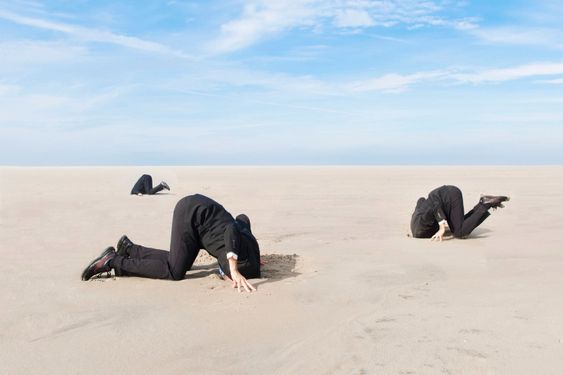
Denial is not just denying or rejecting a certain state of affairs.  Its subtler forms include wishful thinking, kidding ourselves, underestimating things, avoidance, or simply choosing to turn a blind eye.

I feel much of our responses to Covid 19 are of that nature. At the beginning, it was all too easy for me to discount or minimize its spread and impact on our lives.  And I am quite sure that I was not alone in believing that.

I frequently heard (and still do) what I consider denial based comments about Covid 19, such as the following:

“It’s not that harmful—the flu kills more people each year”

“They will soon find a vaccine”

“The virus will soon run its course”

“I’m young and in good health”

“Only old people are at risk”

“People are just running scared”

“It’s all politically based”

And the highly optimistic denial: “Things are getting much better now”

The problem is that when you are in denial of the underlying issue or problem,

You can’t make the choices and pursue the paths that can alleviate the very problems you are denying. 

Indeed, you risk making them worse!

A prime example is the early opening of restaurants, bars, gyms, and other gathering places by many states and local governments.   In almost every instance, there has been a huge spike in cases, deaths, and shortage of hospital and ICU beds.

I’ve previously offered ways to let go of denial in other contexts. (See my post, “Letting Go of Denial”).   One vital key is worth repeating:

We must be able to dispassionately see the “truth” and then have the courage and wherewithal to act upon it. 

I understand that people will see different versions of the truth and/or may choose to act in different ways upon it, especially in these highly divisive times.

Nonetheless, I encourage you to at least be willing to reexamine your deeply ingrained beliefs in order to gain a greater awareness of when, how, and what you may be denying in The Time of Coronavirus.   Remember, too, that when you deny less, you accept more, and will have greater serenity even during turbulent times.

In the meantime, remember to

Let It Go—and Accept “What Is!” 

Danny

* To help make The Gifts of Acceptance and Losing Control, Finding Serenity available to more people during the coronavirus crisis, I have lowered their ebook prices to $2.99.

**If you enjoyed this post, please “like” it on your Facebook page and share it with others.

Overcoming “Lulls” and “Lows” in The Time of Coronavirus

(5th in an ongoing series on “Acceptance in The Time of Coronavirus“) 

I don’t know about you, but its easy for me to fall into a “lull” and “low” during The Time of Coronavirus.

Every day seems the same, yet I feel different almost every day. 

Same in the sense I have a lot of time on my hands most days and am restricted in movement, engagement, and enjoyment of what I like to do, especially playing tennis.

Different because I don’t know how I will feel until I get out of bed and begin my day.   Some days I feel calm, relaxed and productive.  Others anxious and antsy.   And unfortunately, a good night’s sleep isn’t necessarily a harbinger of positive thoughts, feelings, and energy.

And some days, like today, I feel a “lull” and “low”–and lethargic.  My body didn’t feel right this morning.   I wasn’t sure if I was coming down with something.  Who Knows? Maybe even the dreaded Covid-19.  Fear is at the forefront these days.  (See my post, “Dealing with Fear in The Time of Coronavirus”)

You may relate to what I’m talking about.   If so, I would like to share some simple things that helped me feel much better as the day progressed.    I hope they will help you, as well.

I reached out to a friend to see how he was doing. That wasn’t easy for me because I really didn’t feel like speaking to anyone. But I knew from past experience that the best way for me to get out of my head’s “negative” thinking was to see how others are doing and lend a good ear. My friend greeted me warmly and we shared some insights and “what we were doings” during The Time of Coronavirus.  We even had a few good laughs.    The conversation lightened my spirits, and then,

I took a “nature walk” around my neighborhood. It’s wonderful springtime here in California.   Why not enjoy “the beauty all around me.”  The blooming roses and irises.  The bright blue sky.  And the cheerful music of birds. Have you noticed lately that the birds seem happier than ever?  The doves even more peaceful?  And the ground squirrels playfully scampering around?

Is it possible they know something that we don’t?

Or, maybe it’s that they know “less” than we do–and are happier because of it? 

Whatever the reason, it was a real blessing to be able to share their space with them.

I’ve heard it said that we are only a guest of nature, and I welcomed the invitation.

I felt so much lighter, and then

I decided to write this post. I thought that others—maybe even you—have experienced similar lulls and lows during The Time of Coronavirus and my sharing  today’s experiences might ease their discomfort.

Quite honestly, just that thought lifted my spirits considerably.   And the actual writing—this very writing—helps me a lot.

I gain needed awareness, clarity—and acceptance. 

I encourage you try these things when you feel a lull or low.  (The writing part can be some basic journaling.) Please also share your  experiences and ideas about dealing with lulls and lows in The Time of Coronavirus. It would be helpful to me and I know others.

(You can read my earlier post, “Accepting “Lulls” and “Lows” for some other suggestions on this subject.)

In the meantime, remember to

Let It Go!—and Accept “What Is!” 

Danny

*If you enjoyed this post, please “like” it on your Facebook page and share it with others.

**To help make The Gifts of Acceptance and Losing Control, Finding Serenity available to more people, I have lowered their ebook prices to $2.99


Acceptance in the Time of Coronavirus–A Series

 “These are Times that Try Men’s Souls”

In December 1776 General George Washington and his troops were facing imminent defeat, having been driven out of New York and chased across New Jersey by the British.

Washington had been deserted by Congress and his demoralized, hungry, and ill equipped troops planned to go home in two weeks when their enlistments ran out.

In an inspired move, Washington rounded up his weary soldiers into ranks and had them listen to a stirring message written by Thomas Paine:

“These are the times that try men’s souls.  The summersoldier and sunshine patriot will, in this crisis, shrink from the service of their country, but he that stands it now deserves the love and thanks of man and woman.”* 

Thomas Paine’s words had a major impact on Washington’s beleaguered soldiers.   A sense of renewed commitment and sacred mission returned to their souls.

Two nights later they crossed the Delaware, caught the British mercenaries completely off guard on a groggy hangover the morning after Christmas Day.   Washington captured the whole British contingent of a thousand Hessians without a single American being killed.

The rest, as they say, is History!

We are now facing an equally precarious time in our “history”—one brought about by the unrelenting coronavirus and Covid-19 pandemic.  And many, if not most, of us are equally dreary, beleaguered, demoralized—and fear driven.

I wish I had some stirring words like Thomas Paine to arouse and inspire you.  I clearly don’t.  I suffer the same unsettling range of emotions that you likely do.

However, I know that practicing acceptance in the time of coronvirus has helped me cope with the current chaos and uncertainty.   It lightens my spirit.  It grounds me.  It balances me.  And it frees me.  (See my last post “How The Serenity Prayer Helps Deal with the Coronavirus)

From the tremendous response to that post, I am heartened to learn that it helps others as well. Daily blog visitors have increased more than tenfold.   Facebook friends and fans have shared broadly.

I cannot tell you how deeply grateful I am for that.   It makes me feel useful and being of service at a time when I so often feel helpless and powerless.

It also motivates me to do and share more about how to practice acceptance and enjoy the many “gifts” that surely follow.

I thus will be offering a short course  on “Acceptance in the Time of Coronavirus” through weekly blog posts.

I will share what I know and have experienced first hand, as well as things learned from others, about practicing acceptance–its benefits, keys, challenges, obstacles, catalysts and dynamics.

Although I have extensively written and talked about these subjects before, I will discuss them and others within the context of the coronavirus Covid-19 pandemic. I hope to do so in a personal, everyday sort of way.

Concurrent with that, I have lowered the price of the ebooks for The Gifts of Acceptance and Losing Control, Finding Serenity to $2.99, so that more people will be given the opportunity to read and hopefully learn from them.

So stay tuned for the first session!

In the meantime,

Let It Go—and Accept “What Is!” 

Danny

*From The Crisis by Thomas Paine, December 23, 1776.  His cogent essay is prescient about the politics, public panic, and other aspects of the coronavirus pandemic.

**If you like this post, please “like” it on your Facebook Page and share it with ot

How the Serenity Prayer Helps Deal with the Coronavirus

The Serenity Prayer* has really helped me in dealing with the severe impact of the coronavirus and I hope it can help you as well.

Every day it becomes more clear how powerless—and helpless–we are over so many aspects of the Covid-19 pandemic and its impact on our lives.  Jobs and financial losses, business closures, the heavy burdens on parents from school closures, food and supply shortages, and the strict physical and social constraints, including separation from our loved ones.  The vast suffering by so many is heart wrenching and immense.

The Serenity Prayer teaches us that the more we are able to accept our “powerlessness” over (and inability to change) such tragic circumstances, the more serenity we will have in our lives.  It is extremely difficult and challenging, to be sure.  We feel helpless by our lack of power and control.  However, even partial or intermittent acceptance is beneficial.  (I explore these subjects in depth in my books, The Gifts of Acceptance and Losing Control, Finding Serenity.)

Yet, it is the very acceptance of “what is” that is key to mitigating the hardships and vast changes in our lives brought about by the coronavirus.  Indeed,

Acceptance can transport us from despair to hope and even joy.

How?

As I have repeatedly expressed in my speaking and writings on the control and acceptance dynamics, with acceptance comes a critical shift in focus–from what we can’t control or change to what we can.

This shift empowers us.

It does so by expanding our vision—substantially so.  We become much more aware of things and areas in which we do have power and control, and that in turn reduces our stress, anxiety, and despair.  We no longer feel so stuck and mired in negativity.

This is the very essence (and encouragement) of the second line of the Serenity Prayer: “The courage to change the things we can.”

Hence, just as we are unnerved by the things we are powerless over, we are empowered by the things we do have power to do and change—and there are many when we are freed to focus on them.

Acceptance gives us that freedom

I encourage you to explore and embrace your “powers.”  Be creative, open—and courageous.  Here are a few I have personally enjoyed during this time.

*Tending to the “little” things that I didn’t have time for before: gardening, organizing my closet, drawers, and files; cleansing and ridding the house of unneeded and unused “extras”; strolling in the neighborhood, admiring the natural beauty all around me, and saying “hello” to neighbors on different streets I hadn’t yet met; reconnecting with friends I hadn’t talked to in a long time; and drawing and painting.

*Enjoying my wife’s healthy home cooked meals.

*Listening to informative and humorous podcasts and participating in online virtual meetings and get togethers through Zoom.

*Re-reading some favorite books and enjoying them even more.

*Face timing with my 96 year old mom, whom I am unable to visit because of the mandated lock down in her assisted living home.

*Being more aware of, and grateful for, the many blessings I have in my life, including a loving family, good friends, blue skies and sunny days, good health, and much more.

*Learning more about what’s truly important to me and what changes and additions I would like to make once the crisis subsides and hopefully passes.

These powers have brought me unexpected pleasure, comfort, and balance during this trying time.   Most were inspired by my daily reciting and applying the tenets of The Serenity Prayer. (See my post, “Optimizing the Benefits of the Serenity Prayer.”)

I hope you have benefited from discovering your own “powers.”  Please share them with me and others.  We are all in this powerful storm together and let us weather it together by supporting and helping one another.

In the meantime, remember to

Let It Go—and Accept “What Is!” 

Danny

* “God grant me the serenity to accept the things I cannot change,

Courage to change the things I can, and

The wisdom to know the difference.”

**If you enjoyed this post, please share it on your Facebook page and with your friends.


The Harms of Withdrawal–And How to “Return”


In a recent post, I explained how procrastination is a control based avoidance mechanism that carries potentially severe consequences.  Withdrawal is another such mechanism that can be even more detrimental to our well-being.

At times we all have had the urge to retreat and “hole up” and just escape the world.   This is understandable given the burdens, responsibilities, and pressures we face today.

For much of my adult life, withdrawal was my default mode, usually triggered by strong anger, feeling mistreated, or being overwhelmed.

Truth be told, it didn’t take much for me to emotionally “leave” my loved ones.

It was often easier for me to retreat into my private world of painful thoughts than to confront vital issues head-on.   Blame was often the game, as I remained stuck in my self-pity.

Indeed, I can’t think of anything positive that ever resulted from my absences.

Harms of Withdrawal

Withdrawal can become a self-perpetuating process.   The longer your departure, the more difficult your return, and by the time you do return, considerable harm may have already occurred—to you and others.

At home, your mates and family may feel rejected and helpless– even abandoned.  At work, it is difficult to focus on important tasks and assignments, as well as interact with co-workers and customers.

In the arts, your creativity is easily submerged.   And with intimate relations, your sex drive can disappear.

Returning from Exile 

Consequently, because of its negative momentum, withdrawal needs to be nipped in the bud.   I learned that it is important to learn from your past history what makes you depart, and then make an effort to timely counter it.

For many, unprocessed anger and resentment are the catalysts.  For others, it may be financial or health fears, or deteriorating personal relationships.  Grief and sadness, particularly from the loss of a loved one or a close relationship, are also prevalent causes of withdrawal.

To return from your personal “exile,” it is paramount that these core feelings and emotions be processed; otherwise they will fester, propelling you deeper into your inner sanctum.  You must “face and embrace” them; “lean” in to them, if you will.   As you do, the barriers to your return will begin to thaw.

A good way to process your unsettling feelings and emotions is by sharing them with a trusted friend or confidant.   Another is to write about them in some way.

During one withdrawal, I wrote the below poem about withdrawal and what I needed to do to overcome it.   It is included at the beginning of the chapter titled  Avoiding Avoidance in Losing Control, Finding Serenity

Default Mode                                                         

“Engulfed with anger,

We retreat.

Ensnarled by fear,

We hide.


Webbed by doubts

We avoid.

Immersed in pities,

We remain

In exile—

With no default mode.


To return,

Joust the fears,

Lose the anger,

Embrace the truth, and

Face the danger.”

Please share  your experiences with withdrawal.  What typically induces it? How does it impact you?  And how do you overcome it?

In the meantime,

Let It Go—and Accept “What Is”! 

Danny

*If you enjoyed this post, please “like” it on your Facebook page and share it with your friends.


A Unique Benefit of Practicing Gratitude


Gratitude is a common subject of many recovery books and articles.

Below is an article about gratitude I wrote that was recently published in Tiny Buddha, a leading personal growth and inspiration blog.

Gratitude is not only the greatest of virtues, but the parent of all others”—Cicero

Being grateful or practicing gratitude has many benefits, including improving our health, relationships, careers, sleep, and self-esteem, to name just a few.  In recent years, these benefits have been confirmed in scientific studies showing how the brain is “rewired” by continuous grateful thoughts.   (see “The Grateful Brain”)

However, I recently discovered and experienced another significant, and I believe mainly overlooked, benefit of being grateful—in the somewhat unusual setting of a major seniors’ championship tennis tournament I played in Palm Springs this past January.  I learned that,

Practicing Gratitude Calms the Nerves and Mind

As an avid tennis player, I struggled to play up to my ability in tournament match play.  I was constantly over-thinking, too cautious, and too tight during matches.  Before playing in the tournament I read about a mental strategy recommended by sports psychologist Jeff Greenwald in his insightful book The Best Tennis of Your Life:

Play with Gratitude.”

Feeling there was nothing to lose, I decided to give it a try. Before my first match, I thought to myself how grateful I was that:

I was able to play without injuries.

I could play in such a magnificent setting at the historical Palm Springs Tennis Club,

I could afford to take time off from work and treat myself to so much fun.

I repeated these blessings throughout the match, was calm and focused, and won.

My next match was against a player that had soundly defeated me the year before.  I repeated the above blessings and added one more:

I am grateful to have the opportunity to play the same person again to see if my game has improved.

I played the best tennis of my life and won in two sets—and again was calm and focused throughout.

Hmm, I’m now thinking there must be something to this “being grateful reduces-the nerves-and-calms-the-mind” thing.  Next match: I played another (and seeded) player who also had soundly beat me the year before.

I again won in two sets.

I’m now in the semi-finals against the #1 seeded player, a former national champion.  I’m not only grateful for this, but I have been playing at a whole new level and having the tennis time of my life.

I lost in two hard fought sets, but not because I was nervous or uptight.  To the contrary, I played extremely well.  I lost because I played a more highly skilled and experienced player who, incidentally, shared with me after the match that he was grateful that he could still play so well in his 70’s!  (I think he was more grateful than me!)

Upon reflection, it occurred to me that what applies to sports and performance probably applies equally to most life arenas.  Which is to say,

There is a Powerful Synergy between being Grateful and Calmness and Serenity.

I soon had the opportunity to prove this to myself again, but in an entirely different setting—a courtroom.  In April, I was in traffic court for a trial to fight a ticket that I felt I had wrongly received.  While waiting in court, I was nervous as heck as I repeatedly went over in my mind what I would say, what the officer would likely say, and how the judge might rule.

Then an amazing thing happened.  I reminded myself to be grateful—yes grateful. Specifically, I was grateful that I had the opportunity to be heard and present my case—something I was clearly unable to do at the time the officer issued the citation.  I was also grateful that I lived in a country where I could seek justice without a lot of constraints.  With those thoughts, my nerves immediately subsided and I became very calm and grounded.

A short while later, my ticket was dismissed!

The Non-Science of Why Gratitude Leads to Greater Calmness and Serenity

I have no doubt that being grateful stimulates the brain’s neurons and in effect re-wires the brain to produce a more happier state of being. I believe, however, there are more basic reasons why gratitude bestows upon us a more calm and serene state of mind. For example, being grateful:

  • Redirects our focus from what is troubling or worrying us to what lifts our spirit. We shift from negative to positive thinking—and energy.
  • Provides us with a true perspective of what’s at stake, including “how important is it?”
  • Reduces our anxiety creating fears.
  • Allows us to let go of the need to control, thereby creating space for greater calmness and serenity.

Test the Gratitude/Calmness Dynamic

I encourage you to see if the gratitude/calmness dynamic works for you as it does for me.  For example, consider trying it when:

  • You have to give an important talk or presentation.
  • You have a job interview.
  • You have to take an important test.
  • You have to perform or go on stage.
  • You have writer’s block.
  • You keep procrastinating in completing an important task.

Bottom line, there is no shortage of opportunities where you can test this powerful dynamic!

Please write and let me and others know how it worked for you. Were you calmer? Less tense? More grounded? What was the final outcome?

Visit this link for information about our recovery books.

In the meantime, remember to

Let It Go!

Danny


A Valuable Key to a Healthier Heart

When my doctor checked my pulse and blood pressure at a recent physical exam, my pulse was only 47—well below the 60-80 norm—and my blood pressure was a healthy 98/68.  Admittedly, I exercise regularly, but leaving the doctor’s office I wondered whether that alone would account for such good readings—especially for a 70 year old.

It then occurred to me that the readings might also be attributable to the fact that I am now much better at letting go of control in important areas of my life (work, children, loved ones, friends and the like).

In other words, could letting go of control be a valuable key to a healthier heart?

I believe it is.  Medical research and studies confirm that our hearts are adversely impacted by excessive stress, worry, fear, and anger.

And, quite simply:

*When we control less, we stress less;

*When we control less, we worry less;

*When we control less, we fear less; and,

*When we control less, we resent less.

If this all seems too “non-scientific” to you, I encourage you to try the following:

Let Go of Control Heart Test

1.  In the morning or evening of the first day, measure your blood pressure and pulse.

2.  For the next three days, endeavor to let go of control the best you can at work, with your children, close relationships, and troublesome concerns.  Don’t pressure, force, resist—or persist.  Just accept, allow, trust and let be.  I understand that this may not be easy—especially if you have the propensity to be a controller. The key is to simply try your best.   It’s a matter of progress, not perfection. Striving for perfection induces control-based actions. *To assist yourself, try some of the Decontrol Tips and Tools described in my posts in that category at the right column of this page.

3.  After three days, again measure your blood pressure and pulse at about the same time that you did on the first day.

4.  Finally, do the simple math to determine if and/or how much your pulse and blood pressure have improved.

This Test is a No Lose Proposition

Admittedly, there can be many unaccounted for variables that impact your results.

However, you have nothing to lose by taking the test—and here’s why:

Even if the results are not conclusive, I am quite confident that you will have less stress, worry, fear, and anger—and more peace and serenity!

These and other benefits will increase further as you become better and better at letting go of control.   It definitely takes commitment and practice—and at times courage—but it is well worth the effort.   Eventually, letting go of control will become a more natural, intuitive way of living and engaging people and things.

I would love to hear how your heart test went.   Were your pulse and blood pressure lower?  Did you have less stress and anxiety?  Were the decontrol days more enjoyable?

Here’s to your healthier heart!

In the meantime, remember to

Let It Go–And Accept “What Is!”

Danny

*If you enjoyed this post, please “like” it on your Facebook page and share it with your friends.


Letting Go of Control Truths

“Let go of control. You never had it in the first place!”

Most control freaks do not agree with the above statement. What about you? Not sure you agree? Then consider this:

“If you always do what you always did, you always get what you always got. So let go of control to get something new.”

Is micro-managing your children’s lives working for you? Or is not going too well? Here’s a suggestion:

“Listen attentively to them without “counseling” them.   It is a healing gift that allows them to process their concerns by themselves.” 

Are your high expectations of others creating distrust and dissension? If so, then try to:

“Expect Less—Control Less—and you will Discover more.”

How’s your love life been lately? Not so good? No wonder:

Love Control causes the dance of romance to lose its rhythm.”

Are your strong fears propelling you to control more even when you don’t want to?  Then you must:

“Process your fears before they become real. It greatly reduces the need to control.” 

Have your creative juices dried up? Are you looking for inspiration and need some creative nourishment?

Then (trust me) you must not,

“Overthink, overanalyze, press too much or try for perfection.” 

Is it your nature to fight, fight, fight, push, push, push, or resist, resist, resist?  What’s your stress and anxiety level? A bit high?

Here’s something to ponder:

“Surrender doesn’t mean failing; it often means winning.” 

It can be difficult for control freaks to process, but once they do, a greater freedom is available.

What it really all comes down to is this:

“To control or not? That is the question. How you answer will likely determine whether you will have greater serenity in your life—or not.”

To learn more about the habit of control freaks, click here.

In the meantime, remember to

Let it Go–and Accept “What Is!” 

Danny

*If you enjoyed this post, please “like” it on your Facebook page and share it with others.


Acceptance or Denial? It’s Your Choice to Make!


When we are struggling in coping with a troubling issue, we basically have two choices: We can accept the underlying reality of the situation, or we can deny it.  It’s your choice to make!

I strongly encourage people to choose acceptance because that is the only way we can begin to effectively deal with the problem. But here’s the irony—and challenge: We must first overcome our denial before we know what it is that needs accepting. Which is to say, denial obscures acceptance.

It’s no easy task because we tend to be quite clever and creative with our denials.  Wishful thinking is pervasive. So, too, is our propensity to turn a blind eye or suddenly become a “minimalist.” Typical situations are where parents fail or are too slow to recognize the extent of their children’s drug or alcohol use, when a loved one fails to recognize that his or her partner is dealing with severe anxiety or depression, and when we aren’t addressing a serious health condition.

An even more powerful obstacle is the persistent belief that we have the power to make things better when, in fact, we don’t.  Call this, if you will, the Superman myth. Members of this not so exclusive club include control freaks, dedicated problem solvers, perfectionists, and others with inflated egos.  In short, they believe they can conquer reality.

Such people persist in trying to find solutions until they can’t “fly” anymore and crash to the bottom.  Only then are they able to recognize that they are powerless over the matter.   Regrettably, by that time they may have ruined or lost close relationships or salvageable situations may have become irreparable.

But you need not reach that dire point if you let go of your denial and accept “what is.” My forthcoming book The Gifts of Acceptance includes a chapter on letting go of denial and stories of how people, including many control freaks, were able to overcome their denial. (You can download the first chapter of the book for free by clicking here) You can also get some tips from my recent blog post on the subject.

In the meantime,

Let It Go—and Accept What Is!

…and Let’s Help Make Acceptance Go Viral!

Danny

*If you enjoyed this post, please “like” it on your Facebook page and share it with others.

Accepting Your Foes Helps!

Reading the above title, you may be thinking, “Why should I accept people who are trying to harm or cause me trouble?  They are the last people I would want to accept!” I know I used to feel that way, especially before starting my personal recovery journey.

It’s clearly unnerving to think about accepting those that we feel are toxic, and even more challenging to do so. However, when I look back, I now realize that I suffered unnecessarily from my refusal to accept such people, both in terms of greater personal anguish and poorer results.

This became even more clear to me–of all things—while competing in some seniors’ tennis tournaments. 

  My Unrelenting Tennis Foe

Not long ago, I played a first round match in a tournament against a player who constantly miscalled lines and game scores—both, of course, in his favor.   I felt I was a better player than him, but I let his court antics upset me so much, I lost my focus—and the match.

After entering another tournament several months later, I received a call from this person asking me if I would assist him in entering the same tournament.   He didn’t understand English well and had trouble completing the online entry form.   Oh brother, I thought to myself, do I really want to help him?

Yet, I felt that good sportsmanship required me to do so. When the draws for the tournament came out several weeks later, lo and behold, we were matched again in the first round.

At the time, I was in the midst of studying and writing about the rewards of acceptance, and I instinctively felt there was a reason this was happening: It gave me the opportunity to accept my opponent for the player that he was—crafty and likely not honest—and not let that impact my play.  Here’s what followed in our second match.

After I was ahead in the first set, he started with his shenanigans again, frequently misstating scores and sometimes making bad line calls.   I tried to remain calm, but internally I was very upset by his antics—so much so that I lost my lead and the match!

I left the court so embittered that I vowed never to play him again, even if that meant defaulting a match.   I was very discouraged that despite my efforts, I was still unable to accept this person for who he was.

Unbelievably, two months later I drew him again in the first round of the largest seniors tournament in the United States. Out of 60 players in our division! How could that happen?

Since I didn’t want to put myself through such torment again, I seriously considered withdrawing from the tournament. I still sensed, however, that there had to be some higher meaning or purpose to all this, and decided to play the match.   However, before playing, I knew I had to seriously examine what was required in order to somehow accept my opponent—antics and all—and not let him get the best of me yet again.

 Keys to Accepting My Foe

Here are the keys I used to finally be able to accept my opponent.

* I told myself that I would not speculate further about his motives or character. I thus would not focus on his being a schemer or cheater.   Instead, I considered that there might be reasons beyond my knowledge—or even his—for his poor court manners. That made it easier for me to accept that that’s simply the way he was—and that it had nothing to do with me, and I need not spend mental energy worrying about it.

* I practiced gratitude.In this case, I was grateful for having “the opportunity” to do things differently this time.   This significantly defused my anxiety about playing him again, and when we entered the court, I harbored no ill feelings toward him.

*I focused on what was within my power to do. Namely, to make sure I watched the ball well and played my “own” game, despite whatever he may do during the match. I also requested the presence of a court referee to assist in keeping score and resolving any line disputes.

Here’s how the match went.   I fell behind 5-2 in the first set even though he didn’t misbehave; yet, I remained calm and focused, confident in my belief that the final outcome is all about me, and not him.

I then won nine straight games and the match!

This despite my opponent’s intentionally slowing down play by taking longer than allowed cross-over periods and more time between points.   None of his diversions angered me, nor altered my focus from what I needed to do.   Indeed, I played even better.  I am convinced that had I not found a way to accept my foe, I would have lost again.

Understanding What True Acceptance Means

If you still aren’t keen about the idea of accepting your foes and adversaries (or feel that it would be near impossible to do), a clearer understanding of what acceptance means should help you.   For example, acceptance does not mean,

 *That you approve or condone another’s behavior. You are not approving by accepting. Rather, you are simply acknowledging the “reality” of the person or situation, or “what is”—and deciding what’s best for you based on that reality. Hence, you can accept someone even though you disapprove of what the person says or does.   (This is not to say, however, that you should accept abuse, violence, or other aberrant behavior.)

*That you must “give in” to others.   Acceptance does not require that you relinquish your needs or subordinate your best interests to those of others.   Once again, it means being realistic about the person (or situation); if you feel mistreated or imposed upon, you can disengage or detach–or of course, stand your ground.

 *That you cannot be resentful.   It’s normal and understandable—only “human” if you will—to be upset or resentful when someone acts badly.   What is important, however, is that these feelings be timely addressed and processed, and not be allowed to linger.   When not timely addressed, you will linger in negativity and not be able to “see” the meaningful choices and options available to you. 

And very importantly, acceptance does not mean, 

*That you have no viable choices.   To the contrary, it is only by truly accepting the person as they are (or the situation as it is), that you will be able to recognize the choices and options that will serve you best, as I did in my final match. Why? Because with acceptance, the focus changes from others to you—and what you can do to better serve your own interests.

Your Acceptance Challenge

The next time you deal with an adversary, a perceived enemy—or for that matter, simply a very unpleasant person—I challenge you to try accepting them as they are.   In doing so, note whether there were fewer aggravations. Was it easier to remain calm? Were you better able to focus on taking care of your own needs?

Please let me know how it went!  I would also love to hear about any personal recovery and acceptance stories  you wish to share.

And remember to,

Let it Go–and Accept “What Is!”

Danny

*This post first appeared in the popular personal growth blog, Tiny Buddha.

**If you enjoyed this post, please “like” it on your Facebook page and share it with others.


The Link Between Addiction and Control

The lives of addicts often reel out of control, especially for those who have not started down the path to personal recovery. Many feel ashamed and powerless over their addiction and many things in their lives. To counter their anxiety and attempt to gain some semblance of control in their lives, they try to exert “external” control over others and important aspects of their lives.


Some believe addicts are control freaks. Licensed clinical social worker Rita Milios explains why in her informative article appearing in Recovery.org titled Control Freak: How to Stop Trying to Change Your World and Change Yourself Instead. Visit this link to read the article.

“If a person feels that they have lost control of themselves and their substance use, they often shift their sphere of control to other areas of their life. Feeling out of control increases the anxiety, and becoming a “control freak” is one way an addict may attempt to reduce this anxiety. Exerting outward control may also be an attempt to manage other uncomfortable emotions, such as depression, low self-esteem or feelings of powerlessness.”

Which Comes First—Addiction or Control? 

Yet, if addiction leads to the need to control, can it also be said that excessively controlling behavior can lead to addiction? An intriguing question, to be sure, given the toxic energy and anxiety created by such compulsive behavior.

Lisa, a recovering alcoholic, isn’t sure which came first for her.  She explains it this way in her introspective article, The Need for Control and Addiction:

“Looking back on my sobriety so far, those early days were cruel and painful. I didn’t know what I was doing, and I hated it. I was out of control, and I hated it. For a control freak like me, that was hard to handle!   I wonder what came first, Control Freak Personality/Type A or Addiction?….I do know that the more I abused alcohol, the more out of control I felt I was, therefore more anxious, therefore I drank more.”

Do Controllers Have More Control Over Their Lives? 

I believe there is a significant link between control and addiction. Irrespective of what comes first, I seriously doubt that addicts gain more control over their lives by being controlling. In fact, in Losing Control, Finding Serenity: How the Need to Control Hurts Us and How to Let It Go, I demonstrate through true stories that the best way you can gain control of your life—to the extent that you ever can—is by losing or letting go of control. Many believe it to be the first step in personal recovery And I believe the contrary also to be true:

The more you try to control your life, the more out of control your life becomes! 

Indeed, this belief is a cornerstone of the widely attended Al-Anon Twelve Step Program for personal recovery, where the harms of control are examined and ways of letting go of it shared.

This conclusion is readily apparent if you consider that life’s natural currents are unpredictable and have a constantly moving, ever-changing ebb and flow. Some people refer to this as Life’s Impermanence. Things never remain the same. As such, life (and people) can’t be controlled and trying to do so is akin to gripping a rapidly moving conveyor built: you will either get burned or dragged along.

What’s your belief about the link between addiction and control? Do you believe that control itself is an addiction? Is there an addict in your family that tries to control everything?   Does it alleviate his/her suffering? Please share with me and others your experiences with the addiction/control dynamic.

In the meantime, remember to

Let It Go! 

Danny

If you enjoyed this post, please “like” it on your Facebook page and share it with your friends.


10 Ways the Need to Control Hurts You

Many people call them control freaks.  Some call them controllers.  Others refer to them as nitpickers and micromanagers.  Whatever you call them, they all have one clear thing in common: The Need to Control.

Hence, the subtitle of my book Losing Control, Finding Serenity,  “How the Need to Control Hurts Us and How to Let It Go.”   As such, the book examines in-depth (using true stories) the many ways our need to control hurts us—and others.

Controlling too much is like gripping a rapidly moving conveyor belt—you either get burned or dragged along.

10 ways for control freaks to get themselves in check:

1.  The intensity of our control-driven actions “blinds” us from recognizing new paths and opportunities that could vastly improve our lives.

2.  The need to control our children’s lives deprives them of opportunities for personal growth.  It also leads to resentment between parent and child.

3.  Control obstructs the creative process.  Creativity flourishes with “opening up”, whereas control closes it down.

4.   Love control causes the dance of romance to lose its rhythm.  Who likes to feel they are not good enough in matters of the heart?

5.  Controlling others at work discourages original thought and ideas.   It also invites conflict and dissension.

6.  Control stymies spontaneity, and with that, the unexpected and often exciting joys it brings.

7.  Control impedes trust and intimacy.  When you keep telling others what they need to do or what’s best for them, they are reluctant to confide in and be open with you.

8.  The need to control diverts us from focusing on where it can do us the most good: ourselves!

9.  When you control, you can’t flow—especially in sports.

10.  Constantly trying to control or change others or things takes inordinate amounts of time.

So, doesn’t it make since to let go of control and enjoy the rewards that follow?

Please share with me and others your experiences about how your need to control has hurt you—and others.

In the meantime, remember to

Let It Go–and Accept “What Is!”

Danny

*If you enjoyed this post, please “like” it on your Facebook page and share it with others.